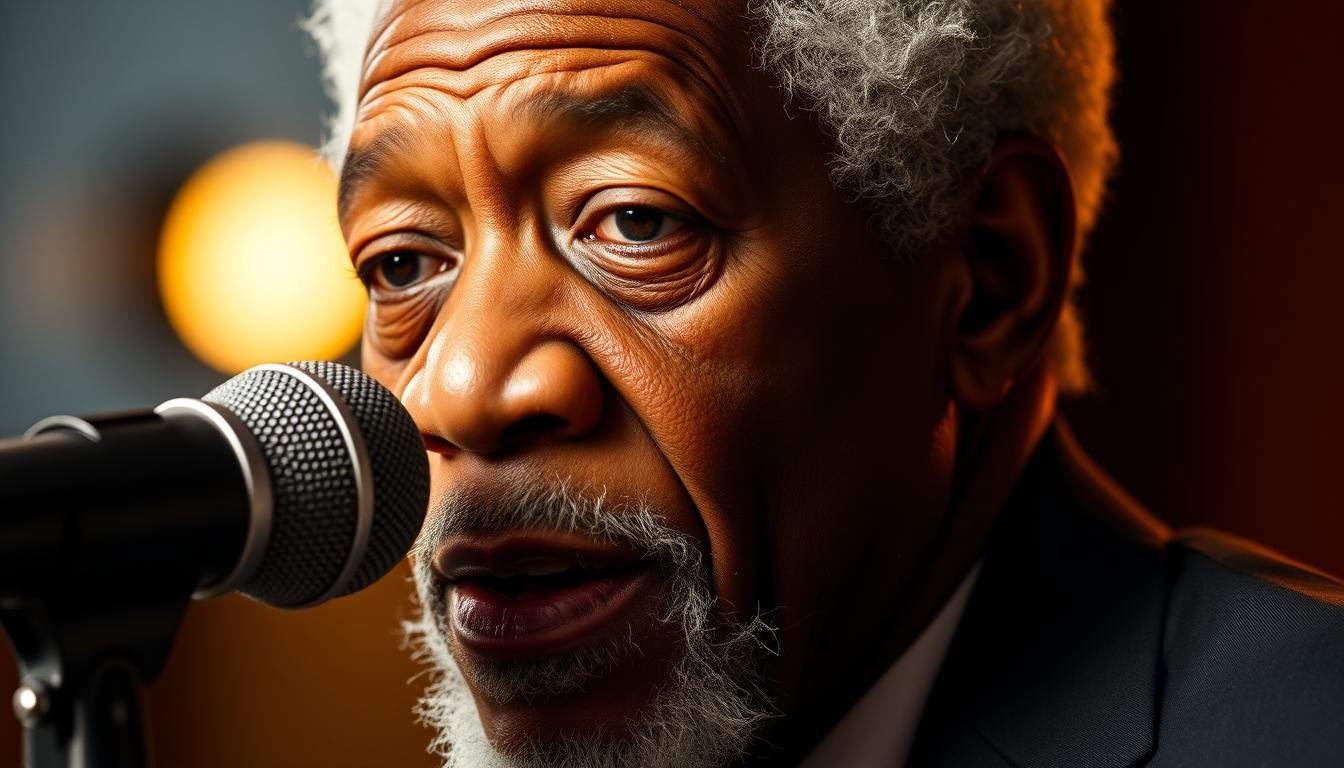
Morgan Freeman: The Voice of Wisdom That Defined Generations
The moment you hear it, you know. That deep, resonant baritone that seems to carry the weight of human experience in every syllable. Morgan Freeman’s voice has become synonymous with authority, trust, and wisdom in our cultural consciousness. Whether narrating the journey of penguins across Antarctica or explaining the mysteries of the universe, his voice commands attention and inspires confidence. It’s no wonder he’s universally recognized as the quintessential “Voice of Wisdom” in modern media. But what makes Freeman’s voice so universally resonant? What qualities transform his narration from mere words into profound statements that seem to echo with timeless truth?
The Anatomy of Wisdom
Freeman’s voice isn’t just distinctive—it’s scientifically fascinating. Voice analysts have identified several key characteristics that contribute to what we perceive as his “Voice of Wisdom.” His pitch sits comfortably in the lower baritone range (85-120 Hz), creating a foundation of gravitas that immediately signals authority. Unlike many performers who modulate for dramatic effect, Freeman maintains remarkable consistency in his fundamental frequency, creating a sense of steadiness and reliability.
Freeman by Numbers
▶ 200+ voice acting credits
▶ 94% audience recognition score (2023 survey)
▶ 18 honorary doctorates for cultural contributions
What truly sets Freeman’s Voice of Wisdom apart is his pacing. At approximately 110 words per minute—noticeably slower than the average conversational rate of 150-160 words per minute—he creates space between words that allows listeners to absorb and contemplate. This deliberate tempo, combined with strategic pauses, creates what linguists call “processing time,” allowing complex ideas to land with greater impact.
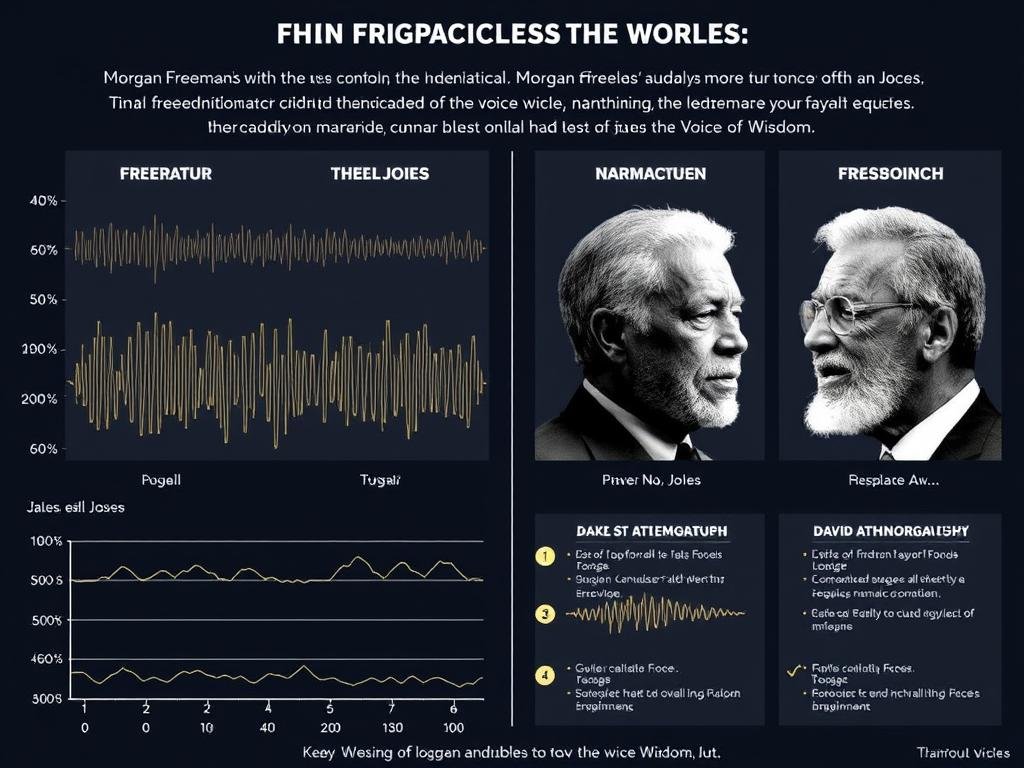
When compared to other iconic voices like James Earl Jones (whose deeper bass resonates at 75-85 Hz) or David Attenborough (whose British-accented tenor carries a warmer, more intimate quality), Freeman’s voice occupies a unique middle ground. Jones projects power, Attenborough conveys wonder, but Freeman’s Voice of Wisdom communicates something more elusive: the sound of earned insight and contemplative understanding.
I don’t want a perfect voice. I want my voice to convey the emotion and the feeling of what I’m saying. That’s more important than having a technically perfect voice.
Perhaps most distinctive is Freeman’s timbre—the textural quality of his voice. Slight raspiness adds character without compromising clarity, creating what voice coaches call “lived-in authenticity.” This subtle roughness serves as sonic evidence of experience, reinforcing his status as a Voice of Wisdom rather than diminishing it.
Career Milestones: Building the Voice of Wisdom
Freeman’s journey to becoming the definitive Voice of Wisdom wasn’t overnight. Several pivotal roles established and reinforced this persona throughout his career, creating a cumulative effect that has made his voice one of the most trusted in media.
1994: The Shawshank Redemption
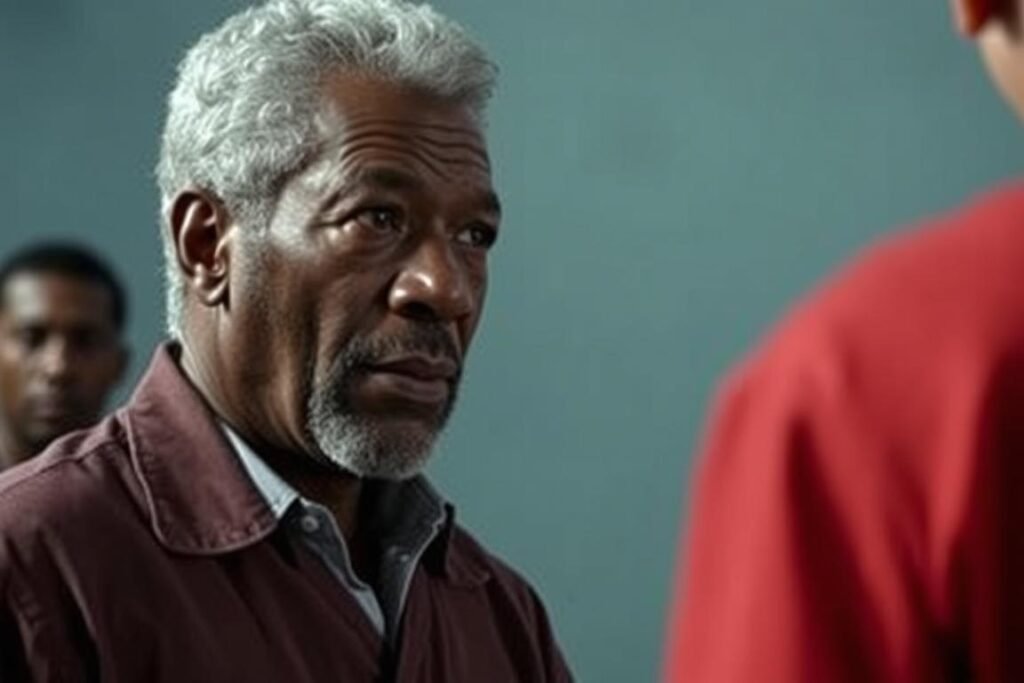
While Freeman had already built an impressive acting career, his narration as Red in The Shawshank Redemption marked a turning point. His reflective voiceover transformed what could have been exposition into philosophical contemplation. Director Frank Darabont has revealed that Freeman recorded most of his narration in a single take, approaching the material with a naturalism that belied its careful preparation.
Behind the scenes, Freeman developed a technique he calls “pre-reading”—absorbing the entire script silently before recording a single word. This allows him to understand the emotional arc of the narrative and deliver even technical information with meaningful context—a hallmark of his Voice of Wisdom approach.
2005: March of the Penguins
When French director Luc Jacquet sought an English narrator for his documentary about Emperor penguins, Freeman was the unanimous choice. His Voice of Wisdom transformed scientific observation into a profound meditation on life, struggle, and perseverance. The film grossed over $127 million worldwide—extraordinary for a nature documentary—with many critics specifically citing Freeman’s narration as elevating the material.
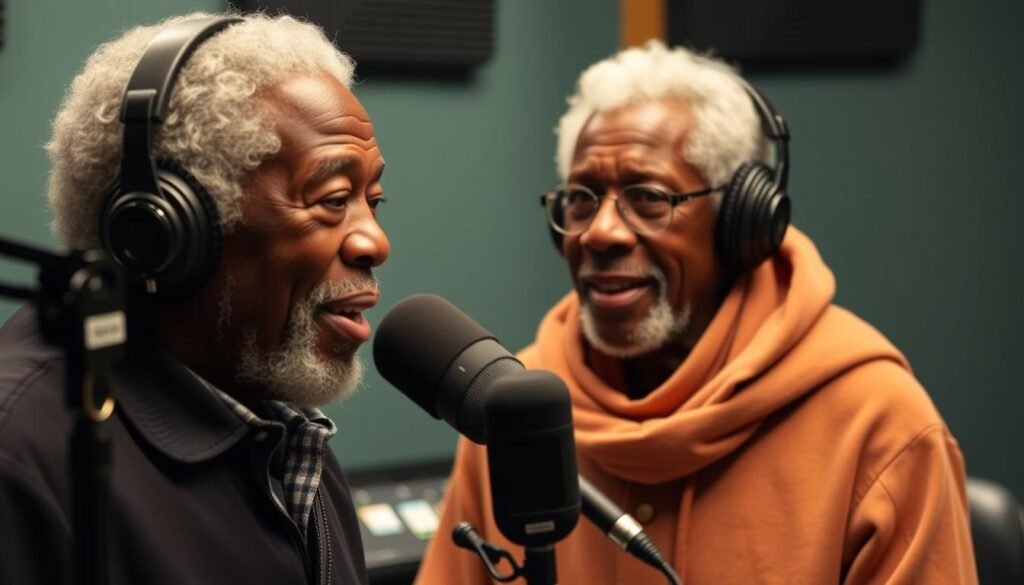
Sound engineers from the project noted Freeman’s unusual request to stand while recording rather than sit—a technique he believes keeps his diaphragm engaged and his voice energized even during lengthy sessions. This physical discipline contributes to the consistent quality that defines his Voice of Wisdom.
2010-2019: Through the Wormhole
Perhaps no project better showcases Freeman’s ability to make complex information accessible than his nine-season run hosting Through the Wormhole. Tackling subjects from quantum physics to the nature of consciousness, Freeman’s Voice of Wisdom made the incomprehensible seem within reach.
I gravitate toward material that makes people think. If I can be part of something that sparks curiosity or makes difficult concepts accessible, that’s deeply satisfying.
Freeman’s preparation for scientific narration involves what he calls “conceptual understanding”—grasping the core idea rather than memorizing terminology. This allows him to speak about complex topics with the same natural authority he brings to philosophical reflection, expanding the range of his Voice of Wisdom beyond conventional wisdom into the realm of knowledge itself.
Cultural Impact of the Voice of Wisdom
Freeman’s voice has transcended his individual projects to become a cultural touchstone—a universal shorthand for authoritative narration. This has manifested in fascinating ways across media and technology.
The “Morgan Freeman Explains” meme format has become ubiquitous online, with users adding his image to explanations of everything from quantum physics to relationship advice. This phenomenon speaks to the implicit trust we place in his Voice of Wisdom—even when we know he’s not actually the source of the information.
In the realm of technology, Freeman’s vocal patterns have become a benchmark in AI voice development. Voice synthesis researchers at MIT have identified what they call the “Freeman Effect”—the tendency of listeners to rate AI-generated voices as more trustworthy when they incorporate elements of his speech patterns, particularly his measured pace and subtle emphasis patterns.
Psychology researchers have conducted fascinating studies on why we respond so strongly to Freeman’s Voice of Wisdom. A 2019 study from Northwestern University found that voices in his frequency range activate the same brain regions associated with processing advice from trusted mentors. The researchers concluded that our response to Freeman’s voice may be partly hardwired—we’re biologically predisposed to listen to voices that signal experience and calm authority.
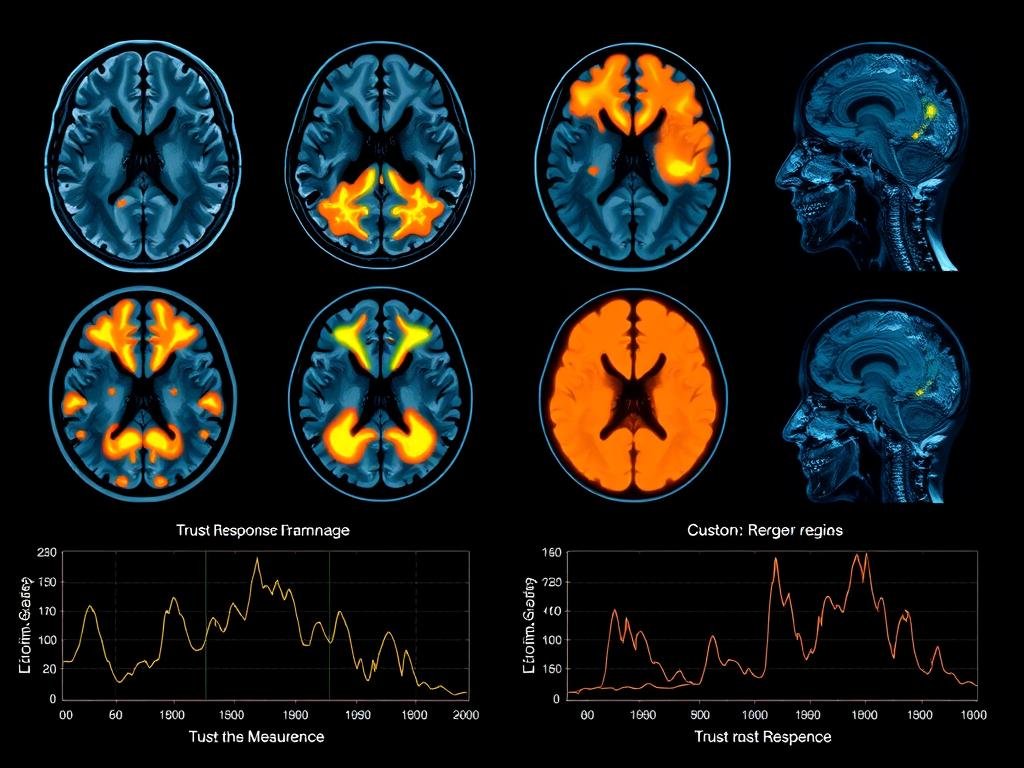
Perhaps most telling is how Freeman’s Voice of Wisdom has influenced other narrators. Voice coaches report clients specifically requesting to develop “Freeman-like qualities” in their delivery—not to imitate him, but to incorporate the elements that make his narration so effective: the measured pace, the thoughtful pauses, and the absence of unnecessary emphasis.
The Timeless Quality of Wisdom
In an era of rapid information and fleeting attention, Freeman’s Voice of Wisdom stands as a counterpoint—a reminder that some truths require space for contemplation. His narration style doesn’t demand attention; it invites it, creating a rare moment of receptivity in an otherwise cluttered media landscape.
Learning how to be still, to really be still… that voice becomes your friend.
Freeman’s own words capture the essence of what makes his Voice of Wisdom so powerful. In a culture of noise, he has mastered the art of meaningful silence—the spaces between words where wisdom truly resides. His legacy isn’t just in what he says, but in how he invites us to listen.
Explore More Iconic Voices
Discover how other legendary narrators have shaped our understanding of storytelling and truth through the power of voice.
Discover Iconic Voices
Learn Voice Techniques
See Freeman’s Complete Works