Vladimir Putin – Rise of a Russian Power
Few political figures have shaped the 21st century as profoundly as Vladimir Putin. His transformation from an obscure KGB officer to one of the world’s most influential leaders represents a remarkable political journey that has fundamentally altered Russia’s trajectory and global geopolitics. This analysis examines Putin’s methodical rise to power, his consolidation of authority, and the strategies that have defined his leadership of the world’s largest country by land mass.
Early Life and KGB Background
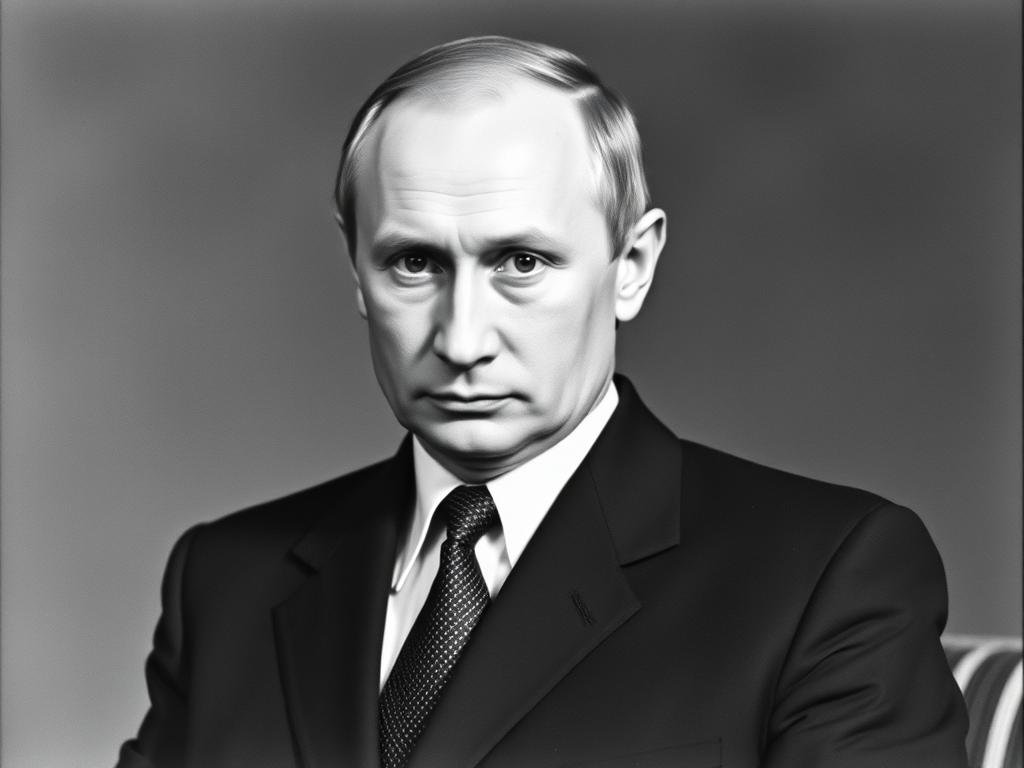
Vladimir Putin during his early career in the KGB
Born on October 7, 1952, in Leningrad (now St. Petersburg), Vladimir Vladimirovich Putin grew up in modest circumstances. His childhood in post-war Soviet Russia was marked by hardship – he lived with his parents in a communal apartment building where multiple families shared kitchen and bathroom facilities. These formative years instilled in him a toughness and resilience that would later characterize his political approach.
After studying law at Leningrad State University, Putin joined the KGB in 1975, fulfilling a childhood ambition. His intelligence career took a significant turn when he was stationed in Dresden, East Germany from 1985 to 1990. Though his role there remains partially shrouded in secrecy, this period coincided with the final years of the Cold War and the collapse of the Soviet satellite system in Eastern Europe.
The fall of the Berlin Wall in 1989 represented a pivotal moment in Putin’s worldview. As protesters threatened to storm KGB headquarters in Dresden, Putin reportedly bluffed his way out of the situation, claiming armed guards would fire on the crowd. This experience of Soviet retreat and the subsequent dissolution of the USSR in 1991 – which Putin later called “the greatest geopolitical catastrophe of the century” – profoundly shaped his determination to restore Russian power and prestige.
Political Ascent: From Deputy Mayor to President
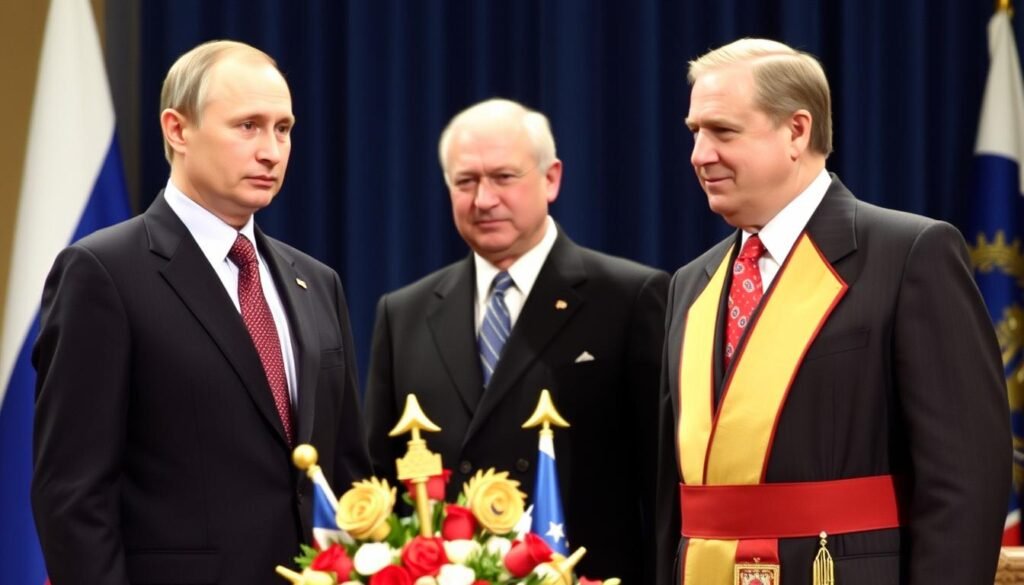
Vladimir Putin with Boris Yeltsin during the transfer of presidential power in 1999
Putin’s political rise began after his return from Germany, when he joined the administration of Anatoly Sobchak, his former law professor who had become mayor of St. Petersburg. As deputy mayor from 1991-1996, Putin gained valuable experience in governance and developed connections with business leaders and future oligarchs who would later support his ascent to national power.
When Sobchak lost his reelection bid in 1996, Putin’s career could have stalled. Instead, he moved to Moscow and secured a position in President Boris Yeltsin’s administration. His rise through the Kremlin ranks was remarkably swift – from head of the Federal Security Service (FSB, the KGB’s successor) in 1998 to prime minister by August 1999.
The timing of Putin’s appointment as prime minister coincided with a series of apartment bombings in Russian cities that killed over 300 people. Though officially blamed on Chechen terrorists, these attacks have been the subject of controversy, with some critics suggesting possible FSB involvement. Regardless, they provided the justification for the Second Chechen War, which Putin directed with a tough, uncompromising approach that resonated with a Russian public tired of perceived national weakness.
On December 31, 1999, in a surprise move, Boris Yeltsin resigned the presidency and appointed Putin as acting president. This strategic timing gave Putin the advantage of incumbency heading into the March 2000 presidential election, which he won with 53% of the vote. His first official act as acting president was to sign a decree granting Yeltsin immunity from prosecution – a move that reflected the carefully orchestrated nature of this power transfer.
Timeline: Vladimir Putin’s Rise to Power (1999-2024)
| Date | Event | Significance |
| August 1999 | Appointed Prime Minister by Yeltsin | Positioned as potential successor |
| September 1999 | Apartment bombings in Russian cities | Justified Second Chechen War |
| December 31, 1999 | Becomes Acting President after Yeltsin’s resignation | Gained incumbency advantage |
| March 26, 2000 | Elected President | First electoral victory |
| 2004 | Re-elected for second term | Consolidated political control |
| 2008-2012 | Serves as Prime Minister under Medvedev | Maintained power while respecting term limits |
| 2012 | Returns to presidency | Demonstrated durability of political control |
| 2014 | Annexation of Crimea | Asserted Russian geopolitical interests |
| 2018 | Re-elected for fourth term | Extended rule to 2024 |
| 2020 | Constitutional amendments | Reset term limits, allowing rule until 2036 |
| 2024 | Re-elected for fifth term | Extended rule to 2030 |
Download the Complete Timeline
Get our detailed chronology of Vladimir Putin’s political career with additional context and analysis.
Consolidation of Power Through Constitutional Changes and Media Control
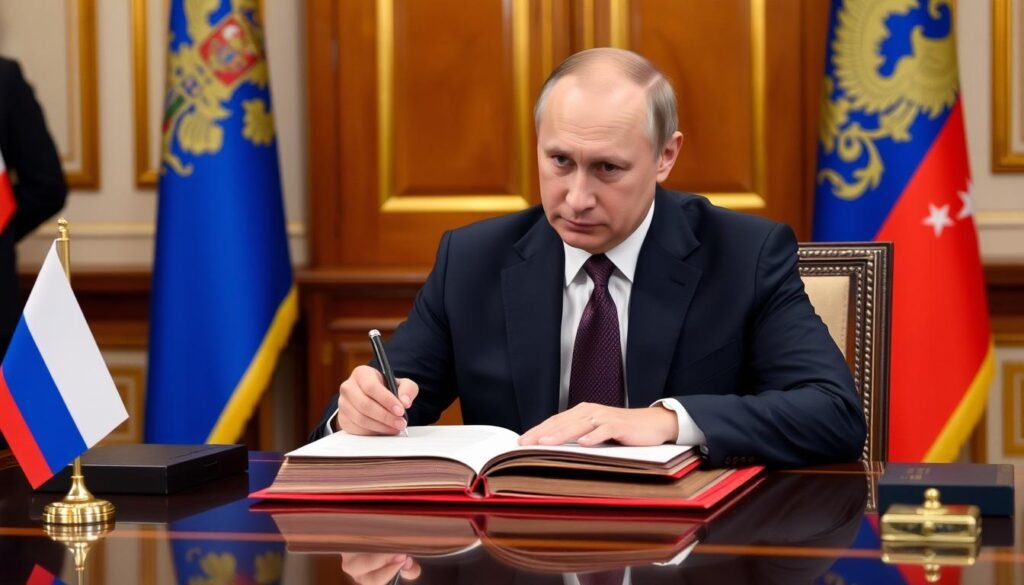
Putin signing constitutional amendments that extended his potential rule
Once in office, Putin moved systematically to centralize authority and eliminate potential challenges to his rule. His approach to consolidating power operated on multiple fronts simultaneously – constitutional, economic, media, and security.
Constitutional Restructuring
Putin implemented significant changes to Russia’s federal structure, reducing the autonomy of regional governors by making them presidential appointees rather than elected officials. He justified these reforms as necessary to strengthen the “vertical of power” and combat separatist tendencies that had threatened Russia’s territorial integrity during the 1990s.
When faced with constitutional term limits in 2008, Putin orchestrated a carefully managed transition where his loyal ally Dmitry Medvedev became president while Putin served as prime minister. This “tandem” arrangement preserved Putin’s influence while technically respecting constitutional requirements. Upon returning to the presidency in 2012, Putin secured amendments extending presidential terms from four to six years.
The most dramatic constitutional changes came in 2020, when sweeping amendments effectively reset Putin’s term count, potentially allowing him to remain in power until 2036. As political analyst Ekaterina Schulmann noted, “These changes transformed Russia’s political system from a super-presidential republic to a personalist regime centered entirely around Vladimir Putin.”
Media Control and Information Management
Headquarters of state-controlled media in Moscow
Control of information flow proved crucial to Putin’s consolidation of power. Within his first term, he moved against independent television networks, bringing them under state control through various legal and financial mechanisms. The takeover of NTV, previously owned by oligarch Vladimir Gusinsky, represented a watershed moment in this process.
By systematically restricting independent media voices, Putin created an information environment where most Russians received news filtered through a state-approved lens. This control extended to digital spaces as well, with legislation requiring social media platforms to store Russian user data on servers within the country and to remove content deemed illegal by authorities.
As media scholar Sarah Oates observed, “Putin didn’t simply censor the media; he transformed it into a sophisticated tool for shaping public opinion and delegitimizing opposition voices.” This approach proved particularly effective during periods of international tension, such as the 2014 annexation of Crimea, when state media presented a narrative starkly different from Western reporting.
Geopolitical Strategies: Chechnya, Georgia, and Crimea
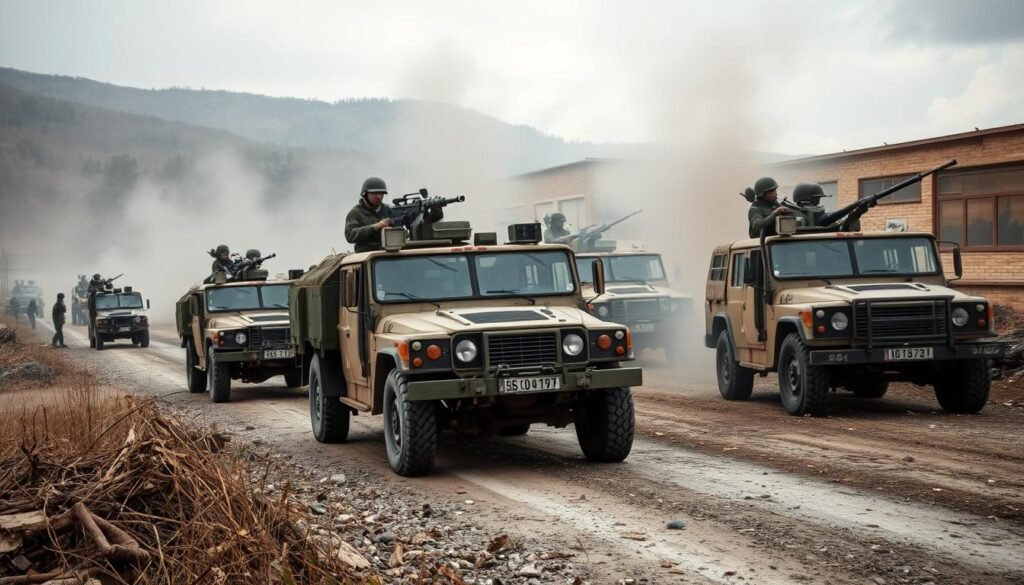
Russian military operations during the Second Chechen War
Vladimir Putin’s rise to power is inextricably linked to his handling of the Second Chechen War, which began shortly after his appointment as prime minister in 1999. Unlike the first conflict (1994-1996) that ended in a humiliating withdrawal of Russian forces, Putin’s approach was uncompromising. He framed the conflict not as a separatist movement but as a counter-terrorism operation, particularly after the apartment bombings that killed hundreds of Russian civilians.
The brutal military campaign in Chechnya established Putin’s image as a decisive leader willing to use force to protect Russian interests. Though criticized internationally for human rights abuses, the war’s perceived success in restoring Russian control over the breakaway republic resonated with a domestic audience tired of national humiliation.
The Georgia Conflict
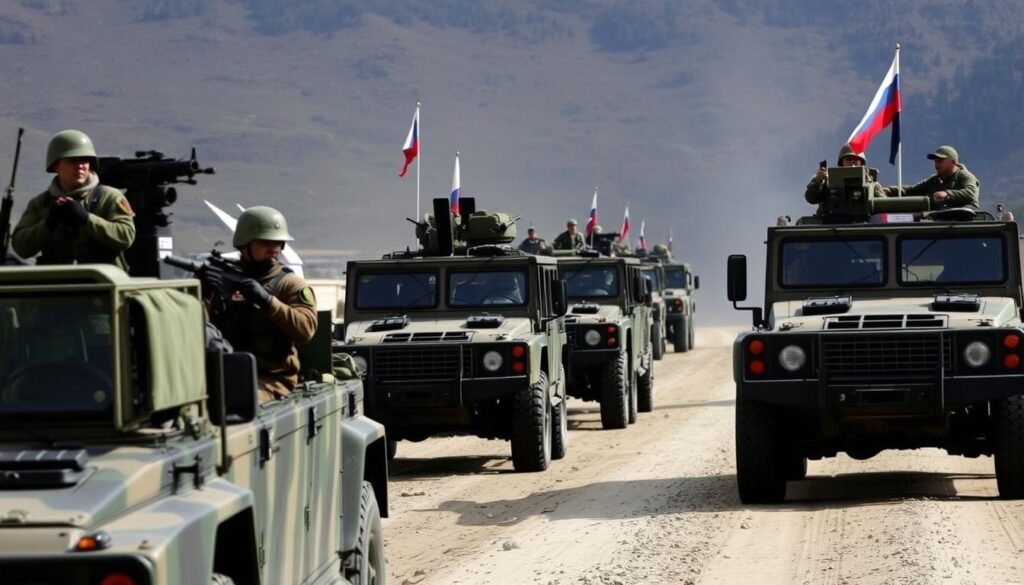
Russian forces in South Ossetia during the 2008 Russia-Georgia conflict
The 2008 Russia-Georgia war represented Putin’s first major military intervention beyond Russia’s borders. Though Medvedev was formally president at the time, Putin’s influence on the decision to intervene was widely acknowledged. The five-day conflict resulted in Russian recognition of the breakaway territories of South Ossetia and Abkhazia as independent states – effectively placing them under Moscow’s protection.
This brief but decisive conflict demonstrated Russia’s willingness to use military force to prevent former Soviet republics from moving too far into the Western orbit. It also revealed the limitations of Western support for countries in Russia’s “near abroad” – a lesson that would influence future events in Ukraine.
The Annexation of Crimea
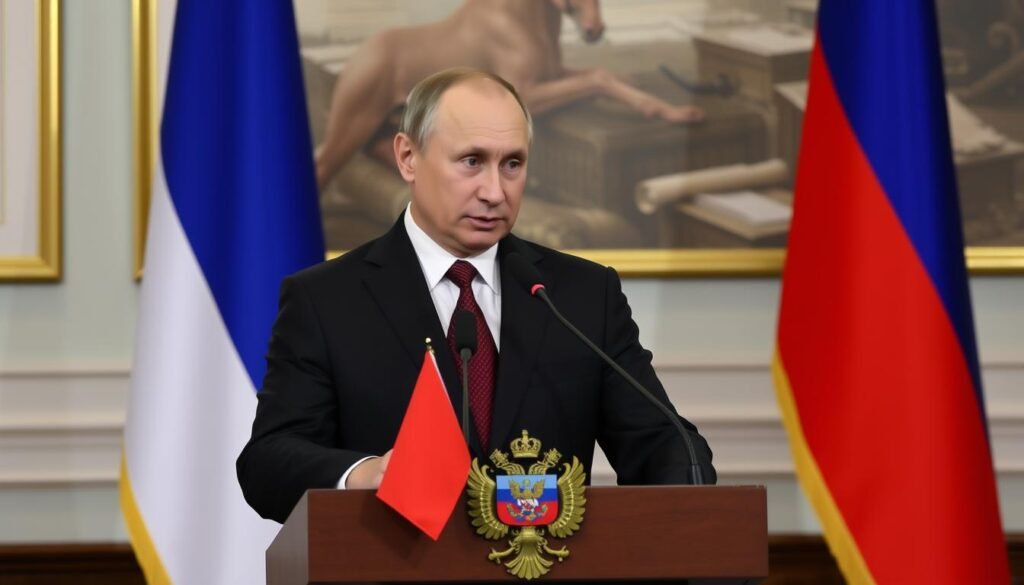
Putin announcing the annexation of Crimea in March 2014
The 2014 annexation of Crimea marked perhaps the most significant geopolitical move of Putin’s presidency. Following the ouster of pro-Russian Ukrainian President Viktor Yanukovych amid mass protests, Putin deployed “little green men” – unmarked Russian special forces – to secure key installations in Crimea. A hastily organized referendum, conducted under military occupation, led to Russia’s formal annexation of the peninsula.
This bold move, while triggering Western sanctions, generated enormous domestic popularity for Putin. As foreign policy expert Fyodor Lukyanov noted, “The annexation of Crimea represented the culmination of Putin’s project to restore Russia as a great power capable of defending its interests against Western pressure.”
Simultaneously, Russia supported separatist movements in eastern Ukraine’s Donbas region, creating a frozen conflict that effectively prevented Ukraine’s integration into Western institutions. These actions demonstrated Putin’s determination to maintain a sphere of influence in former Soviet territories and his willingness to pay economic costs to achieve geopolitical objectives.
Controversies: Opposition Treatment and Election Integrity
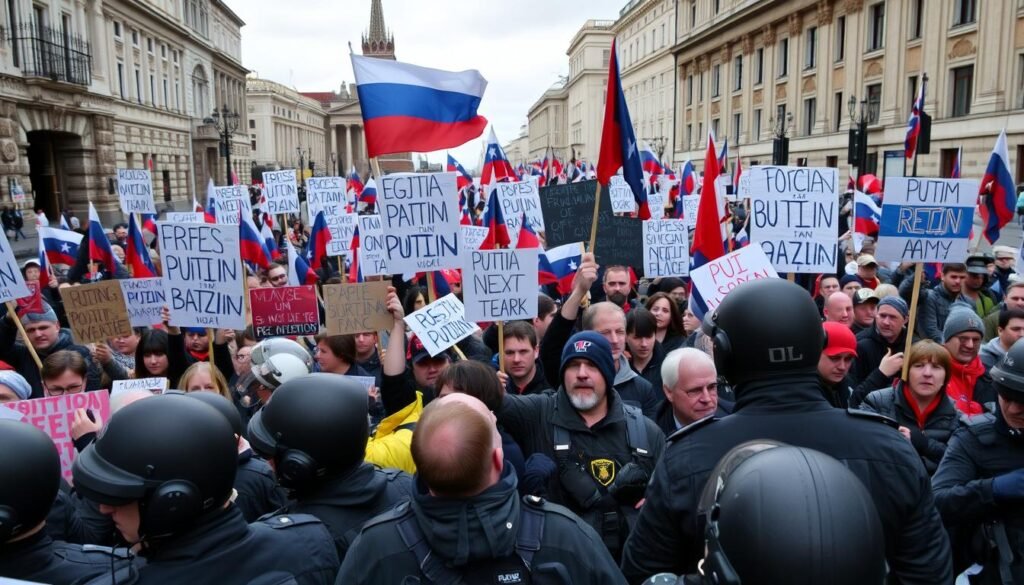
Opposition protests in Moscow against Putin’s government
Throughout Putin’s rule, his treatment of political opponents has drawn international criticism. High-profile cases include the imprisonment of oil tycoon Mikhail Khodorkovsky, who had funded opposition parties, and the suspicious deaths of journalists and critics like Anna Politkovskaya and Alexander Litvinenko.
More recently, the poisoning and subsequent imprisonment of opposition leader Alexei Navalny highlighted the risks faced by those who directly challenge Putin’s authority. Navalny’s Anti-Corruption Foundation had published investigations into alleged corruption among Putin’s inner circle, including claims of a lavish “palace” built for the president on the Black Sea coast.
“The system created by Putin doesn’t just discourage political competition – it criminalizes it. Opposition is treated not as a legitimate part of the democratic process but as a threat to national security.”
Election Integrity Questions
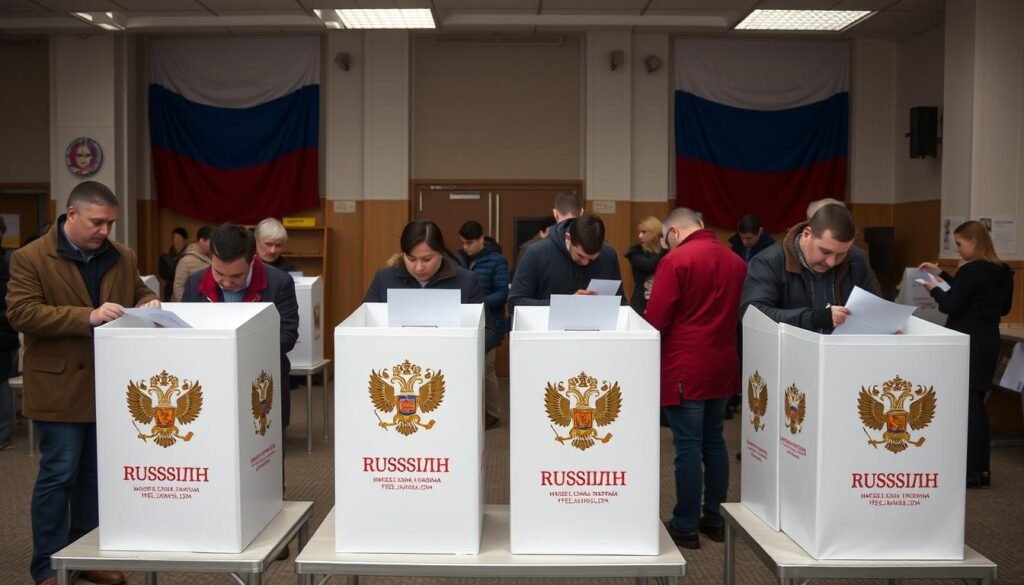
A polling station during Russian presidential elections
Elections under Putin’s rule have consistently delivered victories for him and his allies, but international observers have raised concerns about their fairness. The Organization for Security and Co-operation in Europe (OSCE) has documented issues including media bias, administrative pressure on voters, and ballot-stuffing in multiple Russian elections.
The 2018 presidential election, which Putin won with over 76% of the vote, featured the exclusion of his most prominent critic, Alexei Navalny, who was barred from running due to a criminal conviction widely seen as politically motivated. Similarly, the 2021 parliamentary elections delivered a constitutional majority for the pro-Putin United Russia party amid reports of irregularities.
These controversies highlight the tension between Putin’s formal adherence to democratic procedures and the substantive limitations on political competition in contemporary Russia. As political scientist Nikolai Petrov observed, “Russia maintains the outward forms of democracy while systematically emptying them of meaningful content.”
Comparisons to Soviet-Era Leadership
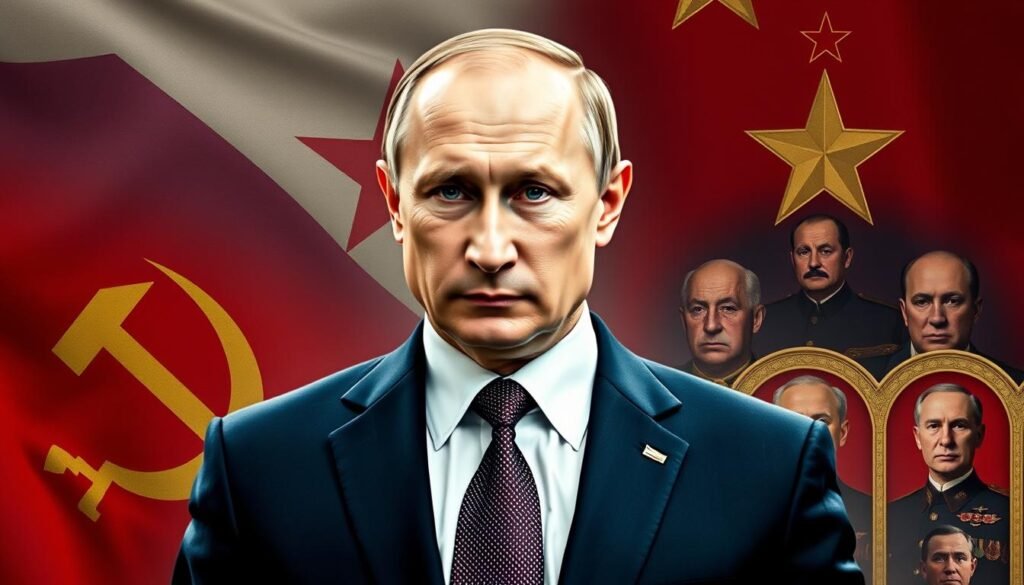
Putin’s leadership often draws comparisons to Soviet-era governance
Putin’s leadership style and governance model invite comparisons to Soviet-era leaders, though with important distinctions. Unlike Soviet communism’s ideological rigidity, Putin’s system is more pragmatic and adaptable, combining elements of market economics with authoritarian political control.
From the Soviet playbook, Putin has revived the centralization of power, state control of strategic industries, and the use of security services to maintain domestic order. He has also restored Soviet-era symbols and practices, from the revival of the Soviet national anthem (with new lyrics) to the resurrection of military parades in Red Square.
Soviet Parallels
- Centralized decision-making
- Personality cult elements
- Security service prominence
- State control of key media
- Great power foreign policy
Post-Soviet Innovations
- Market economy (with state direction)
- Formal democratic institutions
- Integration with global economy
- Religious and nationalist rhetoric
- Sophisticated information warfare
However, Putin has rejected the Soviet Union’s internationalist communist ideology in favor of Russian nationalism and traditional values. As historian Stephen Kotkin noted, “Putin is not trying to restore the Soviet Union; he’s trying to restore Russian greatness using whatever elements of the Soviet and pre-Soviet past serve his purposes.”
This selective approach to Soviet legacy reflects Putin’s pragmatism and his understanding that modern Russia cannot simply recreate the USSR. Instead, he has constructed a hybrid system that maintains authoritarian control while allowing sufficient economic freedom to avoid the stagnation that plagued the late Soviet period.
Impact of Western Sanctions
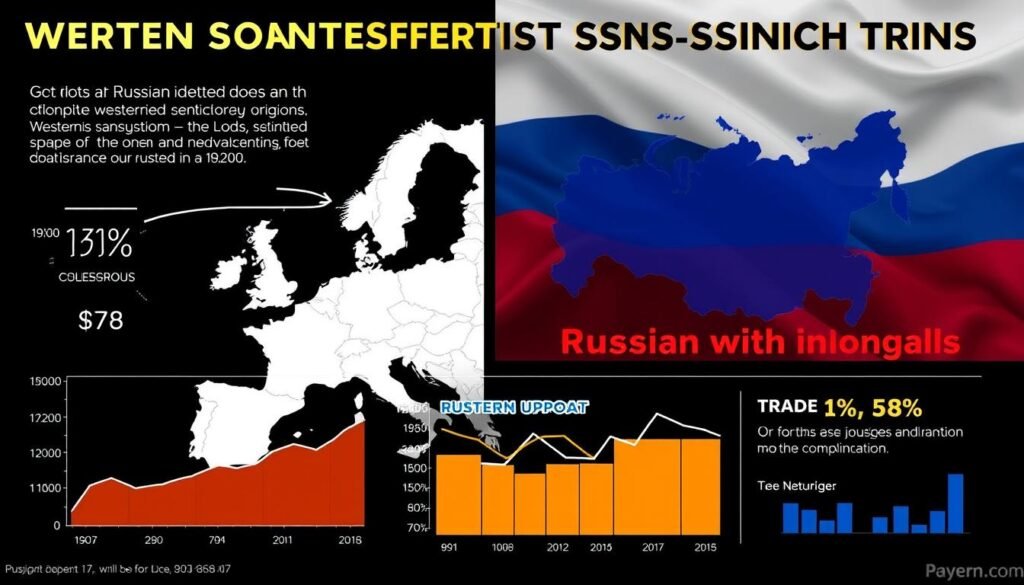
Economic indicators showing the impact of Western sanctions on Russia
Western sanctions imposed on Russia following the 2014 annexation of Crimea represented a significant challenge to Putin’s economic model. These measures targeted key individuals in Putin’s inner circle, restricted access to Western capital markets, and limited technology transfer in strategic sectors like energy and defense.
The immediate economic impact was substantial – the ruble lost nearly half its value against the dollar, inflation spiked, and Russia entered a recession. However, Putin’s government responded with a series of countermeasures that demonstrated resilience:
- Import substitution policies to reduce dependence on Western goods
- Pivot toward Asian markets, particularly China
- Accumulation of substantial foreign currency reserves
- Development of domestic payment systems to bypass SWIFT
- Increased state support for strategic industries
Adaptation Strategies
- Reduced access to Western technology and investment
- Higher costs for capital and imported components
- Stagnant living standards for average Russians
- Increased economic dependence on China
- Continued vulnerability to energy price fluctuations
Persistent Challenges
Economically, sanctions accelerated Russia’s turn toward state capitalism, with the government taking a more direct role in managing strategic sectors. While this approach helped stabilize the immediate crisis, it has not addressed fundamental structural weaknesses in the Russian economy, including over-reliance on natural resource exports and insufficient innovation.
Politically, sanctions may have strengthened Putin domestically by enabling him to frame Russia’s economic challenges as the result of Western hostility rather than policy failures. As economist Sergei Guriev observed, “Sanctions gave Putin a convenient external enemy to blame for economic problems while rallying nationalist sentiment around the flag.”
Legacy in Shaping Modern Russia’s Global Position
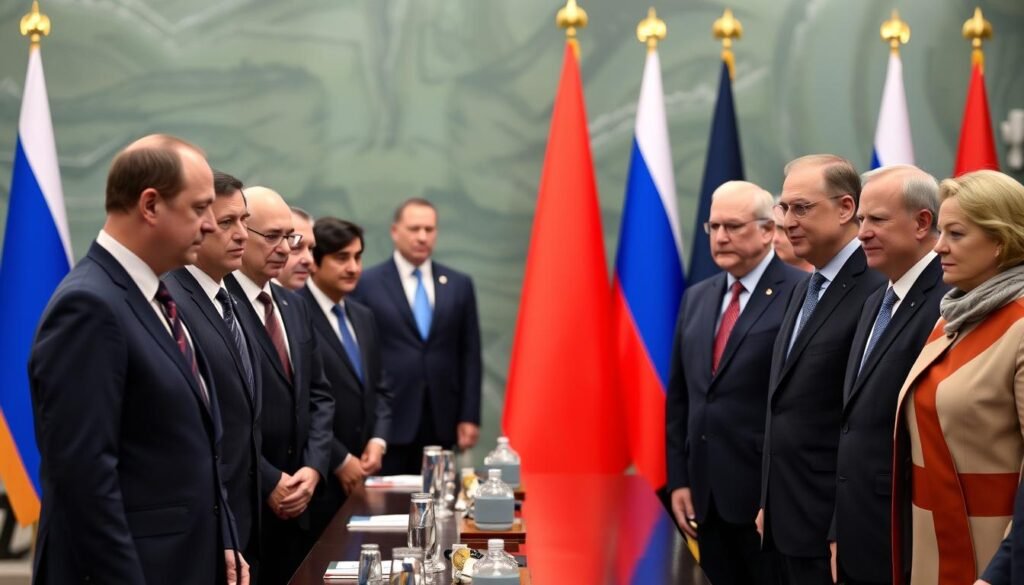
Putin among world leaders at an international summit
After more than two decades in power, Vladimir Putin has fundamentally reshaped Russia’s position in the international system. From the weakness and chaos of the 1990s, he has restored Russia as an assertive global actor willing to challenge Western dominance and defend what it perceives as its legitimate interests.
Putin’s legacy includes the reassertion of Russian influence in its “near abroad” – the former Soviet republics that Moscow considers its natural sphere of influence. Through military intervention, energy diplomacy, and political pressure, Putin has demonstrated Russia’s determination to remain the dominant power in this region despite NATO and EU expansion.
Beyond the post-Soviet space, Putin has reestablished Russia as a significant player in regions where Soviet influence once prevailed, particularly the Middle East. Russia’s military intervention in Syria from 2015 saved the Assad regime from collapse and secured a permanent Russian military presence in the eastern Mediterranean.
“Putin has transformed Russia from a supplicant seeking Western acceptance to a revisionist power challenging the post-Cold War order. Whether one views this as restoration or regression depends entirely on one’s perspective.”
Domestically, Putin’s legacy is more complex. He has delivered stability and modest prosperity compared to the tumultuous 1990s, but at the cost of democratic development and political pluralism. The system he has constructed remains highly personalized, raising questions about its sustainability beyond his eventual departure from power.
Perhaps most significantly, Putin has altered Russians’ understanding of their country’s place in the world. By emphasizing sovereignty, traditional values, and great power status, he has articulated a vision of Russia as a distinct civilization rather than a aspiring Western democracy – a fundamental reorientation with profound implications for Russia’s future trajectory.
Conclusion: The Architect of Modern Russia
Vladimir Putin’s rise to power represents one of the most consequential political journeys of the post-Cold War era. From obscure intelligence officer to long-serving president, his career has coincided with – and largely directed – Russia’s transformation from post-Soviet chaos to authoritarian stability.
Putin’s leadership model, combining elements of Soviet-style control with market economics and nationalist rhetoric, has proven remarkably durable despite economic sanctions, international isolation, and periodic domestic challenges. His ability to maintain popular support while systematically constraining political opposition demonstrates both his political skill and the effectiveness of the system he has constructed.
As Russia continues to assert itself on the global stage, understanding Putin’s rise to power provides essential context for interpreting current events and anticipating future developments. Whether viewed as restorer of Russian greatness or obstacle to democratic development, Vladimir Putin has undeniably shaped not only his country’s trajectory but also the contours of 21st-century geopolitics.
Stay Informed on Global Geopolitics
Subscribe to our newsletter for expert analysis on Russia, Eastern Europe, and evolving global power dynamics.