Johnny Depp – The Pirate and the Paradox
The wind whips through his hair as he sways unsteadily on the mast of the Black Pearl, gold teeth glinting in the Caribbean sun. With a flick of his wrist and a slurred declaration, Captain Jack Sparrow stumbles into cinema history – and Johnny Depp’s career is forever transformed. This singular performance, equal parts calculated brilliance and chaotic improvisation, perfectly encapsulates the fascinating contradictions that define one of Hollywood’s most enigmatic stars. A character actor trapped in a leading man’s body, an artistic rebel who conquered the box office, a private soul thrust into public scrutiny – Johnny Depp embodies the ultimate Hollywood paradox.
Before the Black Pearl: Depp’s Artistic Beginnings
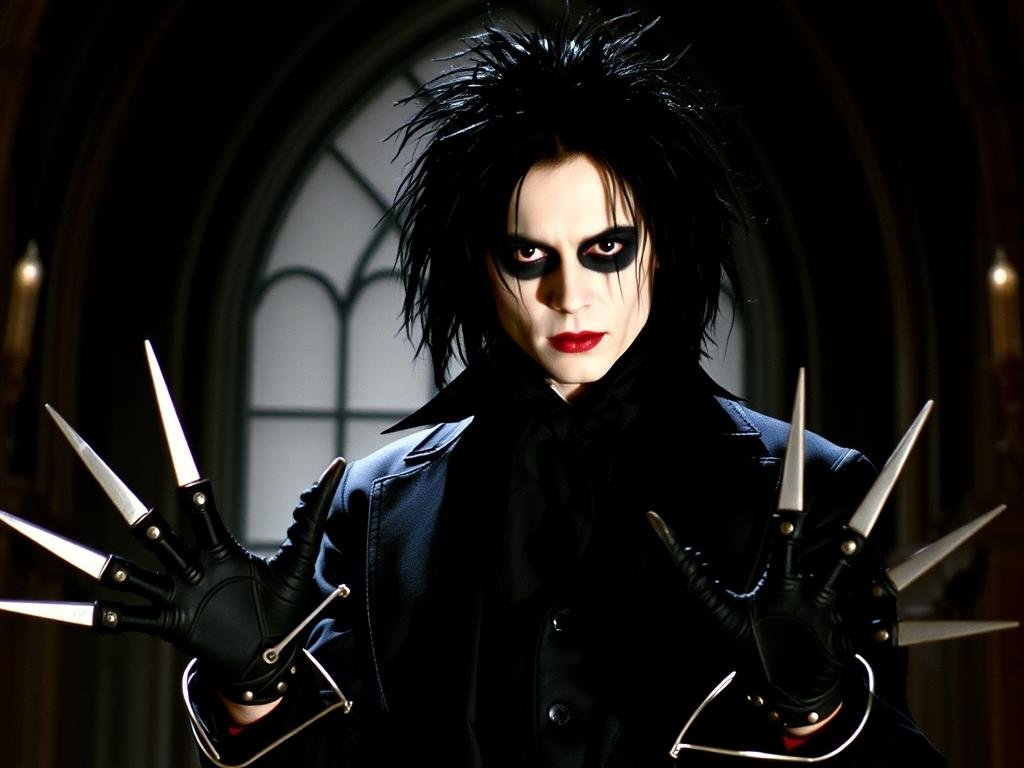
Depp’s portrayal of Edward Scissorhands (1990) established his reputation for eccentric character work
Long before he donned a pirate’s bandana, Johnny Depp was Hollywood’s beloved outsider. After an accidental entry into acting through a Nicolas Cage connection and a brief stint in Wes Craven’s “A Nightmare on Elm Street” (1984), Depp found himself reluctantly thrust into teen idol status via the television series “21 Jump Street.” It was a role that gave him visibility but left him feeling, as he once described, “forced into the role of product.”
This early tension between commercial appeal and artistic integrity would become the defining struggle of Depp’s career. Rather than capitalize on his heartthrob status, Depp made the unusual choice to actively dismantle it. Film critic Roger Ebert noted, “Depp has always made choices that surprise and challenge him as an actor rather than choices that might make him more commercially bankable.”
His collaboration with director Tim Burton began with “Edward Scissorhands” (1990), creating a character that was both visually striking and emotionally vulnerable. This partnership would yield eight films over two decades, with Depp consistently transforming himself into Burton’s gallery of misunderstood outsiders and eccentric dreamers.

In “What’s Eating Gilbert Grape” (1993), Depp showcased his dramatic range beyond eccentric characters
Throughout the 1990s, Depp cultivated a filmography that defied easy categorization. From the tender “Benny & Joon” (1993) to the surrealist “Arizona Dream” (1993), from the nuanced “What’s Eating Gilbert Grape” (1993) to the transgressive “Fear and Loathing in Las Vegas” (1998), Depp consistently chose roles that expanded his artistic range while limiting his commercial appeal.
Explore Depp’s Pre-Pirates Filmography
Discover the eclectic roles that established Johnny Depp as one of Hollywood’s most versatile actors before his blockbuster breakthrough.
The Birth of a Pirate Legend
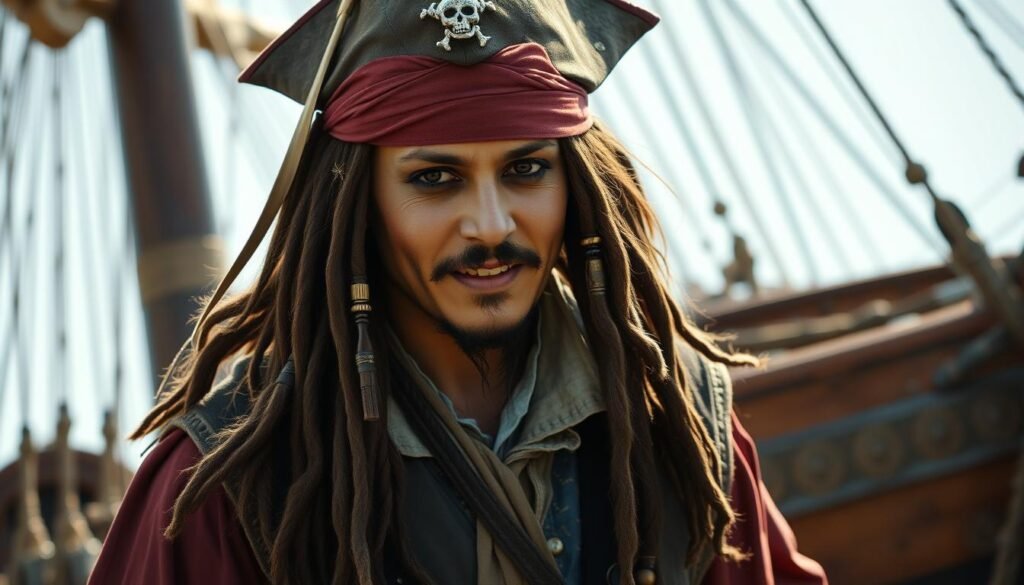
Depp’s portrayal of Captain Jack Sparrow redefined his career and created a cultural phenomenon
In 2003, the trajectory of Johnny Depp’s career changed forever with the release of “Pirates of the Caribbean: The Curse of the Black Pearl.” What could have been a forgettable theme park ride adaptation instead became a cultural phenomenon, largely due to Depp’s revolutionary approach to the character of Captain Jack Sparrow.
Studio executives were initially bewildered by Depp’s interpretation. His slurred speech, flamboyant gestures, and gender-fluid mannerisms were far from the traditional swashbuckling hero they had envisioned. Depp later revealed that he had based the character on a combination of Keith Richards and Pepé Le Pew, creating something entirely unexpected in the action-adventure genre.
“I think it was Michael Eisner, the head of Disney at the time, who was quoted as saying, ‘He’s ruining the movie.’ Upper-echelon Disney-ites were going, ‘What’s wrong with him? Is he drunk? Is he gay?'”
The risk paid off spectacularly. Audiences were captivated by Sparrow’s unpredictable charm, and critics praised Depp’s bold performance. The role earned him his first Academy Award nomination for Best Actor, a remarkable achievement for a performance in a summer blockbuster based on a theme park attraction.
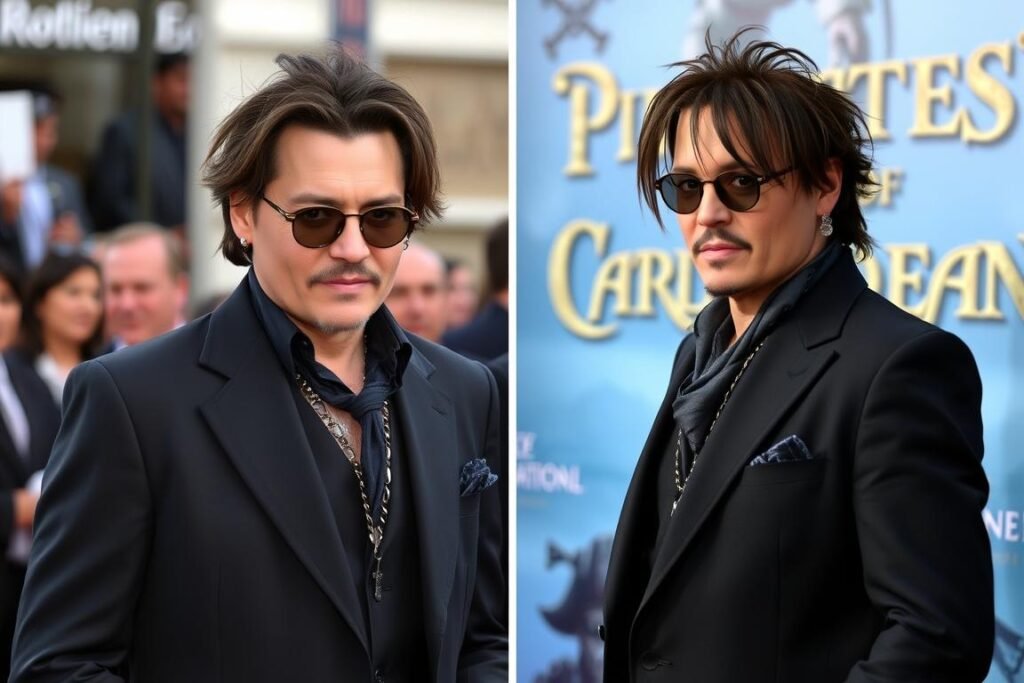
The success of Pirates of the Caribbean transformed Depp from cult favorite to global superstar
Captain Jack Sparrow became more than just a character – he became a cultural icon. Children dressed as him for Halloween, theme park visitors lined up to meet him, and his catchphrases entered the popular lexicon. The film spawned four sequels, with the franchise grossing over $4.5 billion worldwide. For an actor who had spent a decade deliberately avoiding mainstream success, Depp suddenly found himself at the center of a global franchise.
The Sparrow Effect
The success of Captain Jack Sparrow fundamentally altered how Hollywood viewed Johnny Depp. No longer just a critical darling with cult appeal, he was now a bankable star who could carry major franchises. His salary skyrocketed, and by 2012, he was listed by the Guinness World Records as the world’s highest-paid actor, with earnings of $75 million.
More significantly, the role created a template that would define much of Depp’s subsequent work: the eccentric outsider whose strange behavior masks deeper wisdom or pain. This archetype would reappear in various forms throughout his later career, from Willy Wonka to the Mad Hatter.
Cultural Impact
Few characters in modern cinema have had the cultural staying power of Captain Jack Sparrow. The role transformed Depp from a respected character actor into a global superstar, while simultaneously allowing him to maintain his artistic credibility through the sheer originality of his performance.
Film historian Leonard Maltin observed, “What makes Depp’s achievement so remarkable is that he created a genuinely weird, subversive character within the framework of a mainstream Disney franchise. It’s a balancing act few actors could pull off.”
Experience the Pirate Saga
Revisit the swashbuckling adventure that transformed Johnny Depp into a global superstar and created one of cinema’s most beloved characters.
After the Black Pearl: The Blockbuster Years
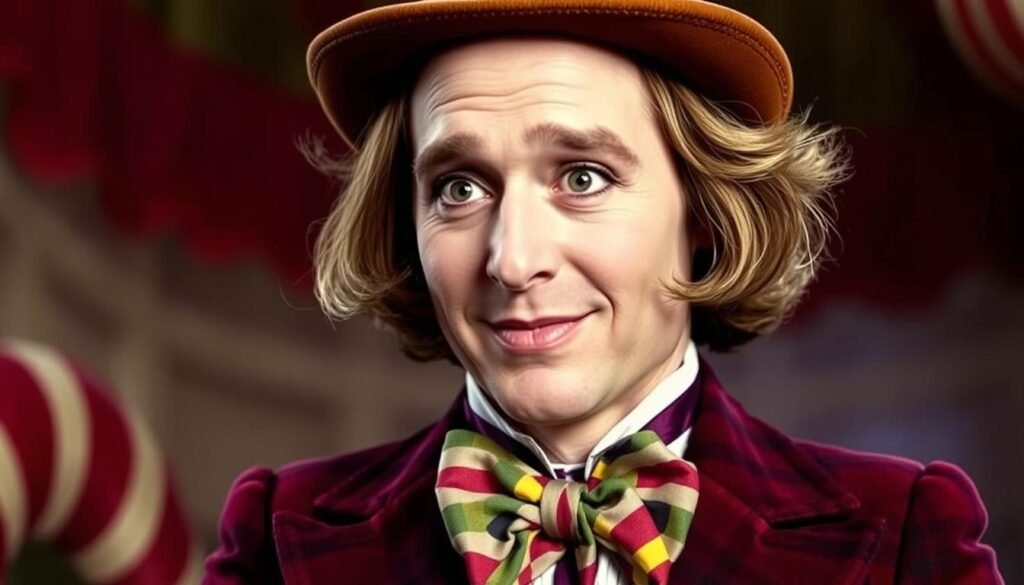
As Willy Wonka in “Charlie and the Chocolate Factory” (2005), Depp continued his pattern of transformative character work
The success of Pirates of the Caribbean ushered in a new phase of Depp’s career – one marked by bigger budgets, wider audiences, and increasingly extreme character transformations. His collaboration with Tim Burton continued with “Charlie and the Chocolate Factory” (2005), where his unsettling take on Willy Wonka divided critics but delighted audiences.
This period saw Depp balancing his newfound commercial appeal with continued artistic risk-taking. For every blockbuster like “Alice in Wonderland” (2010), which grossed over $1 billion worldwide despite mixed reviews, there were more challenging projects like “Sweeney Todd: The Demon Barber of Fleet Street” (2007), which showcased previously unseen talents as Depp performed his own singing for the role.
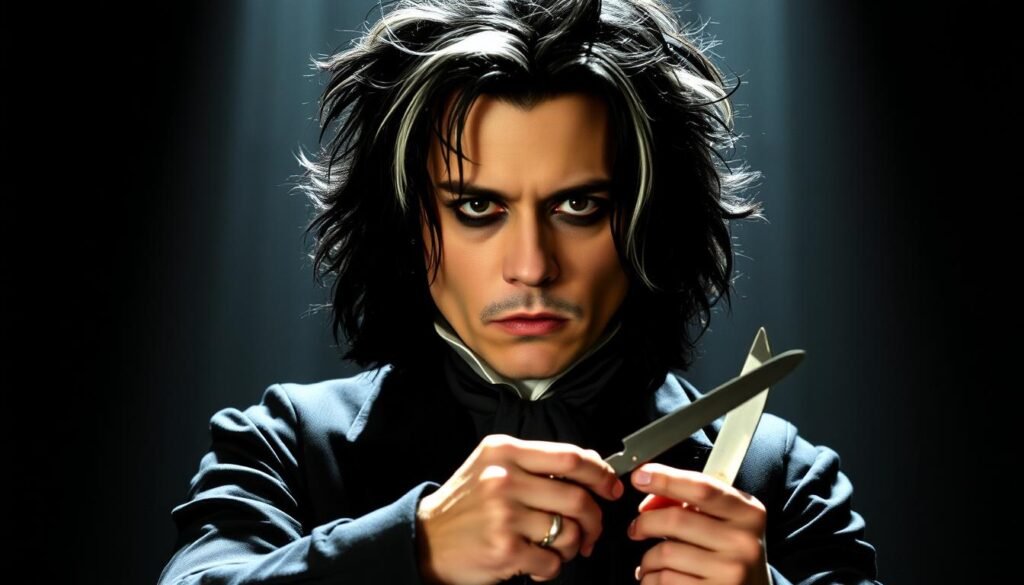
Depp won a Golden Globe for his performance in “Sweeney Todd: The Demon Barber of Fleet Street” (2007)
His performance as Sweeney Todd earned him a Golden Globe Award and another Academy Award nomination, proving that commercial success hadn’t diminished his ability to deliver critically acclaimed performances. Entertainment Weekly’s Chris Nashawaty noted, “Depp’s soaring voice makes you wonder what other tricks he’s been hiding.”
Yet as the 2010s progressed, a pattern emerged in Depp’s work that suggested diminishing returns on his established formula. Films like “Dark Shadows” (2012), “The Lone Ranger” (2013), and “Alice Through the Looking Glass” (2016) relied heavily on elaborate makeup and eccentric characterizations but failed to connect with audiences or critics in the way his earlier work had.
The Burton Partnership
Depp’s collaboration with Tim Burton yielded eight films over two decades, creating a body of work that defined both of their careers. From Edward Scissorhands to the Mad Hatter, these partnerships allowed Depp to explore the outsider characters that became his specialty.
Musical Ventures
Beyond acting, Depp maintained his musical roots throughout his career. He performed with rock bands, played guitar on film soundtracks, and eventually formed the supergroup Hollywood Vampires with Alice Cooper and Joe Perry in 2015.
Production Company
In 2004, Depp founded his production company, Infinitum Nihil, to develop projects where he would serve as actor or producer. The company’s first two film releases were “The Rum Diary” (2011) and “Hugo” (2011).
Discover Depp’s Musical Side
Beyond his acting career, Johnny Depp has maintained a lifelong passion for music, culminating in his work with the supergroup Hollywood Vampires.
The Paradox: Contradictions in Depp’s Career and Persona
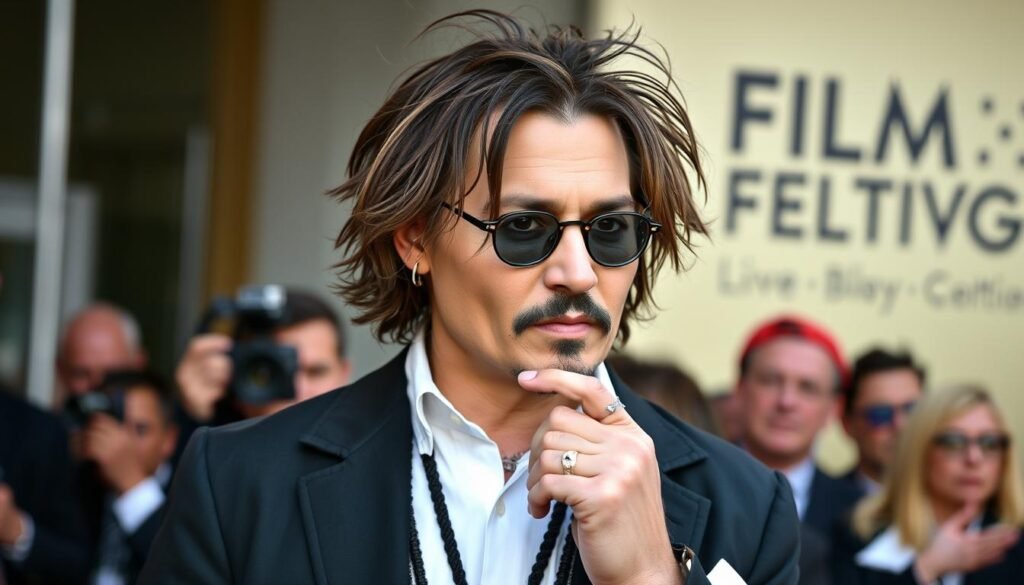
Throughout his career, Depp has balanced mainstream appeal with artistic credibility
The career of Johnny Depp is defined by contradictions that make him one of Hollywood’s most fascinating figures. These paradoxes extend beyond his filmography into his public persona, creating a complex legacy that defies simple categorization.
The Artist
- Character actor who transforms completely for roles
- Collaborator with auteur directors like Tim Burton and Jim Jarmusch
- Risk-taker who chooses unusual projects
- Critical darling with multiple award nominations
- Musician who maintains artistic pursuits outside of acting
The Star
- Box office draw who led a multi-billion dollar franchise
- Celebrity whose personal life became tabloid fodder
- Fashion icon twice named “Sexiest Man Alive”
- Commercial brand ambassador for luxury products
- Highest-paid actor who commanded $20 million per film
The Artistic Rebel vs. The Commercial Success
Perhaps the most striking paradox in Depp’s career is how an actor who deliberately avoided mainstream success for the first decade of his career became one of Hollywood’s most bankable stars. Film scholar Anne Everett described Depp’s 1990s persona as “anti-macho” and “gender-bending,” noting how he consistently chose roles that obscured his natural good looks and challenged conventional masculinity.
Yet by the mid-2000s, Depp had become the face of a Disney franchise, the star of family-friendly blockbusters, and a global celebrity whose image adorned merchandise from lunch boxes to theme park attractions. This transition occurred without Depp seemingly compromising his artistic approach – he simply brought his eccentric sensibilities to larger canvases with bigger budgets.
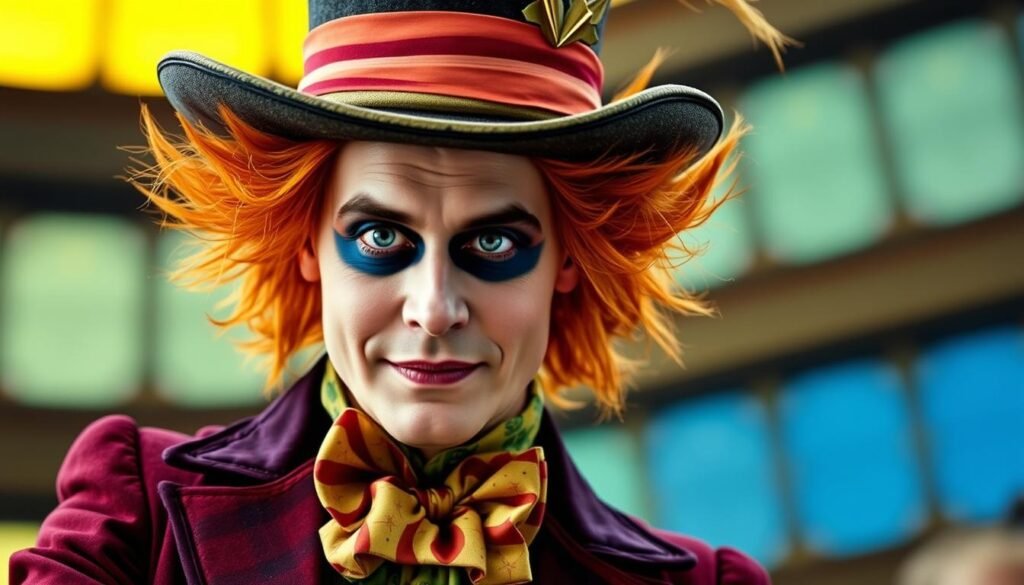
As the Mad Hatter in “Alice in Wonderland” (2010), Depp continued pushing boundaries in mainstream films
The Private Man vs. The Public Figure
Another contradiction lies in Depp’s relationship with fame. Despite being one of the world’s most recognizable actors, he has consistently expressed discomfort with celebrity culture. He once described fame as “living like a fugitive,” yet his high-profile relationships and lavish lifestyle kept him firmly in the public eye.
This tension became particularly acute during his highly publicized legal battles with ex-wife Amber Heard, which forced intensely private matters into the public domain. The trials, which included allegations of domestic abuse from both parties, revealed aspects of Depp’s personal life that contrasted sharply with his carefully cultivated public image.
“I don’t want to be a product. I am not a product. I’m a human being. I’m not a Coca-Cola. I’m not a box of cereal. I’m not a car. I’m a human being.”
The Character and The Caricature
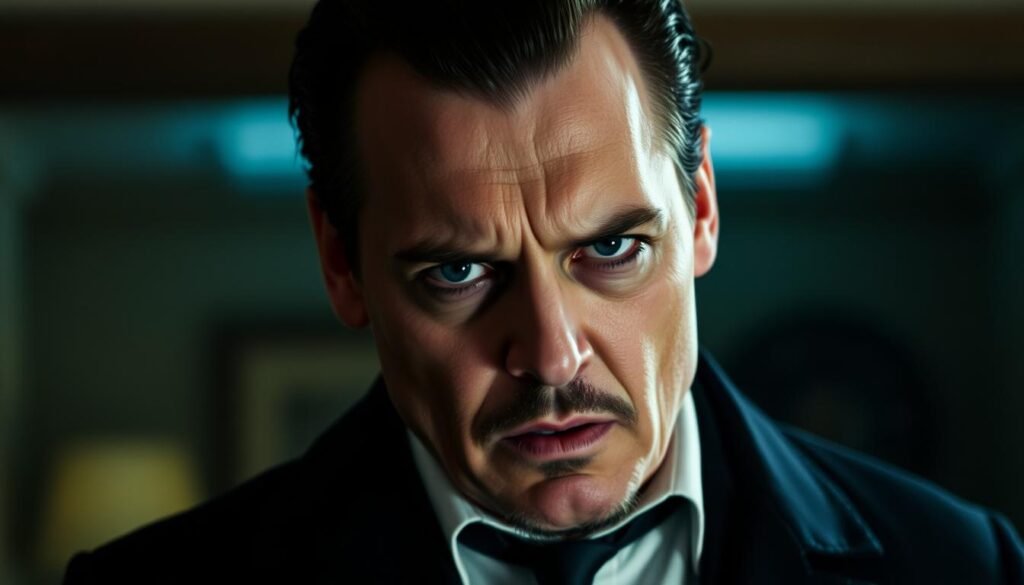
In “Black Mass” (2015), Depp demonstrated his continued ability to disappear into dramatic roles
As Depp’s career progressed, critics began to question whether his transformative approach to character work had become formulaic. What once seemed revolutionary – his complete physical and vocal transformation for roles – began to appear repetitive in films like “Mortdecai” (2015) and “Alice Through the Looking Glass” (2016).
Yet just as this narrative was taking hold, Depp delivered one of his most acclaimed performances in years as Boston gangster Whitey Bulger in “Black Mass” (2015). Critics from The Hollywood Reporter and Variety called it one of his best performances, demonstrating that beneath the sometimes excessive makeup and mannerisms remained a genuinely gifted actor.
Explore Depp’s Most Transformative Roles
From Edward Scissorhands to Whitey Bulger, discover the performances that showcase Johnny Depp’s remarkable range as an actor.
The Essential Johnny Depp: Films That Define the Paradox
To truly understand the paradoxical nature of Johnny Depp’s career, one must experience the films that best exemplify his unique artistic journey. The following selections represent key moments in his evolution from cult favorite to global star and back again.
| Film | Year | Director | Character | Significance |
| Edward Scissorhands | 1990 | Tim Burton | Edward | First Burton collaboration; established Depp’s outsider persona |
| What’s Eating Gilbert Grape | 1993 | Lasse Hallström | Gilbert Grape | Showcased dramatic depth beyond eccentric characters |
| Ed Wood | 1994 | Tim Burton | Ed Wood | Critical acclaim; Golden Globe nomination |
| Donnie Brasco | 1997 | Mike Newell | Joseph D. Pistone/Donnie Brasco | Proved ability in mainstream dramatic roles |
| Pirates of the Caribbean: The Curse of the Black Pearl | 2003 | Gore Verbinski | Captain Jack Sparrow | Career-defining role; Oscar nomination; global stardom |
| Finding Neverland | 2004 | Marc Forster | J.M. Barrie | Oscar nomination; showed restraint amid growing eccentricity |
| Sweeney Todd | 2007 | Tim Burton | Sweeney Todd | Golden Globe win; revealed singing abilities |
| Black Mass | 2015 | Scott Cooper | Whitey Bulger | Critical comeback after commercial disappointments |
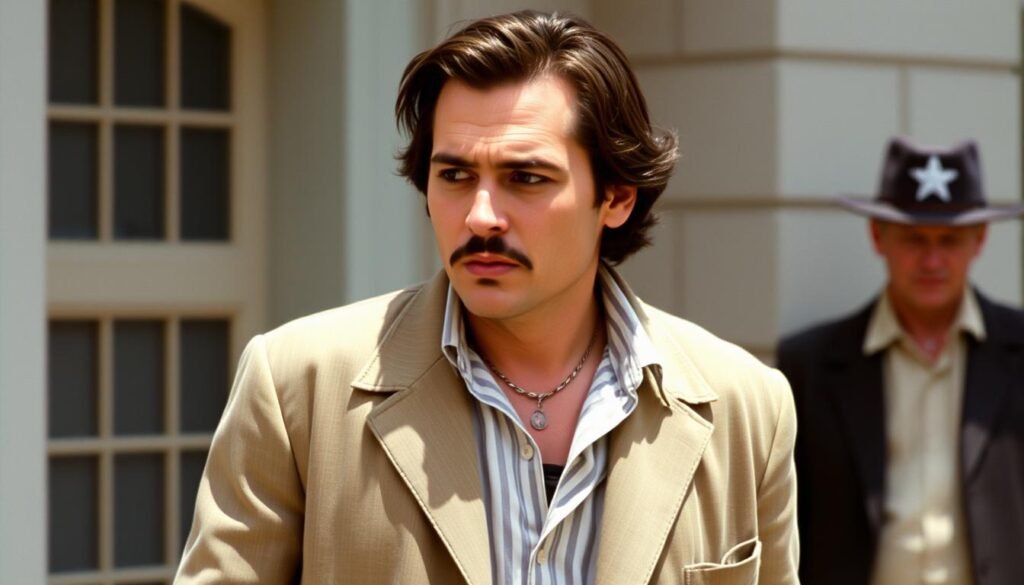
In “Donnie Brasco” (1997), Depp demonstrated his range in a grounded dramatic role
What makes Johnny Depp’s approach to acting unique?
Depp’s approach is distinguished by his complete physical and psychological transformation for each role. Unlike many leading men who maintain a consistent persona across films, Depp disappears into his characters, often making himself unrecognizable through makeup, mannerisms, and vocal changes. He’s known for extensive research and finding unusual inspirations for his characters – from Keith Richards for Jack Sparrow to silent film stars for Benny & Joon. This transformative approach allows him to move between genres and character types with remarkable versatility.
How did Pirates of the Caribbean change Depp’s career trajectory?
Pirates of the Caribbean fundamentally altered Depp’s career in several ways. Financially, it transformed him from a respected character actor into one of Hollywood’s highest-paid stars. Artistically, it proved that his eccentric approach to character could work within a mainstream blockbuster framework. Culturally, it created an iconic character that transcended the films themselves. Perhaps most significantly, it changed how studios viewed Depp – suddenly, his unusual characterizations were seen as commercially viable rather than merely critically interesting.
What is Johnny Depp’s legacy in Hollywood?
Depp’s legacy is multifaceted and still evolving. He demonstrated that character actors could become leading men without compromising their artistic approach. He expanded the possibilities for male performance in mainstream cinema, bringing elements of gender fluidity and eccentricity to blockbuster films. His collaborations with directors like Tim Burton created a body of work that influenced visual style and character development across the industry. Despite later career controversies, his performances – particularly as Captain Jack Sparrow – have secured a permanent place in cinema history and popular culture.
Watch Johnny Depp’s Evolution
Experience the full range of Johnny Depp’s remarkable career with this curated collection of his most significant films.
The Enduring Legacy: What Johnny Depp Means to Cinema
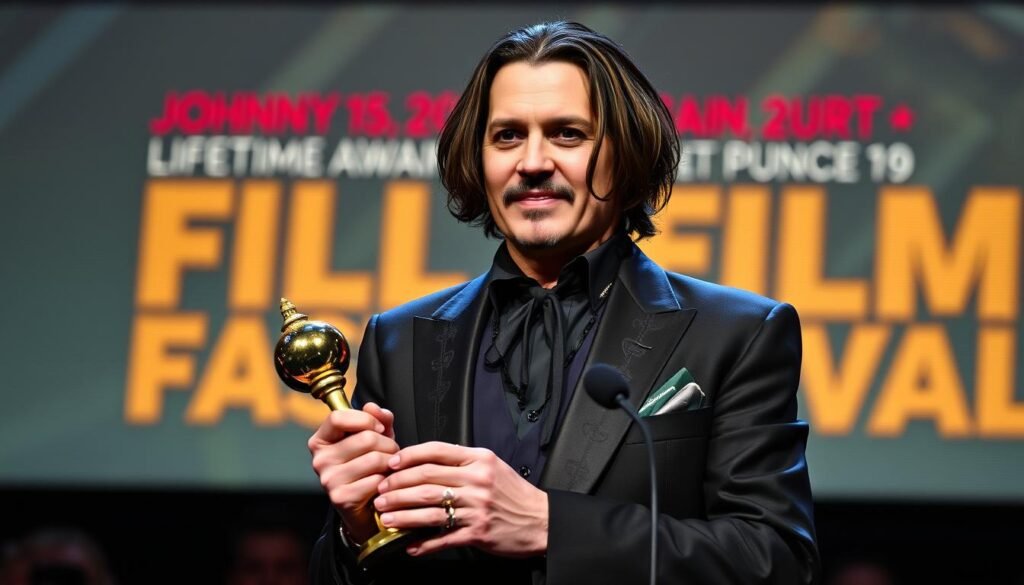
Despite career controversies, Depp’s artistic contributions have been recognized with numerous awards
Beyond the box office numbers and the tabloid headlines lies the true significance of Johnny Depp’s contribution to cinema. His willingness to take risks, his dedication to character transformation, and his ability to bring genuine artistry to commercial entertainment have left an indelible mark on the film industry.
Redefining the Leading Man
Perhaps Depp’s most significant contribution has been expanding the definition of what a Hollywood leading man can be. In an industry often dominated by conventional masculinity, Depp brought sensitivity, vulnerability, and fluidity to his performances. Film critic Hadley Freeman noted that Depp represented “a different kind of masculinity: desirable but gentle, manly but girlish.”
This approach created space for a more diverse range of male performances in mainstream cinema. Actors like Robert Pattinson, Timothée Chalamet, and Ezra Miller have followed in Depp’s footsteps, bringing complexity and vulnerability to their roles in ways that might not have been commercially viable before Depp proved it could work.
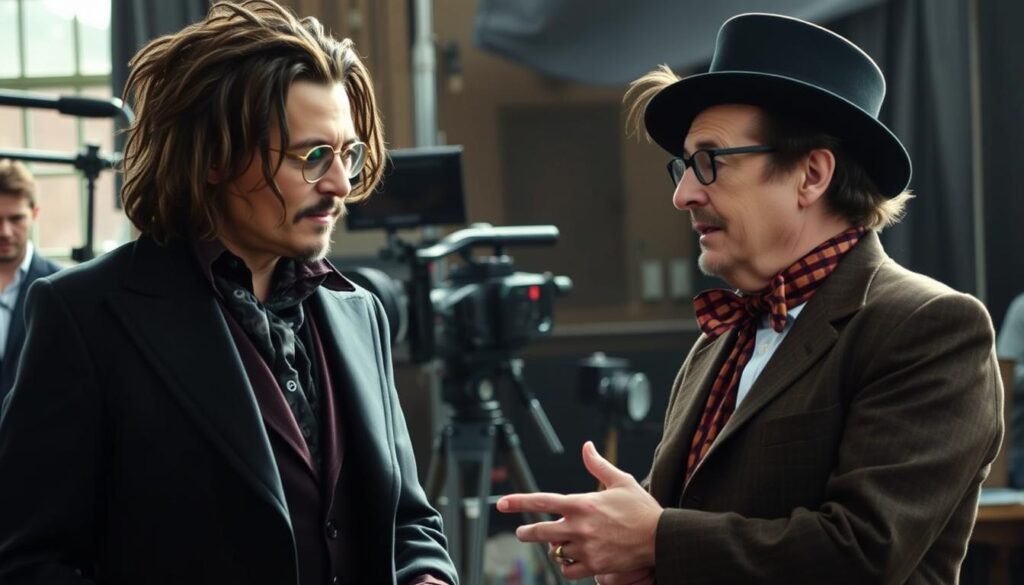
Depp’s creative partnership with Tim Burton produced some of cinema’s most visually distinctive characters
The Actor as Collaborator
Throughout his career, Depp has emphasized the collaborative nature of filmmaking. His long-standing partnerships with directors like Tim Burton and Gore Verbinski have produced bodies of work with distinctive visual and thematic coherence. Rather than simply serving a director’s vision, Depp actively contributed to character development, often bringing unexpected elements that transformed the original conception.
This collaborative approach extended beyond directors to his fellow actors. Many of Depp’s co-stars have spoken about his generosity on set and his ability to elevate everyone’s performances through his commitment and creativity.
The Price of Paradox
The contradictions that make Depp such a fascinating figure have not come without cost. The tension between artistic integrity and commercial appeal, between private person and public persona, has created fractures that have sometimes threatened to overshadow his work.
His later career has been marked by diminishing returns on his established formula, with critics suggesting that what once seemed revolutionary had become routine. Legal battles and personal controversies further complicated his legacy, creating a narrative that sometimes obscured the artistic achievements that defined his earlier career.

In “Minamata” (2020), Depp demonstrated his continued commitment to transformative character work
Yet even as the narrative around Depp has become more complex, his influence on cinema remains undeniable. The characters he created – from Edward Scissorhands to Captain Jack Sparrow, from Ed Wood to Sweeney Todd – have become part of our cultural vocabulary, transcending the films that contained them to become touchstones in the popular imagination.
Explore Johnny Depp’s Artistic Journey
Discover the full scope of Johnny Depp’s remarkable career through interviews, behind-the-scenes features, and critical analysis.
The Pirate and the Paradox: Depp’s Place in Hollywood History
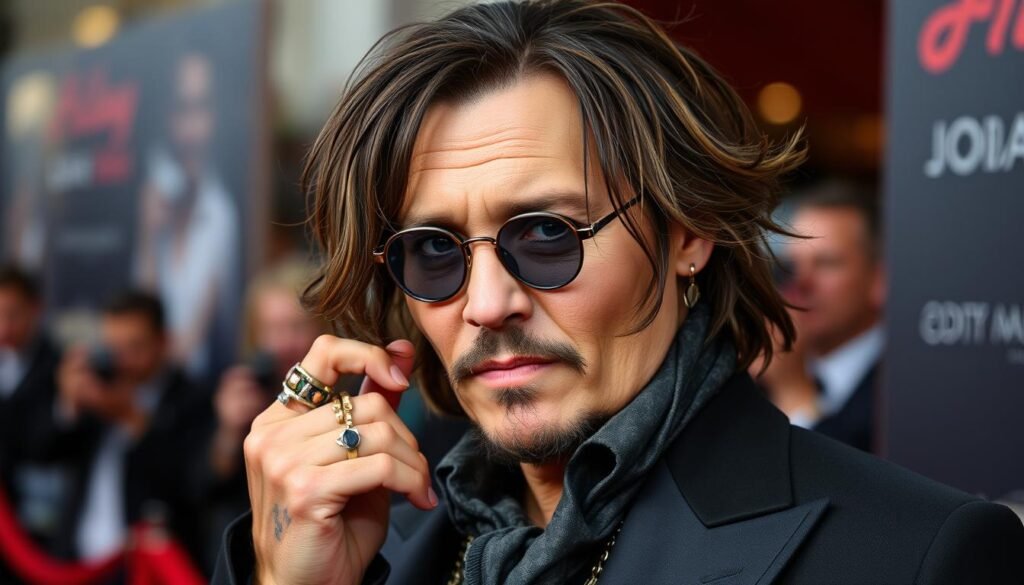
Johnny Depp continues to embody the paradox of artistic integrity and commercial appeal
Johnny Depp’s career serves as a perfect lens through which to view the contradictions at the heart of Hollywood itself. The tension between art and commerce, between personal expression and public consumption, between authenticity and artifice – these are the paradoxes that define not just Depp’s career but the entire entertainment industry.
What makes Depp unique is not that he embodies these contradictions, but that he has made them visible through his work. By deliberately choosing roles that challenge expectations, by bringing artistic sensibilities to commercial projects, and by maintaining his distinctive approach even as the industry around him changed, he has created a body of work that reflects the complex relationship between the artist and the audience.
The pirate and the paradox are inseparable – Captain Jack Sparrow represents both Depp’s greatest commercial triumph and his most artistically subversive achievement. In creating a character that simultaneously satisfied studio demands for a bankable hero while undermining traditional notions of masculinity and heroism, Depp perfectly encapsulated the contradictions that have defined his career.
As we look back on Johnny Depp’s remarkable journey through Hollywood, what emerges is not a simple narrative of rise and fall, but a complex portrait of an artist navigating the treacherous waters of fame, fortune, and creative expression. In his successes and his struggles, in his triumphs and his missteps, Depp has shown us something profound about the nature of celebrity in the modern age – that behind every carefully constructed image lies a human being trying to balance personal truth with public expectation.
The paradox of Johnny Depp may never be fully resolved, but perhaps that’s what makes his story so compelling. In a industry that often demands simplicity and categorization, he has remained stubbornly, gloriously complex – a pirate sailing his own course through the choppy seas of Hollywood, guided by a compass that points not to conventional success but to his own unique artistic true north.

Captain Jack Sparrow remains the perfect embodiment of Depp’s career paradox – artistic subversion within commercial success
Continue Exploring Hollywood Paradoxes
Johnny Depp is just one example of the fascinating contradictions that define Hollywood. Discover more stories of artists navigating the complex relationship between creativity and commerce.