Franklin D. Roosevelt: Leadership Strategies During National Crises
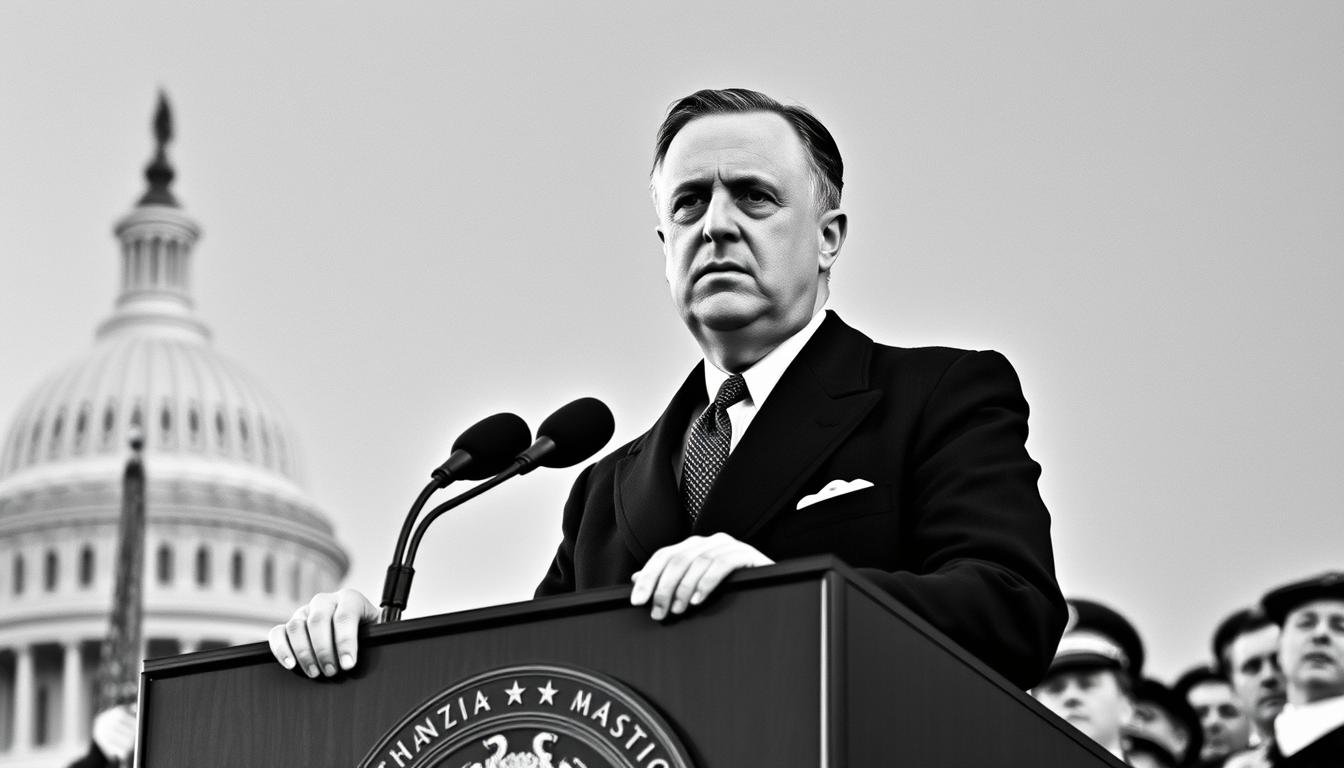
“The only thing we have to fear is fear itself.” These powerful words, spoken by Franklin D. Roosevelt during his first inaugural address in 1933, encapsulate the essence of crisis leadership that defined his presidency. As America faced unprecedented challenges—from the devastating Great Depression to the global conflict of World War II—FDR’s leadership strategies provided a masterclass in guiding a nation through its darkest hours.
Roosevelt’s 12-year presidency (1933-1945) spanned some of the most tumultuous years in American history. His ability to communicate effectively, implement bold policies, and maintain public confidence during times of extreme uncertainty offers valuable lessons for leaders in any era. This examination of FDR’s crisis management approach reveals timeless principles that remain relevant for navigating modern challenges.
Crisis Management Analysis: FDR’s Leadership Pillars
Roosevelt’s approach to crisis management rested on three fundamental pillars that formed the foundation of his leadership during both economic depression and war. These strategies not only helped America navigate immediate crises but also transformed the relationship between government and citizens in lasting ways.
Fireside Chats: Revolutionary Communication Strategy
Perhaps FDR’s most innovative leadership tool was his series of radio broadcasts known as “fireside chats.” In an era before television and social media, Roosevelt recognized the power of speaking directly to Americans in their homes. His first chat on March 12, 1933, during the banking crisis, demonstrated the immediate impact of clear communication during uncertainty.
Roosevelt deliberately used simple language, avoiding technical jargon to explain complex economic concepts. “I want to talk for a few minutes with the people of the United States about banking,” he began, before methodically explaining the banking crisis in terms average citizens could understand. This approach built trust and calmed panic during critical moments.
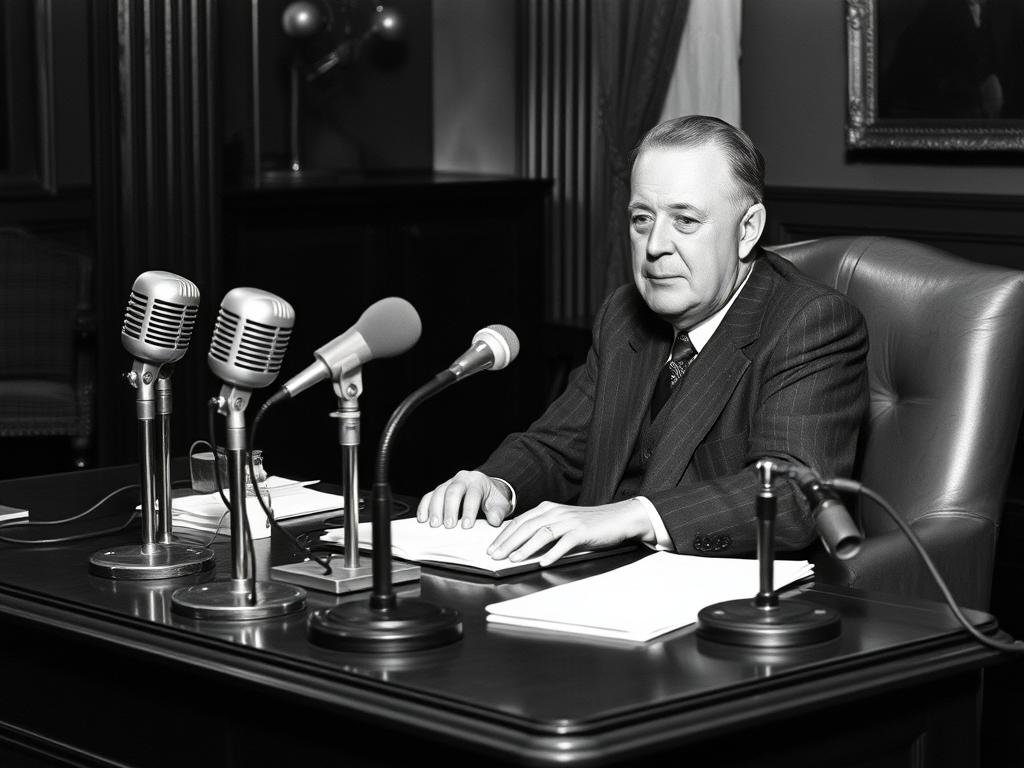
The effectiveness of these broadcasts was remarkable. Following his first fireside chat explaining the banking system, Americans returned nearly $1 billion to banks within two weeks, demonstrating how strategic communication could directly impact crisis recovery. Throughout his presidency, Roosevelt delivered approximately 30 fireside chats, establishing a direct connection with citizens that helped maintain public confidence during turbulent times.
New Deal Implementation: Bold Experimental Approach
When traditional economic approaches failed to address the Depression, Roosevelt embraced bold experimentation. “The country needs and demands bold, persistent experimentation,” he declared. “It is common sense to take a method and try it: If it fails, admit it frankly and try another. But above all, try something.”
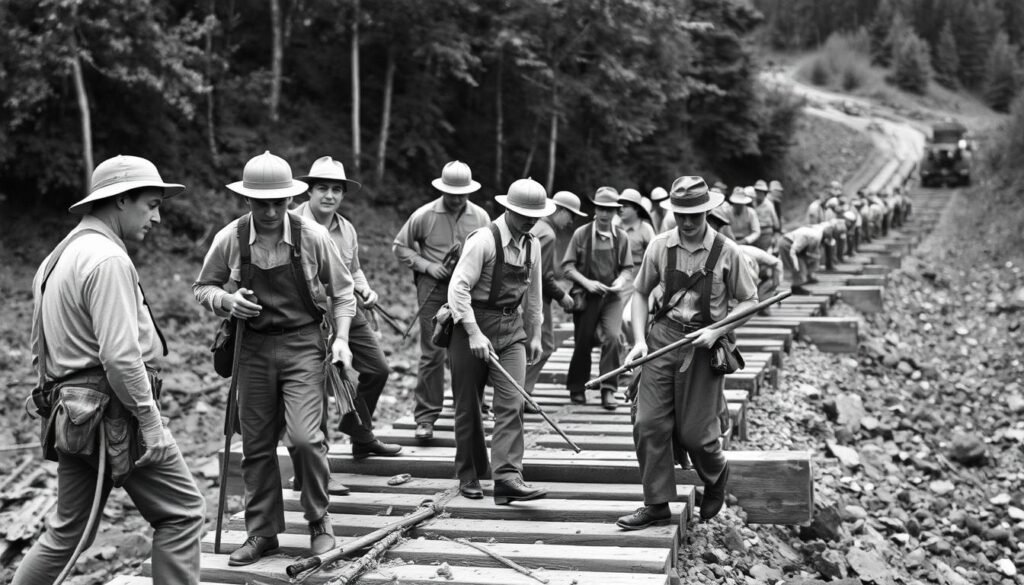
This philosophy manifested in the rapid implementation of New Deal programs that fundamentally transformed the American economic landscape. The Civilian Conservation Corps (CCC) employed millions of young men in conservation projects. The Works Progress Administration (WPA) created jobs building infrastructure that still stands today. The Social Security Act established a safety net for elderly Americans.
Roosevelt’s willingness to try multiple approaches simultaneously—and to abandon those that proved ineffective—demonstrated a pragmatic leadership style that prioritized results over ideology. This experimental mindset proved crucial in addressing a crisis with no historical precedent or established solutions.
Wartime Decision-Making Process: Coalition Leadership
When Pearl Harbor thrust America into World War II, Roosevelt’s leadership style adapted to wartime demands. As Commander-in-Chief, he balanced military strategy with diplomatic coalition-building, working closely with Winston Churchill and later with Stalin to coordinate Allied efforts.
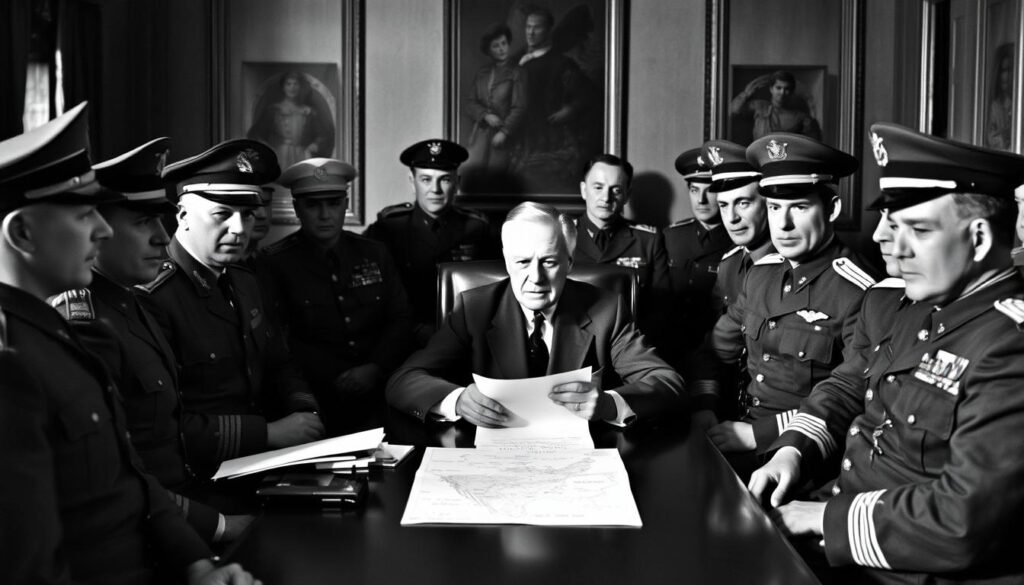
FDR’s decision-making process during the war emphasized building consensus among military leaders while maintaining civilian control. He regularly consulted with his Joint Chiefs of Staff but made clear that final strategic decisions rested with him. This balance of consultation and decisive action proved effective in managing the complex demands of global conflict.
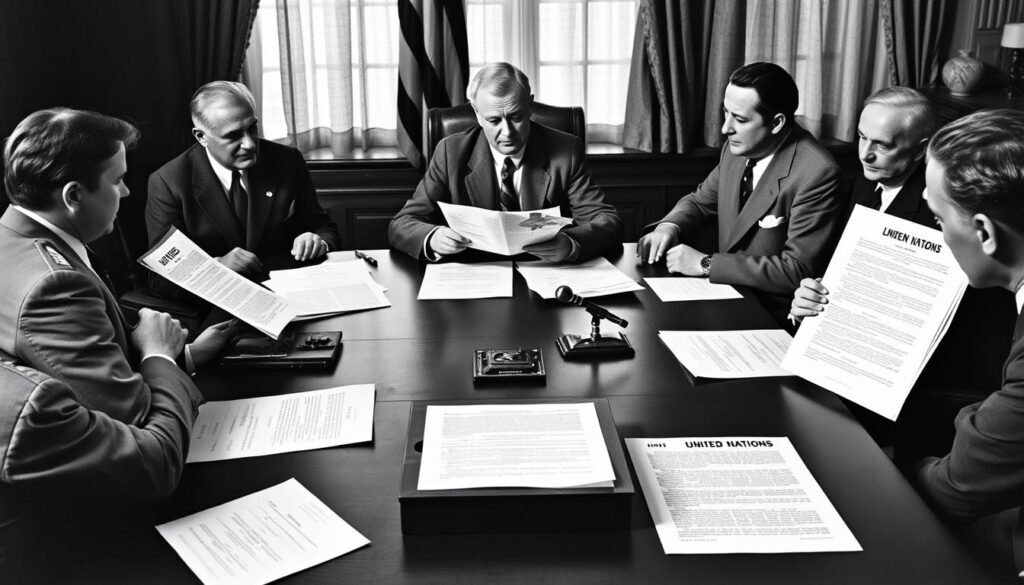
Perhaps most significantly, Roosevelt maintained a focus on post-war planning even during the height of conflict. His vision for international cooperation led to the foundations of the United Nations, demonstrating his ability to address immediate crises while planning for long-term stability.
Key Crisis Moments That Defined FDR’s Leadership
- 1933 Banking Crisis: Within days of taking office, Roosevelt declared a national bank holiday, passed emergency banking legislation, and delivered his first fireside chat explaining these actions to the public. This swift, decisive response stabilized the financial system and began rebuilding public confidence.
- 1937 Economic Relapse: When the economy contracted sharply after initial recovery, Roosevelt adjusted course, abandoning attempts to balance the budget and instead embracing deficit spending to stimulate economic activity. This flexibility demonstrated his willingness to adapt strategies when circumstances changed.
- 1941 Pearl Harbor Attack: Following the Japanese attack, Roosevelt’s address to Congress requesting a declaration of war demonstrated his ability to rally the nation during its darkest hour. His leadership transformed America’s isolationist stance into a unified war effort within days.
Modern Parallels: FDR’s Crisis Leadership in Contemporary Context
The leadership strategies Roosevelt employed during national crises offer valuable frameworks for addressing modern challenges. While historical contexts differ, the fundamental principles of effective crisis management remain remarkably consistent across eras.
| FDR’s Era | Modern Equivalent | Leadership Principle |
| Bank Holidays | COVID-19 Lockdowns | Decisive action to pause systems in crisis for reorganization |
| Fireside Chats | Crisis Communications via Social Media | Direct, transparent communication with citizens using available technology |
| CCC Programs | Green New Deal Proposals | Combining economic stimulus with long-term infrastructure development |
| War Production Board | Pandemic Supply Chain Coordination | Public-private partnerships to address national emergencies |
| United Nations Formation | International Climate Agreements | Building global coalitions to address shared challenges |
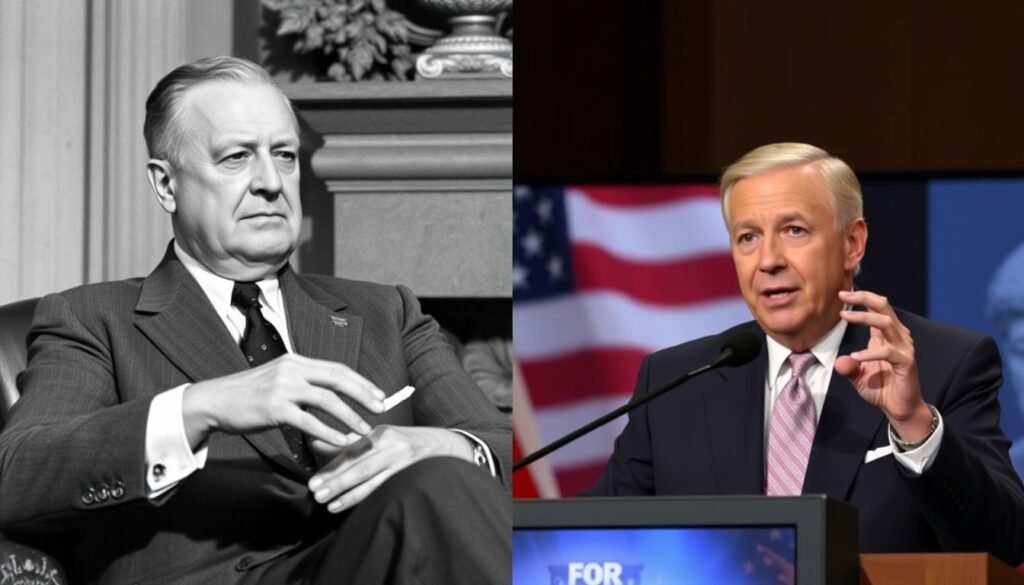
What makes Roosevelt’s leadership particularly relevant today is his ability to balance immediate crisis response with long-term vision. During the depths of the Depression, he simultaneously addressed urgent needs through relief programs while building lasting institutions like Social Security that would strengthen American society for generations.
Similarly, Roosevelt’s personal struggle with polio—which left him unable to walk unassisted—offers a powerful example of resilience during crisis. Though he carefully managed public perception of his disability, his personal experience with adversity informed his empathetic approach to national suffering. This dimension of Roosevelt’s leadership reminds modern leaders that personal challenges can become sources of strength and insight during times of crisis.
Leadership Reflection Point
Consider how Roosevelt’s ability to communicate complex issues in simple terms might apply to your own leadership challenges. What current crisis might benefit from clearer, more direct communication to build trust and reduce uncertainty?
Leadership Legacy: Actionable Lessons from FDR’s Crisis Management
Roosevelt’s approach to leading through crisis offers five actionable lessons that leaders in any field can apply to modern challenges. These strategies transcend their historical context to provide a framework for effective leadership during uncertain times.
1. Transparent Communication Builds Trust
Roosevelt understood that during crisis, information vacuums breed fear and panic. His fireside chats demonstrated that transparent communication—even when delivering difficult news—builds essential trust between leaders and those they lead.
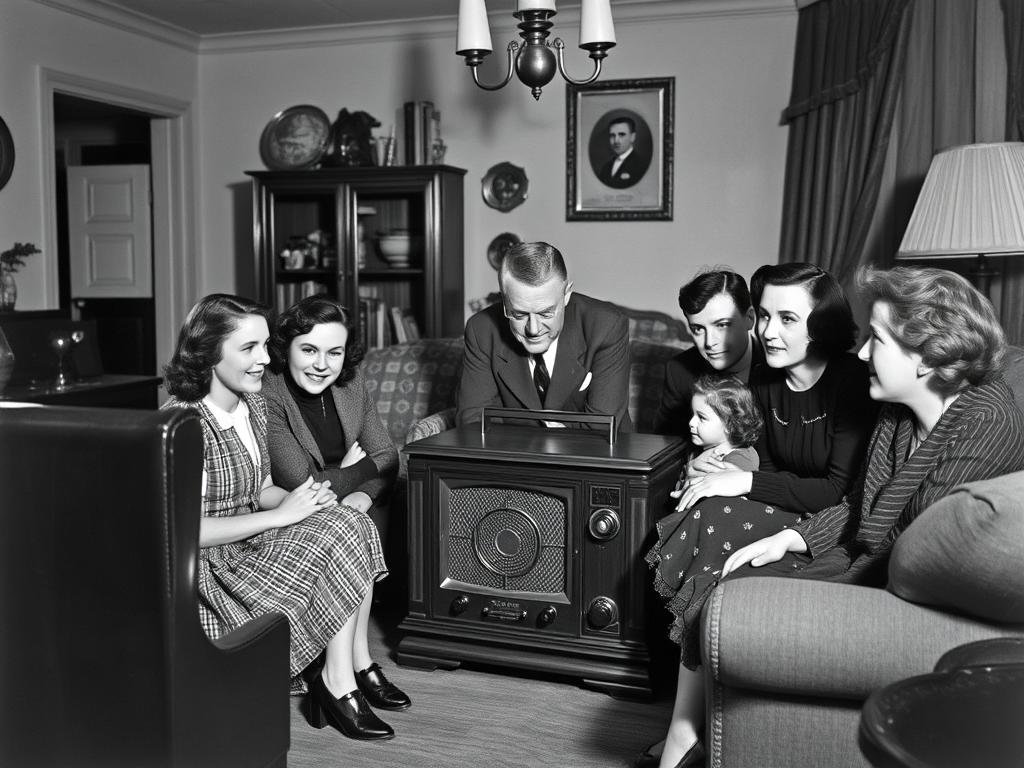
Actionable Strategy: During uncertainty, communicate frequently using clear, jargon-free language. Explain not just what actions are being taken, but why they matter and how they connect to larger goals. Acknowledge challenges honestly while maintaining a tone of reasonable optimism.
2. Bold Experimental Approaches Break Through Paralysis
When faced with unprecedented challenges, Roosevelt rejected the paralysis of perfect planning in favor of bold action. His willingness to try multiple approaches simultaneously—and to adjust course when necessary—provides a model for addressing complex crises without clear solutions.
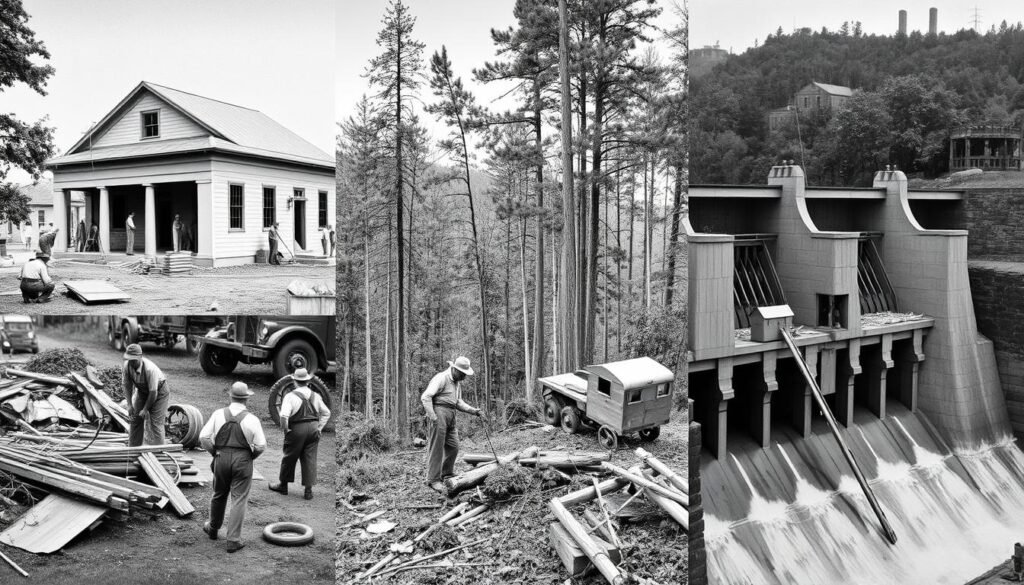
Actionable Strategy: When facing complex challenges, implement multiple small-scale solutions rather than waiting for a perfect comprehensive plan. Establish clear metrics to evaluate effectiveness, and be prepared to scale successful approaches while abandoning those that fail to produce results.
3. Coalition-Building Techniques Expand Resources
Roosevelt excelled at building diverse coalitions to address national challenges. During the Depression, he brought together business leaders, labor unions, and agricultural interests. During the war, he forged international alliances that maximized resources and coordinated strategy.
Actionable Strategy: Identify stakeholders with shared interests in resolving the crisis, even if they differ on other issues. Create structured opportunities for input while maintaining clear decision-making authority. Recognize that effective coalitions require ongoing maintenance through regular communication and acknowledgment of contributions.
4. Crisis Framing Methods Shape Public Response
Roosevelt understood that how a crisis is framed fundamentally shapes public response. By framing the Depression as a challenge to American resilience rather than a systemic collapse, he activated determination rather than despair. Similarly, he framed wartime sacrifices as contributions to a noble cause rather than impositions.
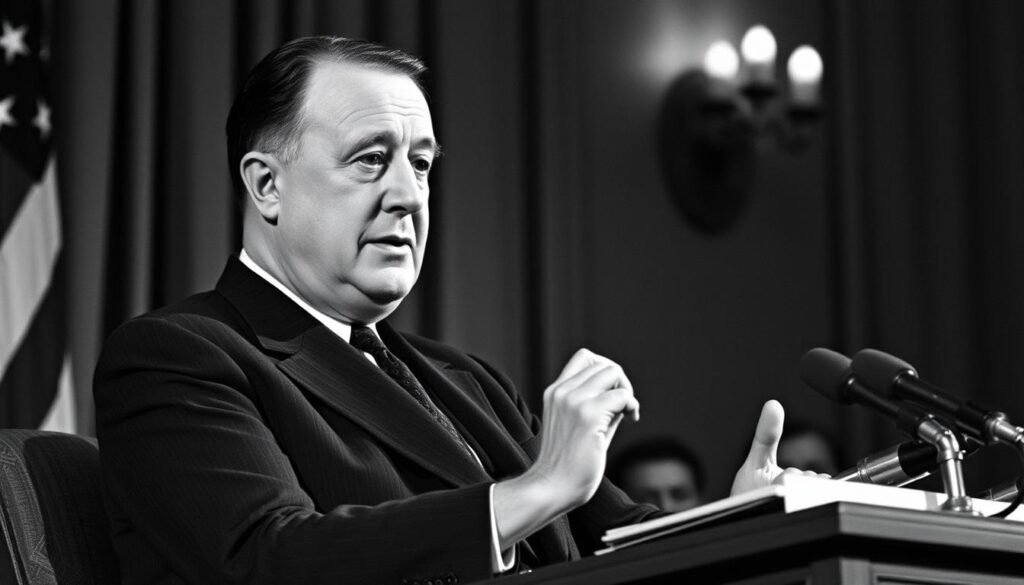
Actionable Strategy: Carefully consider how you describe challenges to your organization or community. Frame crises in terms of shared values, emphasize aspects where action can make a difference, and connect immediate challenges to meaningful long-term goals that inspire commitment.
5. Long-Term Vision Maintenance During Immediate Crisis
Even during the most urgent phases of crisis response, Roosevelt maintained focus on long-term objectives. While addressing immediate banking failures, he was building a new financial regulatory system. While fighting World War II, he was planning post-war international cooperation through the United Nations.
Actionable Strategy: Establish a “dual-track” leadership approach that dedicates specific time and resources to long-term planning even during crisis. Regularly connect immediate actions to longer-term vision to maintain perspective and prevent short-term thinking from compromising future resilience.
“The test of our progress is not whether we add more to the abundance of those who have much; it is whether we provide enough for those who have too little.”
Throughout his leadership during multiple crises, Roosevelt’s personal struggle with polio provided an underlying resilience that informed his approach. Though largely hidden from public view, his daily battle with physical limitation gave him unique insight into overcoming seemingly insurmountable challenges—a perspective that proved invaluable when leading a nation through its darkest hours.
Conclusion: The Enduring Relevance of Roosevelt’s Crisis Leadership
Franklin D. Roosevelt’s leadership during national crises offers more than historical interest—it provides a practical framework for addressing modern challenges. His combination of clear communication, bold experimentation, coalition-building, strategic framing, and long-term vision demonstrates that effective crisis leadership balances immediate response with sustainable solutions.
As we face our own era’s complex challenges, Roosevelt’s example reminds us that leadership during crisis is not about having all the answers, but about creating processes to find solutions, building trust through transparent communication, and maintaining confidence in our collective capacity to overcome adversity.

In Roosevelt’s words from his final inaugural address in 1945: “We have learned that we cannot live alone, at peace; that our own well-being is dependent on the well-being of other nations far away… We have learned to be citizens of the world, members of the human community.” This vision of interconnected challenges and shared solutions remains as relevant today as when he spoke these words.
The study of historical leadership patterns like Roosevelt’s provides not just inspiration but practical strategies for navigating our own uncertain times. By examining how past leaders successfully managed crisis, we develop a deeper toolkit for addressing present challenges.
Deepen Your Understanding of Crisis Leadership
Explore these essential resources to further develop your crisis leadership capabilities through the lens of Roosevelt’s enduring example:
The Splendid and the Vile
Erik Larson’s masterful account of Churchill’s leadership during the Blitz offers fascinating parallels to Roosevelt’s crisis management approach and their wartime partnership.
FDR at War Trilogy
Nigel Hamilton’s definitive three-volume examination of Roosevelt’s wartime leadership provides deep insights into his decision-making process during global crisis.
Leadership in Turbulent Times
Doris Kearns Goodwin’s analysis of how Lincoln, both Roosevelts, and Johnson led during crisis offers comparative insights into effective leadership during national challenges.