Cleopatra Queen of the Nile: Her Legacy, Power, and Myths
The name Cleopatra evokes images of beauty, power, and tragedy – a queen who captivated Roman emperors and defied an empire. Yet behind the romanticized portrayals lies a brilliant strategist and ruler whose legacy continues to fascinate us more than two millennia later. As the last active pharaoh of the Ptolemaic Kingdom of Egypt, Cleopatra VII Thea Philopator navigated treacherous political waters with remarkable skill, preserving Egyptian independence against the expanding Roman Empire for nearly two decades. This exploration of Cleopatra Queen of the Nile reveals not just the woman behind the myths, but a complex political figure whose reign marked the end of the Hellenistic period and whose influence extends far beyond her dramatic death in 30 BCE.
The Early Life of Cleopatra: Birth of a Dynasty’s Final Ruler
Born in early 69 BCE (or possibly late 70 BCE) in Alexandria, Cleopatra VII entered a world of political intrigue and dynastic ambition. As a daughter of Ptolemy XII Auletes, she belonged to the Ptolemaic dynasty – a Macedonian Greek family that had ruled Egypt since the death of Alexander the Great in 323 BCE. Despite her Greek heritage, Cleopatra would become one of Egypt’s most iconic rulers, embodying the complex cultural fusion that characterized the Hellenistic world.
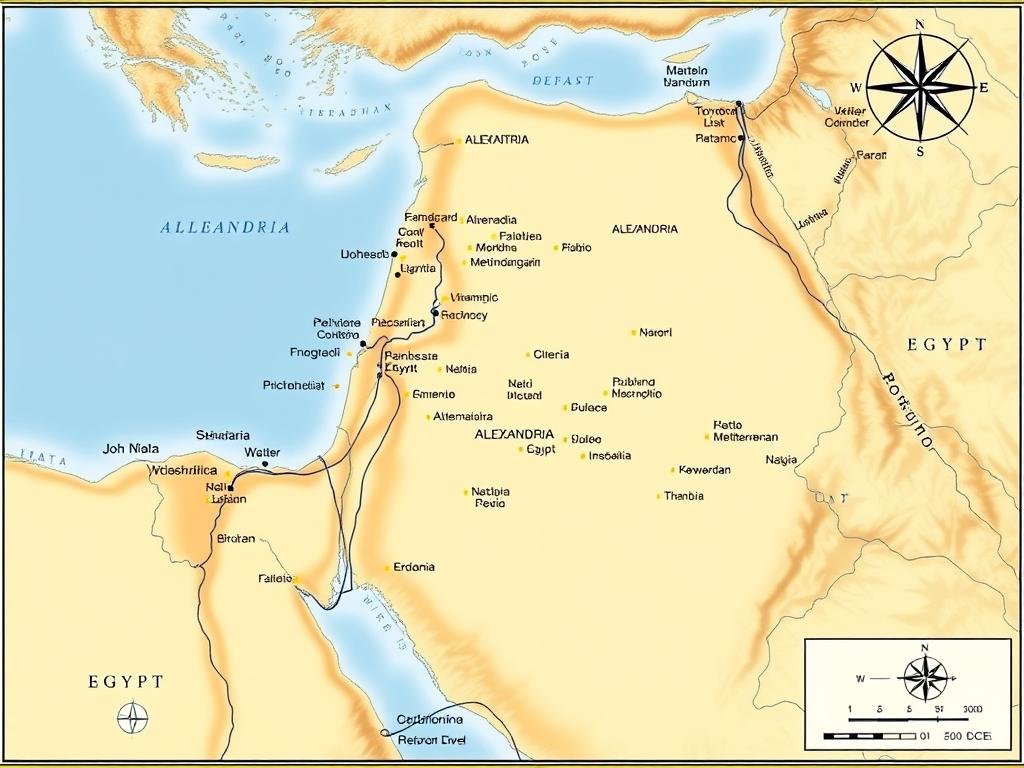
Map of Ptolemaic Egypt during Cleopatra’s reign, showing Alexandria and the Nile Delta region
Unlike her predecessors who maintained their Greek identity and often refused to learn Egyptian, Cleopatra embraced the culture of her kingdom. According to Plutarch, she was the only member of the Ptolemaic dynasty to learn the Egyptian language in addition to her native Koine Greek. Historical accounts suggest she was also fluent in Hebrew, Ethiopian, Arabic, Syrian, Median, Parthian, and Latin – linguistic skills that would prove invaluable in her diplomatic endeavors.
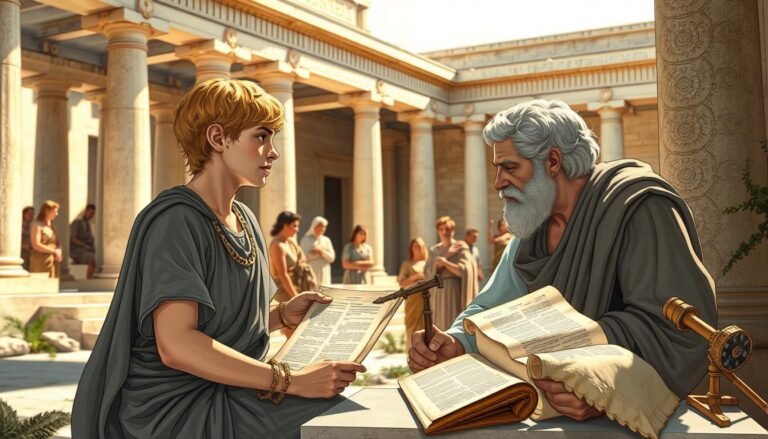
Cleopatra’s education at the famous Library of Alexandria provided her with exceptional knowledge in mathematics, astronomy, philosophy, and oratory. This comprehensive education, combined with her natural intelligence and charisma, prepared her for the complex political landscape she would navigate throughout her reign.
The Tumultuous Path to Power
When Ptolemy XII died in 51 BCE, the 18-year-old Cleopatra and her 10-year-old brother, Ptolemy XIII, were named joint rulers according to Egyptian tradition. Their father’s will, backed by Rome, established this co-regency, but the arrangement quickly deteriorated as court officials supporting the young Ptolemy sought to diminish Cleopatra’s influence.

Bust of young Cleopatra showing her distinctive features as described by historical accounts
By 48 BCE, the power struggle had forced Cleopatra to flee Alexandria. Exiled in Syria, she demonstrated remarkable resilience by raising an army to reclaim her throne. This early challenge revealed the political acumen that would characterize her reign – rather than accepting defeat, she strategically gathered resources and planned her return to power.
Cleopatra’s Political Genius: Alliances That Shaped History
Cleopatra’s greatest strength lay in her political astuteness and diplomatic skill. Recognizing Rome’s growing influence, she cultivated strategic relationships with key Roman leaders that would preserve Egyptian independence while securing her position as queen. These alliances, particularly with Julius Caesar and later Mark Antony, have often been reduced to romantic tales, obscuring the calculated political maneuvering that defined her reign.
The Caesar Connection: Securing the Throne
In 48 BCE, as civil war erupted between Julius Caesar and Pompey, Egypt became entangled in Roman politics. After Pompey’s defeat at Pharsalus, he fled to Egypt seeking refuge, only to be assassinated upon arrival – a miscalculation by Ptolemy XIII’s advisors who hoped to curry favor with Caesar. When Caesar arrived in Alexandria, Cleopatra saw an opportunity to regain her throne.
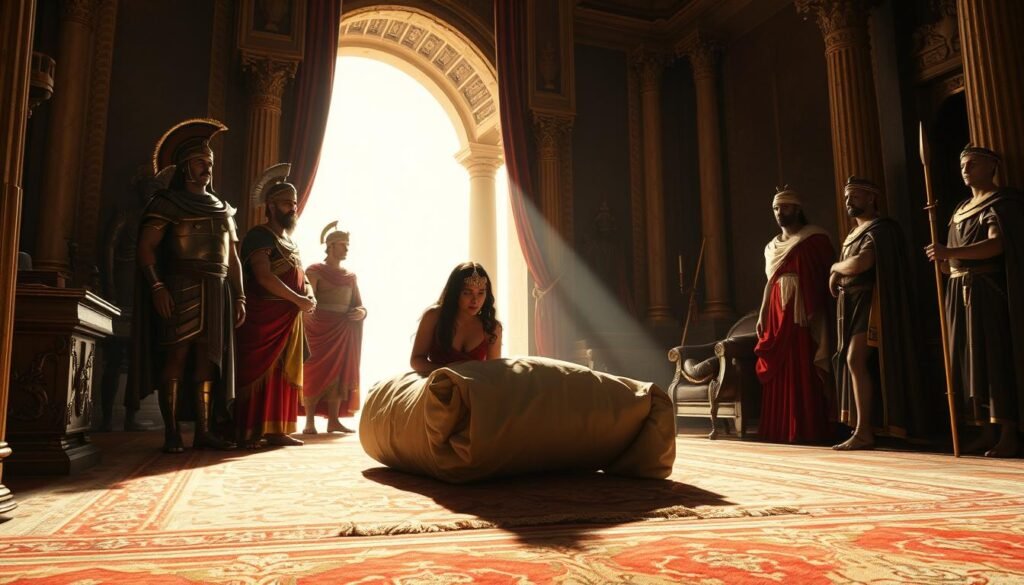
Cleopatra’s legendary meeting with Julius Caesar, where she was reportedly smuggled into his quarters
In what became one of history’s most legendary introductions, Cleopatra allegedly had herself smuggled into Caesar’s quarters wrapped in a carpet (or possibly a linen sack). This bold move – combining theatrical flair with political calculation – succeeded in capturing Caesar’s attention. Beyond any romantic connection, their alliance offered mutual benefits: Caesar gained access to Egypt’s vast grain supplies and wealth, while Cleopatra secured Roman military support against her brother.
The political nature of their relationship bore fruit when Caesar’s forces defeated Ptolemy XIII’s army in the Battle of the Nile in 47 BCE. With her brother drowned while attempting to flee, Cleopatra was reinstated as queen, now ruling alongside her younger brother Ptolemy XIV in another nominal co-regency. The birth of her son Ptolemy XV Caesar (nicknamed Caesarion, meaning “little Caesar”) in June 47 BCE further strengthened her position, providing a potential heir who could claim both Egyptian and Roman lineage.
Strategic Alliance with Mark Antony
After Caesar’s assassination in 44 BCE, Cleopatra returned to Egypt, where her brother-husband Ptolemy XIV died under suspicious circumstances. She then elevated her son Caesarion as co-ruler, securing the succession. As Rome descended into another civil war, Cleopatra carefully navigated the shifting political landscape.
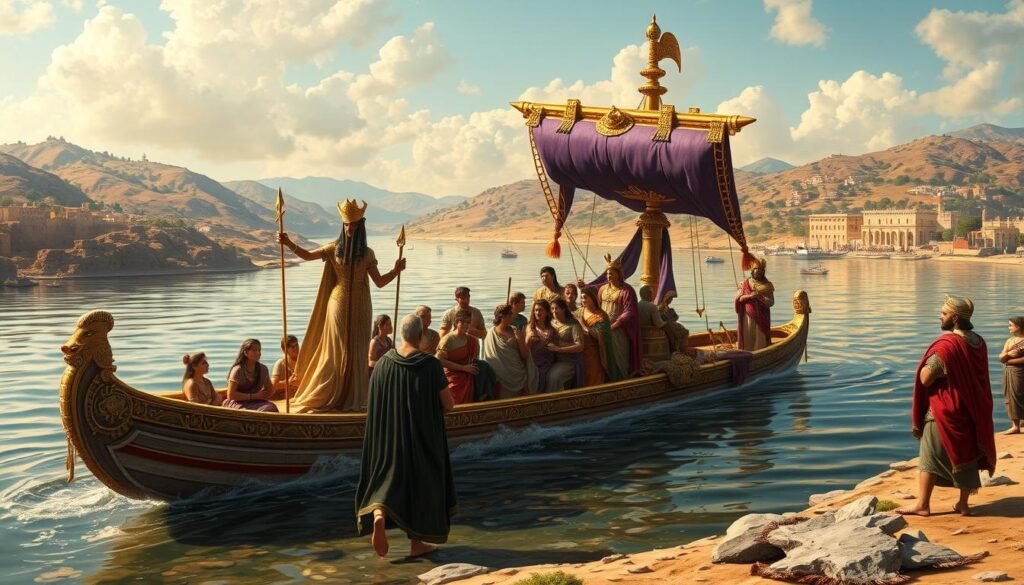
Cleopatra’s dramatic arrival in Tarsus to meet Mark Antony, sailing on her lavish royal barge
When Mark Antony, as part of the Second Triumvirate with Octavian and Lepidus, gained control of Rome’s eastern territories, he summoned Cleopatra to Tarsus in 41 BCE to answer questions about her loyalty. Recognizing another opportunity, Cleopatra orchestrated a spectacular entrance, sailing up the Cydnus River on a golden barge with purple sails, dressed as the goddess Isis. This calculated display of wealth and divine association impressed Antony and set the stage for their alliance.
Their relationship, like her earlier connection with Caesar, served clear political purposes. Antony needed Egypt’s resources for his planned Parthian campaign, while Cleopatra sought to expand her territories and secure Roman protection. Through the Donations of Alexandria in 34 BCE, Antony formally recognized Caesarion as Caesar’s heir and granted substantial territories to Cleopatra’s children with him: Alexander Helios, Cleopatra Selene, and Ptolemy Philadelphus.
“She was a woman who could speak the language of politics in a man’s world, using the tools available to her – including her intellect, wealth, and yes, her relationships – to preserve Egypt’s independence in the face of Roman expansion.”
Cleopatra and the Nile: Symbol of Power and Divine Connection
The epithet “Queen of the Nile” aptly captures Cleopatra’s deep connection to Egypt’s lifeblood. The Nile River was not merely a geographical feature but the very essence of Egyptian civilization – a source of fertility, prosperity, and divine power. Cleopatra strategically leveraged this symbolic relationship throughout her reign, reinforcing her legitimacy as Egypt’s ruler.

The Nile River during Cleopatra’s reign, the lifeblood of Egyptian civilization and source of the kingdom’s wealth
Economic Foundation of the Kingdom
The annual flooding of the Nile created the fertile black soil (kemet) that made Egypt the breadbasket of the Mediterranean. Cleopatra’s Egypt produced vast quantities of grain, papyrus, and other agricultural products that formed the backbone of its economy and made it invaluable to Rome. Control of these resources gave Cleopatra significant leverage in her negotiations with Roman leaders.
During her reign, Cleopatra personally oversaw the administration of the Nile’s bounty. When drought and low flooding threatened famine early in her rule, she ordered royal granaries opened to feed the populace – a pragmatic move that also reinforced her image as a benevolent ruler in the tradition of the pharaohs.
Religious and Symbolic Significance
Cleopatra deliberately associated herself with Isis, the goddess intimately connected to the Nile’s life-giving properties. In Egyptian mythology, Isis’s tears of mourning for her husband Osiris were said to cause the annual flooding of the Nile. By presenting herself as the “New Isis,” Cleopatra tapped into powerful religious symbolism that resonated deeply with her Egyptian subjects.
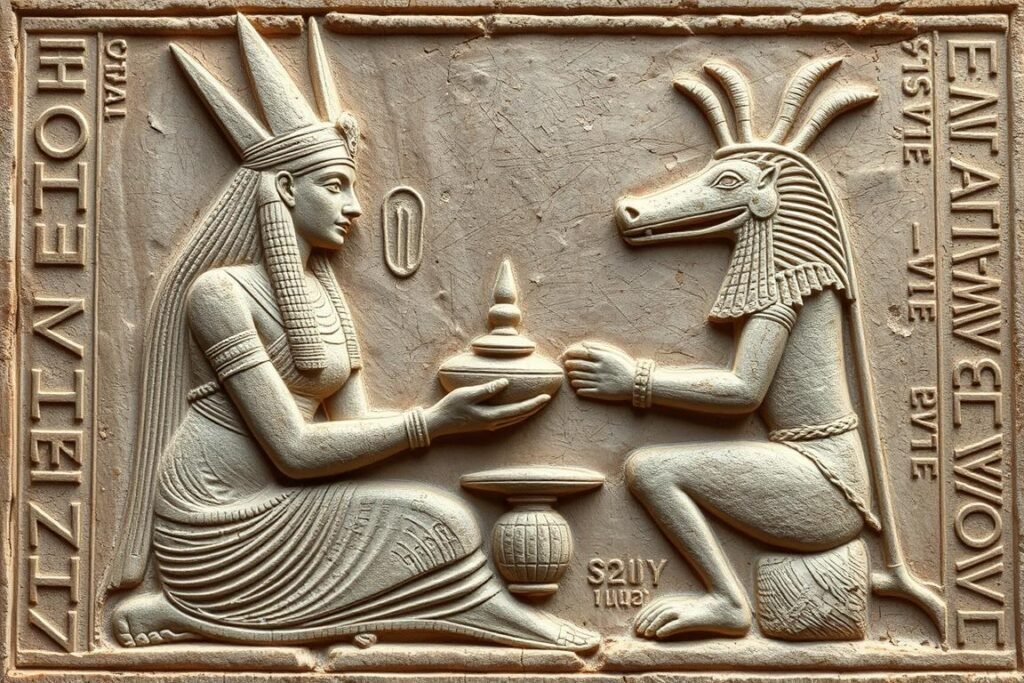
Temple relief depicting Cleopatra as Isis making offerings to Hapi, god of the Nile floods
This divine association was reinforced through public ceremonies and monuments. Historical accounts describe Cleopatra participating in Nile festivals, including the annual celebration of the river’s flooding. These religious observances were not merely spiritual exercises but powerful political statements that positioned her as the mediator between the Egyptian people and their gods.
The Nile as Political Theater
Cleopatra masterfully used the Nile as a stage for political theater. Her legendary cruise with Julius Caesar aboard the Thalamegos – a massive pleasure barge originally built by Ptolemy IV – combined diplomatic discussions with a display of Egypt’s cultural and natural wonders. This journey up the Nile served multiple purposes: strengthening her relationship with Caesar, showcasing Egypt’s wealth, and presenting herself to her subjects as their legitimate queen alongside Rome’s most powerful man.
Similarly, her dramatic arrival to meet Mark Antony in Tarsus aboard a golden barge demonstrated her command of spectacle and symbolism. Though this meeting occurred outside Egypt, the opulence of her ship and entourage projected the wealth and power derived from her control of the Nile’s resources.

Reconstruction of the Thalamegos, the elaborate royal barge used by Cleopatra for her famous Nile cruise with Julius Caesar
The Nile also featured prominently in Cleopatra’s coinage and official iconography, reinforcing the connection between the queen, the river, and Egypt’s prosperity. Some coins depicted her alongside crocodiles or other Nilotic symbols, visually binding her rule to the river that sustained Egyptian civilization.
Leadership and Governance: Cleopatra’s Administrative Brilliance
Beyond the dramatic narratives of her relationships with Roman leaders lies Cleopatra’s substantial accomplishments as a ruler. Her governance of Egypt demonstrated administrative skill, economic acumen, and cultural sensitivity that preserved stability during turbulent times. As the chief religious authority and absolute monarch, she wielded power with strategic intelligence that many historical accounts have overlooked.
Economic Reforms and Trade Expansion
Inheriting a kingdom with significant financial challenges, including debts to Rome incurred by her father, Cleopatra implemented pragmatic economic policies. She maintained a command economy with price controls, tariffs, and state monopolies on certain goods, while also encouraging international trade that brought wealth into Egypt.
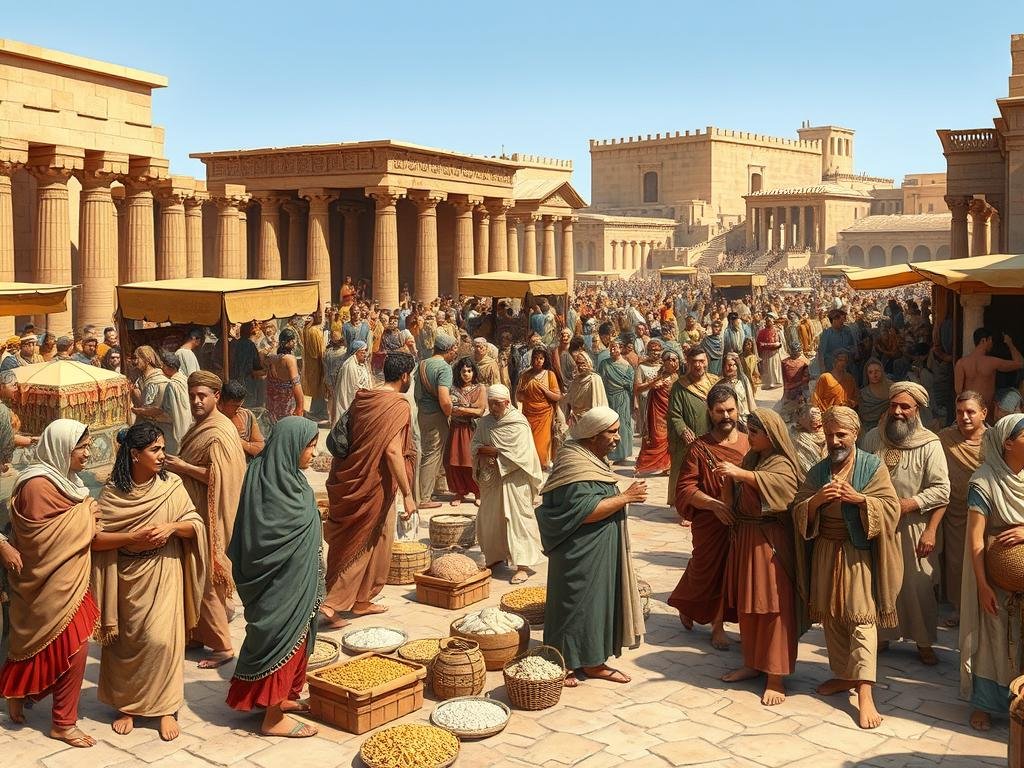
Reconstruction of an Alexandrian marketplace during Cleopatra’s reign, showing the diverse trade that enriched Egypt
Under her direction, Egypt developed new trade routes and strengthened existing ones, particularly with eastern kingdoms including Arabia and India. These commercial connections brought exotic goods, spices, and luxury items that enhanced Egypt’s position as a center of Mediterranean trade. Archaeological evidence from shipwrecks and port facilities confirms the extensive maritime commerce during her reign.
Cleopatra also oversaw mining operations that extracted gold from Nubia and emeralds from the eastern desert, providing valuable resources for Egypt’s treasury. Her careful management of these economic assets allowed her to fund ambitious building projects, maintain a strong military, and still amass the personal wealth that impressed (and concerned) her Roman contemporaries.
Cultural and Religious Leadership
Unlike earlier Ptolemaic rulers who remained culturally Greek, Cleopatra embraced her role as an Egyptian pharaoh. Her fluency in the Egyptian language allowed her to communicate directly with her subjects without translators – a powerful symbol of respect for indigenous culture that earned her popularity among the Egyptian population.
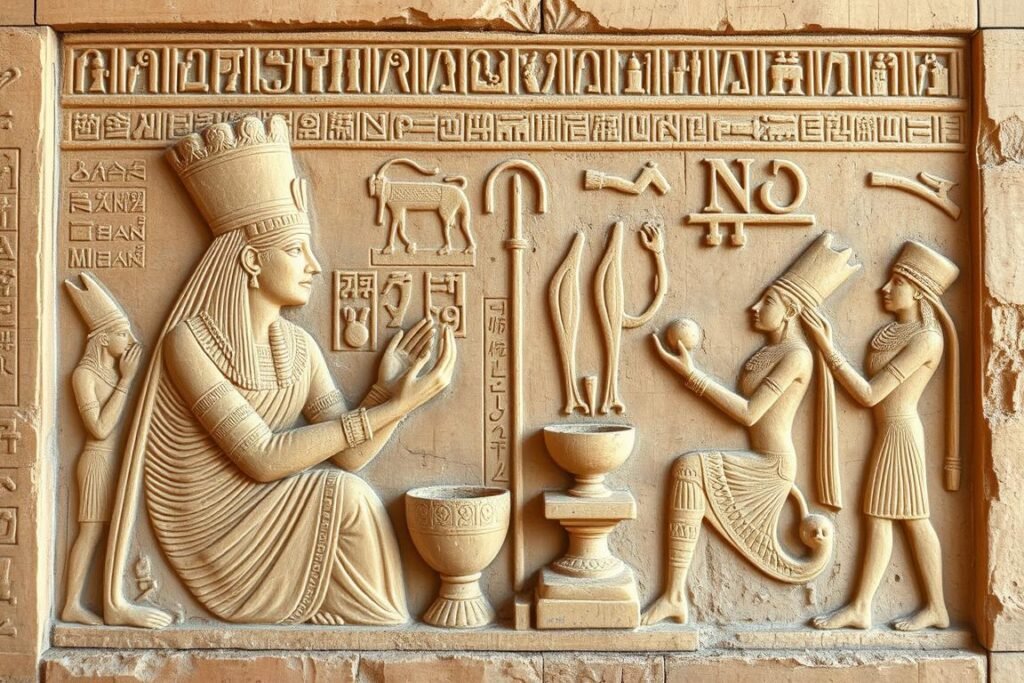
Temple carving showing Cleopatra in traditional pharaonic regalia, demonstrating her embrace of Egyptian religious traditions
As Egypt’s chief religious authority, she presided over ceremonies dedicated to both Egyptian and Greek deities, skillfully balancing the kingdom’s dual cultural heritage. Historical records document her installation of a new Buchis bull at Hermonthis – a traditional Egyptian religious ceremony that previous Ptolemaic rulers had often delegated to priests.
Cleopatra’s building projects reflected this cultural synthesis. She sponsored construction at traditional Egyptian religious sites like the Temple of Hathor at Dendera and the Temple of Edfu, while also establishing the Caesareum in Alexandria – a temple dedicated to the cult of Julius Caesar that blended Egyptian religious practices with Roman political realities.
Administrative Innovation and Pragmatism
Cleopatra’s governance was characterized by pragmatic problem-solving and administrative efficiency. When faced with the Gabiniani – unemployed Roman soldiers left in Egypt by Gabinius – she incorporated them into her military rather than allowing them to become a destabilizing force. This integration of foreign troops strengthened her armed forces while reducing potential threats.
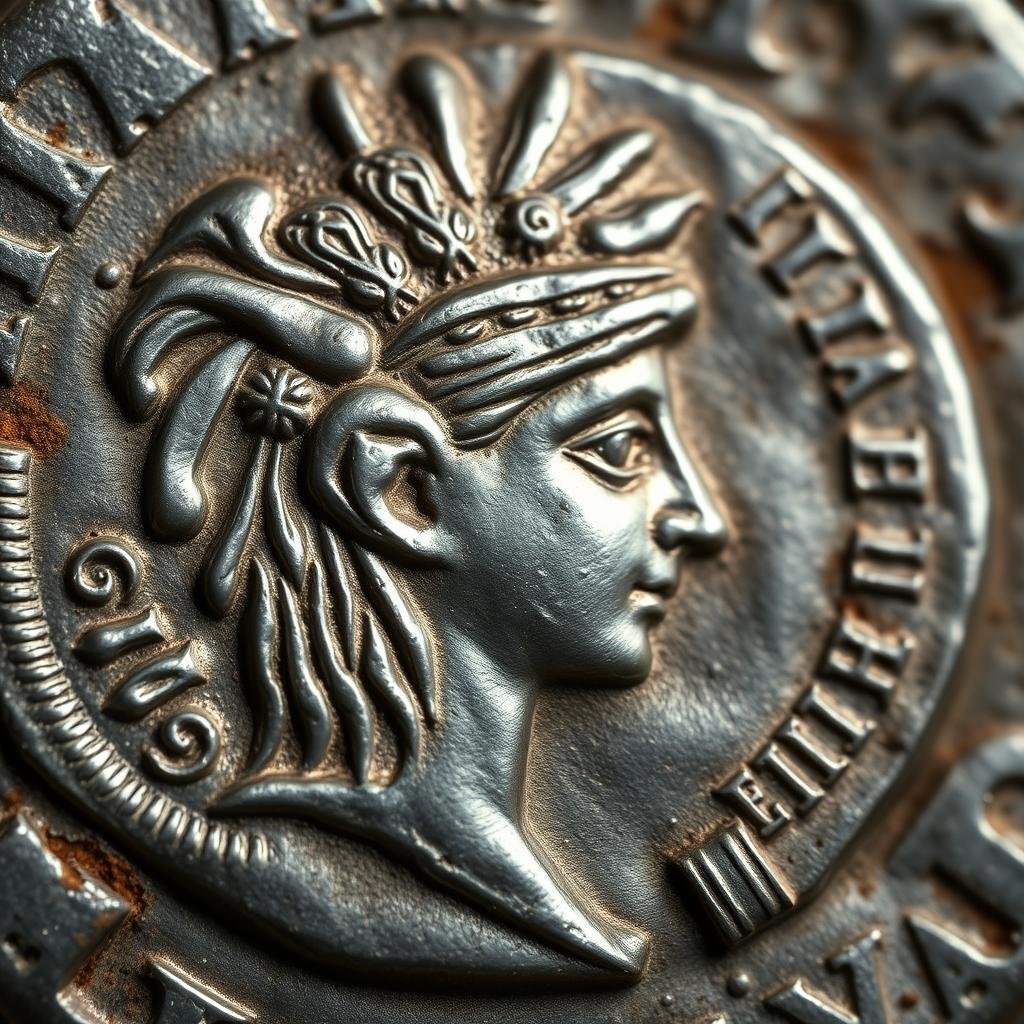
Silver tetradrachm coin from Cleopatra’s reign, showing her profile and royal titles
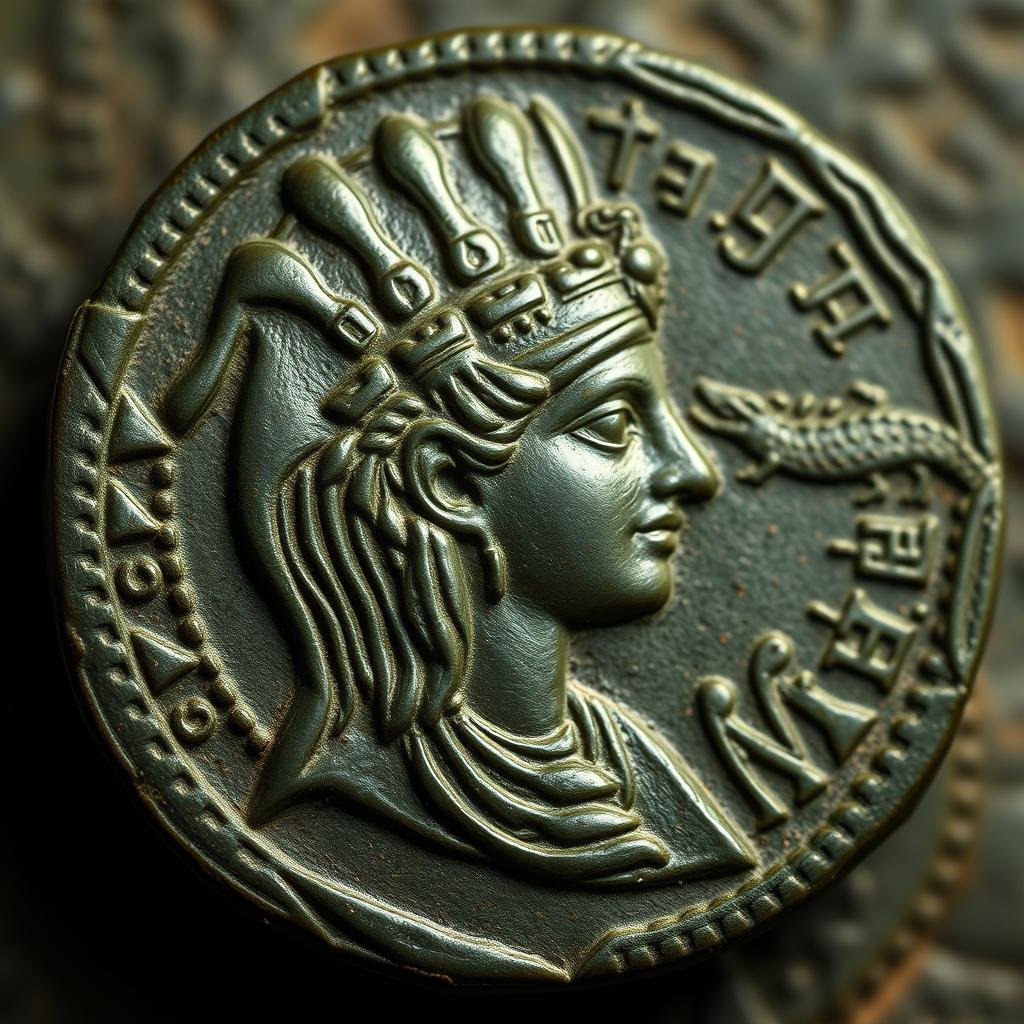
Bronze coin depicting Cleopatra as Isis, demonstrating her association with Egyptian deities
Her administration was notable for its inclusion of both Greeks and Egyptians in positions of authority, creating a government that reflected the kingdom’s diverse population. This multicultural approach extended to her religious policies, where she supported Egyptian temples while also accommodating Jewish communities and Greek cultural institutions.
During crises such as drought and famine, Cleopatra demonstrated decisive leadership by distributing grain from royal stores and implementing irrigation projects to mitigate the effects of low Nile flooding. These practical measures addressed immediate needs while reinforcing her image as a protective, pharaonic figure concerned with her people’s welfare.
Debunking the Myths: The Real Cleopatra Behind the Legends
Few historical figures have been as mythologized as Cleopatra. From ancient Roman propaganda to Hollywood films, layers of fiction have obscured the historical woman. Examining the evidence allows us to separate fact from fantasy and discover a more nuanced understanding of Egypt’s last pharaoh.
The Myth of Exotic Beauty
Perhaps the most persistent myth about Cleopatra is that her legendary power stemmed from extraordinary physical beauty. This narrative, popularized by Roman writers and reinforced through centuries of art and literature, reduces her political achievements to mere seduction.

Comparison of historically accurate depictions of Cleopatra (left) based on contemporary evidence versus later romanticized portrayals (right)
Historical evidence paints a different picture. Contemporary depictions on coins show a woman with a prominent nose, firm chin, and intelligent expression – not conventionally beautiful by either ancient or modern standards. Plutarch, writing a century after her death, noted that “her beauty was not in itself so remarkable” but emphasized instead her charming voice, commanding presence, and intellectual brilliance.
What captivated her contemporaries was not physical appearance but her charisma, wit, and intelligence. She was reportedly able to converse in nine languages, displayed deep knowledge of mathematics and philosophy, and possessed remarkable political acumen – qualities that made her a formidable ruler and diplomat.
The Death by Asp Bite: Examining the Evidence
The dramatic image of Cleopatra dying from the bite of an asp (Egyptian cobra) has become iconic, immortalized in art and literature. While ancient sources agree she died by suicide to avoid being paraded in Octavian’s triumph, the exact method remains uncertain.

Scholarly analysis of competing theories about Cleopatra’s death based on historical evidence
Plutarch himself expressed uncertainty, suggesting an asp was smuggled to her in a basket of figs, but also mentioning the possibility that she used a poisoned hairpin. Cassius Dio suggested she applied poison from a container, while Strabo proposed a toxic ointment. Modern scholars have questioned whether a cobra would have been reliable enough for her purposes, as its venom doesn’t always prove fatal.
Archaeological evidence provides no definitive answer. Octavian reportedly had her body examined by physicians including snake handlers (Psylli), suggesting he believed a venomous creature was involved. However, no snake was found in her chamber. The puncture wounds described on her arm could have been caused by various implements, including a hollow needle used to inject poison.
What seems clear is that Cleopatra chose to control her own fate rather than face humiliation in Rome – a final assertion of royal dignity consistent with her life’s pattern of strategic decision-making.
Roman Propaganda vs. Historical Reality
Much of what we “know” about Cleopatra comes from Roman sources written after her death, during the reign of Augustus (formerly Octavian). These accounts were heavily influenced by the propaganda campaign that portrayed her as a foreign seductress who corrupted Mark Antony and threatened Roman virtue.
“In the end, it was easier to cast Cleopatra as a villain than to acknowledge that Rome had conquered a sophisticated, independent kingdom led by a capable ruler.”
This narrative served Octavian’s political purposes, justifying his war against Antony and Cleopatra as a defense of Roman values rather than a power grab. The portrayal of Cleopatra as manipulative and excessive – dissolving pearls in vinegar, plotting to rule Rome – created a convenient foreign enemy against whom Romans could unite.

Representation of Octavian’s propaganda campaign against Cleopatra, contrasting Roman depictions with historical reality
Archaeological and Egyptian sources provide a counterbalance to these Roman narratives. Temple inscriptions show Cleopatra fulfilling her religious duties as pharaoh. Administrative papyri reveal her governance during economic challenges. These contemporary Egyptian sources depict a ruler concerned with her kingdom’s welfare rather than the exotic temptress of Roman imagination.
The Myth of Egyptian Decline Under Cleopatra
Another persistent misconception is that Cleopatra presided over a declining, weakened Egypt. While the Ptolemaic Kingdom faced significant challenges from Roman expansion, evidence suggests Cleopatra’s reign was a period of relative stability and even cultural renaissance.
Under her rule, Egypt maintained its position as the Mediterranean’s breadbasket, producing vast quantities of grain. She expanded trade networks, particularly with eastern kingdoms, bringing new wealth into Egypt. Archaeological findings from her reign show continued building activity and artistic production, contradicting the narrative of decline.
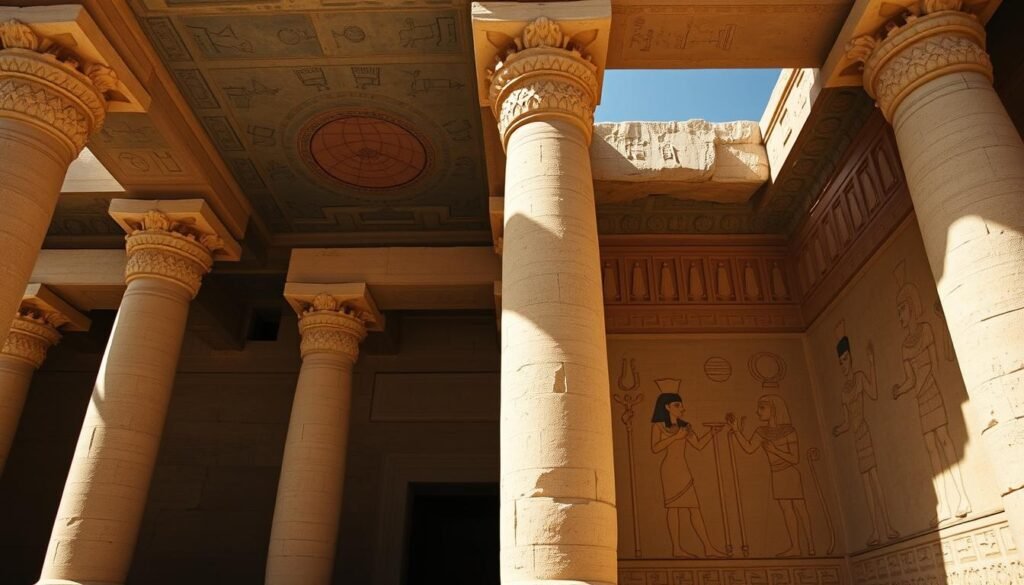
The Temple of Hathor at Dendera, featuring reliefs commissioned during Cleopatra’s reign
Cleopatra’s ultimate defeat came not from internal weakness but from Rome’s overwhelming military power and internal political dynamics that made Octavian determined to eliminate her as a rival. Her resistance against Roman domination lasted longer than many contemporary kingdoms, testifying to her political skill rather than confirming decline.
Cultural Influence: Cleopatra’s Impact on Egyptian Society
As both a Ptolemaic Greek and Egyptian pharaoh, Cleopatra navigated a complex cultural landscape. Her approach to governance reflected a sophisticated understanding of Egypt’s diverse population and the symbolic power of cultural integration. Rather than imposing Greek customs, she embraced Egyptian traditions while maintaining connections to her Hellenistic heritage.
Religious Syncretism and Divine Associations
Cleopatra’s most significant cultural innovation was her deliberate association with the goddess Isis. While earlier Ptolemaic queens had made similar connections, Cleopatra elevated this identification to new heights, presenting herself as the “New Isis” in both Egyptian and Greek contexts.
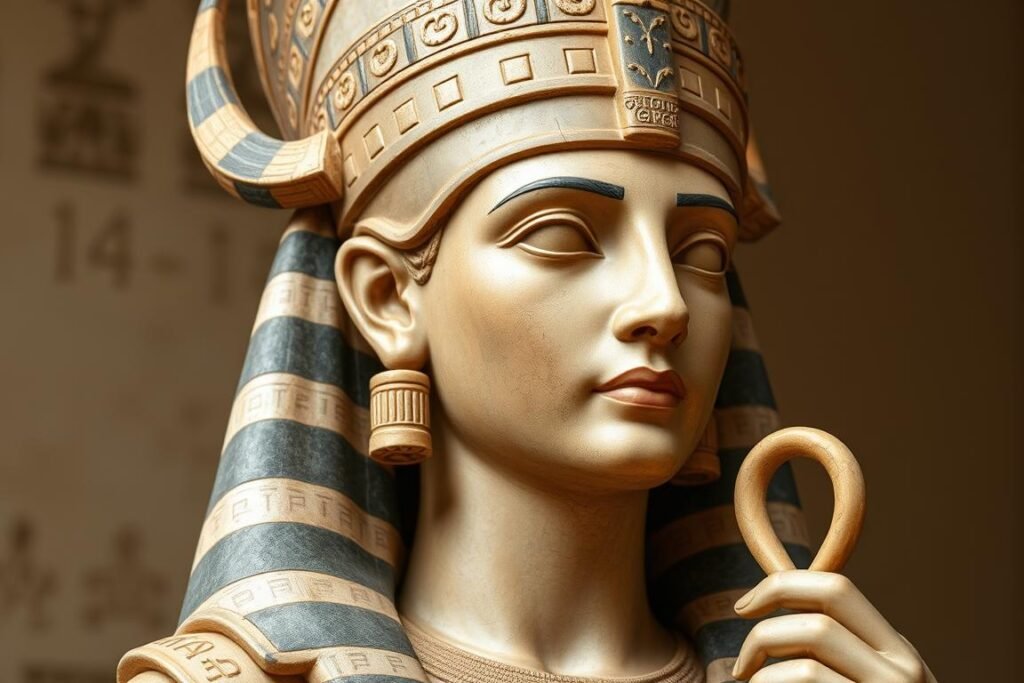
Statue depicting Cleopatra as the goddess Isis, demonstrating her religious and cultural policies
This religious association served multiple purposes. For Egyptian subjects, it positioned her within the traditional pharaonic role as intermediary between humans and gods. For Greeks and other Hellenistic peoples, it connected her to a deity whose cult had spread throughout the Mediterranean. The Isis identification also emphasized maternal protection and magical power – useful attributes for a female ruler in a patriarchal era.
Cleopatra’s religious policies extended beyond personal divine associations. She supported traditional Egyptian temples with donations and building projects, while also accommodating Greek religious practices and even building a synagogue for Alexandria’s Jewish community. This religious inclusivity reflected the multicultural reality of Ptolemaic Egypt and helped maintain social stability.
Architectural and Artistic Patronage
The physical landscape of Egypt bears witness to Cleopatra’s cultural influence through her architectural patronage. Major projects included work on the Temple of Hathor at Dendera, where her image appears in traditional pharaonic style making offerings to Egyptian deities. She also continued construction at the Temple of Edfu and other religious sites throughout Egypt.
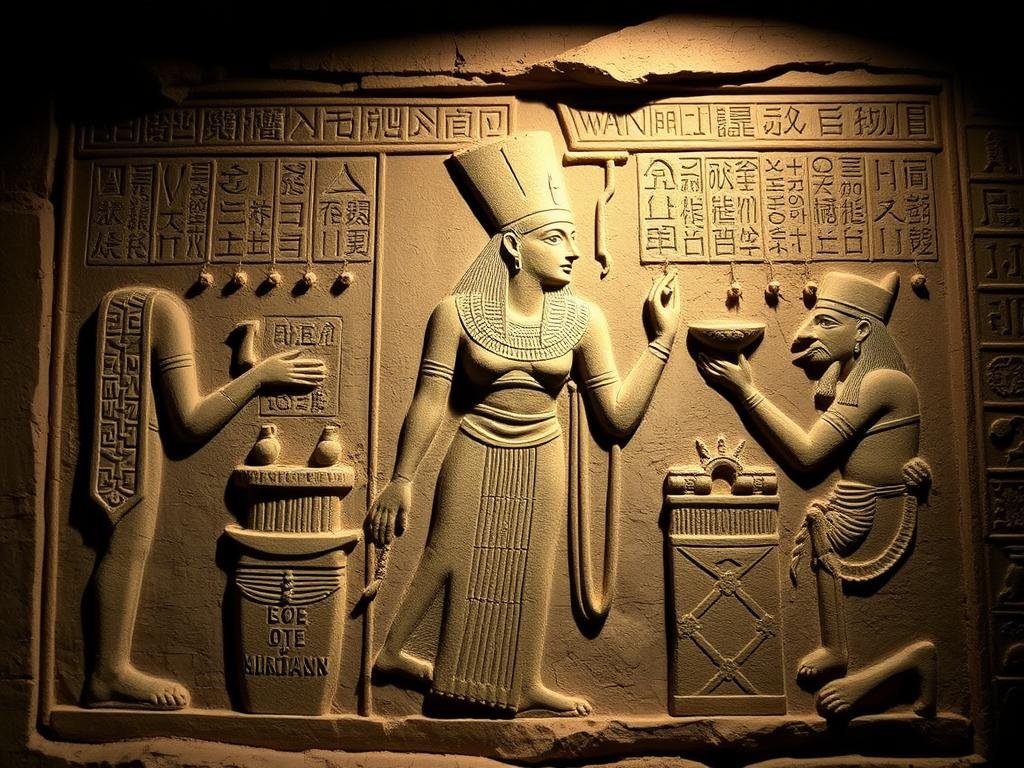
Relief from the Temple of Hathor showing Cleopatra in traditional pharaonic style
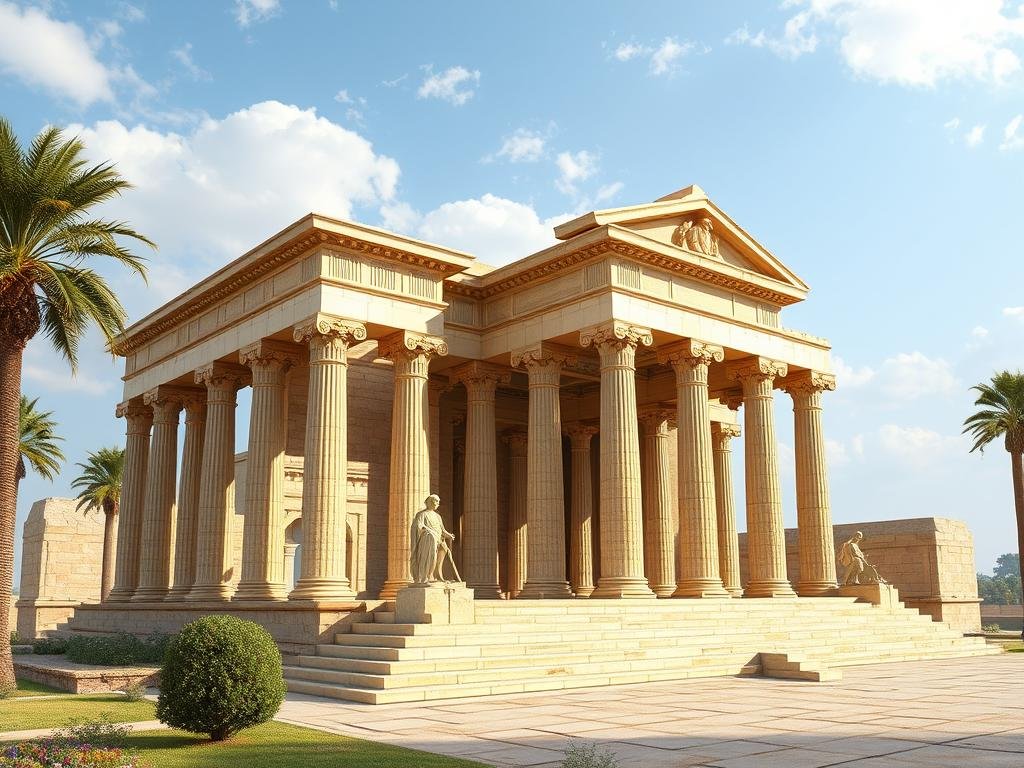
Reconstruction of the Caesareum of Alexandria, combining Greek and Egyptian architectural elements
In Alexandria, her most ambitious project was the Caesareum – a temple dedicated to the cult of Julius Caesar. This structure represented a sophisticated blending of Egyptian religious practices with Roman political realities. Though completed after her death, its design reflected her cultural policy of synthesis and adaptation.
Cleopatra’s patronage extended to the arts and intellectual life. The Library of Alexandria continued to function under her rule, and she supported scholars and philosophers. According to Plutarch, she attended philosophical discussions and was knowledgeable about mathematics, astronomy, and other sciences – intellectual interests that reflected Alexandria’s position as a center of Hellenistic learning.
Language Policy and Communication
Perhaps Cleopatra’s most significant cultural innovation was her approach to language. Unlike previous Ptolemaic rulers who relied on translators, she learned to speak Egyptian, allowing direct communication with her indigenous subjects. This linguistic skill represented more than practical governance – it symbolized respect for Egyptian culture and tradition.
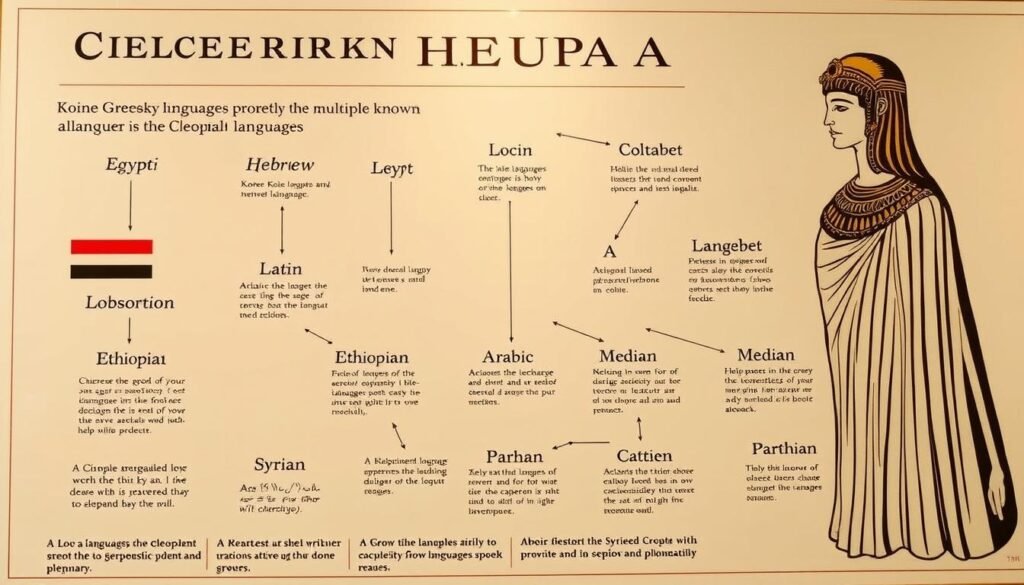
The languages spoken by Cleopatra, demonstrating her linguistic abilities and multicultural approach
Her multilingualism extended beyond Egyptian and Greek. Ancient sources credit her with fluency in Hebrew, Ethiopian, Arabic, Syrian languages, Median, Parthian, and Latin – an extraordinary linguistic range that facilitated diplomatic relations with diverse kingdoms and peoples. This linguistic versatility reflected Alexandria’s cosmopolitan character and Cleopatra’s recognition of language as a tool of statecraft.
Cleopatra’s cultural policies created a legacy that outlived her reign. The syncretic religious practices she promoted continued into the Roman period, and her architectural projects remained visible for centuries. More subtly, her model of cultural integration – respecting Egyptian traditions while engaging with the wider Mediterranean world – established a pattern that subsequent rulers of Egypt would follow.
Economic Innovations: How Cleopatra Managed Egypt’s Wealth
Cleopatra inherited a kingdom with significant financial challenges. Her father, Ptolemy XII, had incurred substantial debts to Rome in his struggle to maintain power, and Egypt’s economy faced both internal and external pressures. Her management of these economic challenges demonstrated pragmatic innovation and strategic thinking that preserved Egypt’s wealth despite mounting difficulties.
Monetary Policy and Currency Management
One of Cleopatra’s most visible economic actions was her management of Egypt’s currency. Numismatic evidence shows that she debased the silver content of coins, a practical response to financial pressures that allowed her to stretch limited resources. While this debasement has sometimes been interpreted as evidence of economic decline, it actually represented a sophisticated understanding of monetary policy.
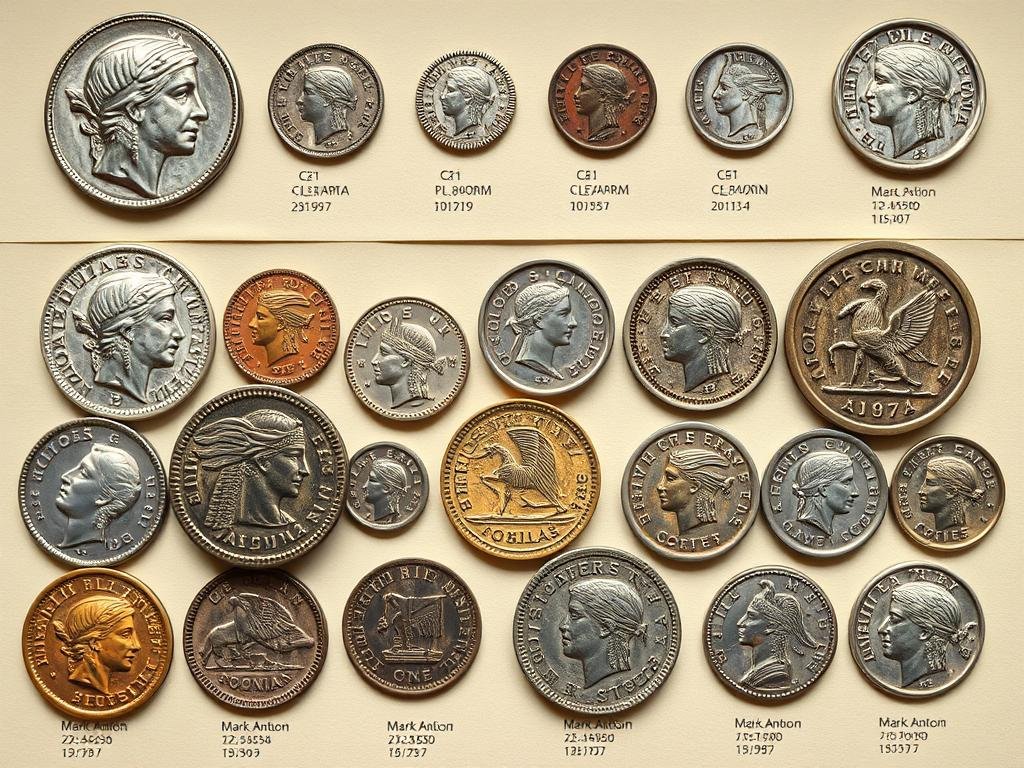
Collection of coins from Cleopatra’s reign, showing the evolution of currency and economic policies
Cleopatra maintained different currency standards for internal and external trade. Within Egypt, bronze coins with lower intrinsic value circulated for everyday transactions, while silver coins with higher precious metal content were reserved for international trade and payment of Roman debts. This dual system protected Egypt’s precious metal reserves while maintaining commercial relationships.
Her coinage also served political purposes. Early issues featured her alone, while later coins included images of Caesarion or Mark Antony, reflecting changing political alliances. The distribution of these coins throughout her expanded territories helped integrate newly acquired regions into Egypt’s economic sphere.
Trade Expansion and Resource Development
Recognizing that Egypt’s prosperity depended on trade, Cleopatra worked to expand commercial networks. She maintained traditional Mediterranean trade while developing connections with eastern kingdoms including Arabia, India, and possibly even China through intermediaries.

Map of trade routes connecting Cleopatra’s Egypt to Mediterranean, African, and Asian markets
Archaeological evidence from Red Sea ports shows increased activity during her reign, suggesting expanded maritime trade with eastern markets. These connections brought luxury goods including spices, silk, and exotic materials that enhanced Egypt’s prestige and provided valuable items for diplomatic gifts.
Cleopatra also developed Egypt’s natural resources. She reopened gold mines in the eastern desert and Nubia that had been neglected, providing precious metal for coinage and luxury items. The emerald mines at Mons Smaragdus (modern Wadi Sikait) were actively worked during her reign, producing gems that were highly valued throughout the Mediterranean world.
Agricultural Management and Food Security
Agriculture remained the foundation of Egypt’s economy, with grain production particularly crucial both for feeding the population and for export. Cleopatra maintained the traditional system of state management while introducing innovations to increase productivity and ensure food security.

Agricultural activities along the Nile during Cleopatra’s reign, showing irrigation systems and grain production
When drought and low Nile flooding threatened famine early in her reign, Cleopatra ordered royal granaries opened to feed the population – a pragmatic response that prevented social unrest while demonstrating pharaonic responsibility for the people’s welfare. She also invested in irrigation infrastructure to maximize agricultural output even during years of poor flooding.
The management of grain production and distribution remained under royal control, with a portion reserved for export to Rome and other Mediterranean markets. This grain trade provided substantial revenue while also giving Cleopatra political leverage in her dealings with Rome, which had become dependent on Egyptian wheat.
Taxation and Administrative Efficiency
Cleopatra inherited a complex taxation system that extracted revenue from agriculture, trade, and various economic activities. Rather than implementing radical changes, she focused on improving administrative efficiency and reducing corruption that had diverted funds from royal coffers.
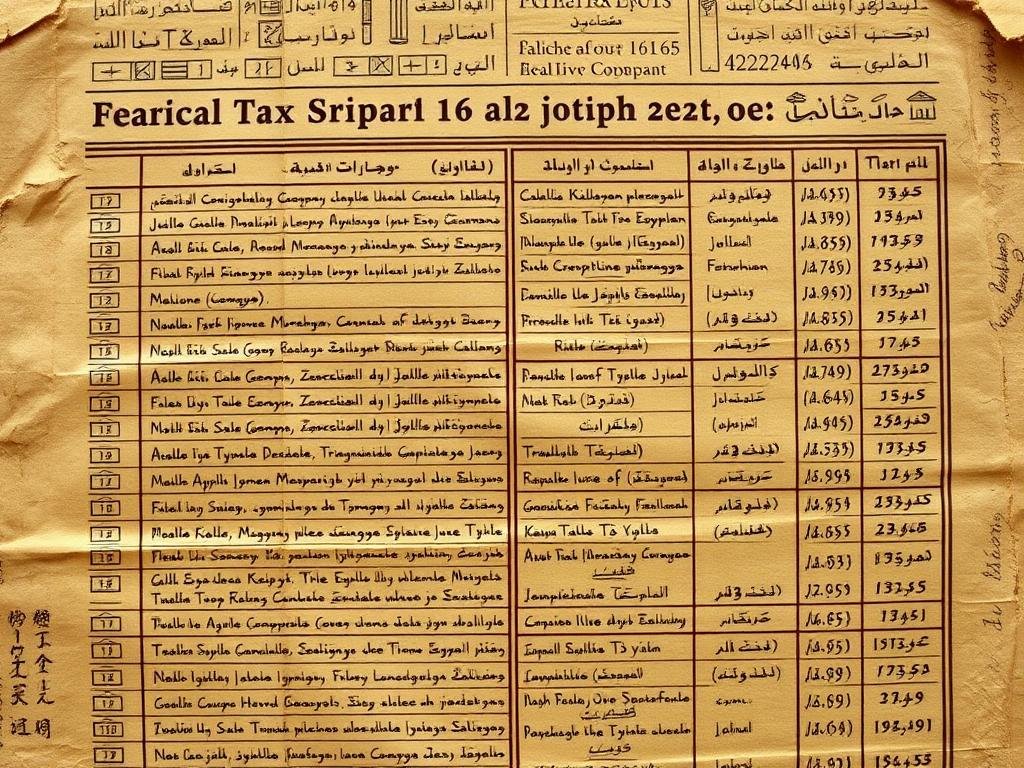
Papyrus document showing administrative records from Cleopatra’s reign, with bilingual Greek and Demotic text
Documentary evidence from papyri shows that she maintained traditional tax categories while ensuring more effective collection. Tax farmers were closely supervised, and records were kept in both Greek and Egyptian demotic script, reflecting the dual nature of her administration and ensuring transparency across cultural boundaries.
Cleopatra’s economic policies, while pragmatic rather than revolutionary, succeeded in maintaining Egypt’s prosperity during a period of external pressure. Her ability to fund ambitious building projects, maintain a substantial military, and still accumulate personal wealth testifies to effective economic management that extracted maximum value from Egypt’s resources without triggering social unrest.
Enduring Legacy: Cleopatra’s Impact Through the Ages
When Cleopatra took her own life in August of 30 BCE, she could not have imagined how profoundly her story would shape cultural imagination for millennia to come. As the last active ruler of Ptolemaic Egypt and the final pharaoh in a 3,000-year tradition, her death marked the end of an era. Yet her legacy continues to evolve, shaped by changing perspectives on power, gender, and cultural identity.
Historical Transition: From Hellenistic to Roman World
Cleopatra’s reign coincided with a pivotal historical transition. Her death and Egypt’s annexation as a Roman province marked the end of the Hellenistic period that had begun with Alexander the Great. The independent kingdoms that emerged from Alexander’s conquests were gradually absorbed by Rome, with Egypt – the wealthiest and most culturally significant – being the last major holdout.

Timeline showing the transition from Hellenistic kingdoms to Roman provinces, with Cleopatra’s reign as the final chapter
In this context, Cleopatra’s resistance against Roman domination represents the last significant attempt to preserve a different model of Mediterranean civilization – one that balanced Greek, Egyptian, and other cultural traditions rather than imposing Roman hegemony. Her vision of a multicultural eastern Mediterranean power, though ultimately unsuccessful, offered an alternative to the Roman-centered world that followed.
After her death, Egypt became Rome’s richest province, its grain feeding the imperial capital and its wealth financing Roman ambitions. The Ptolemaic administrative system, which Cleopatra had maintained and refined, provided a template that Roman governors adapted rather than replaced – a testament to its effectiveness.
Cultural Representations Through History
Few historical figures have inspired as many artistic interpretations as Cleopatra. From Roman poetry to Renaissance painting, from Shakespearean drama to Hollywood film, her image has been continuously reinvented to reflect changing cultural values and perspectives.
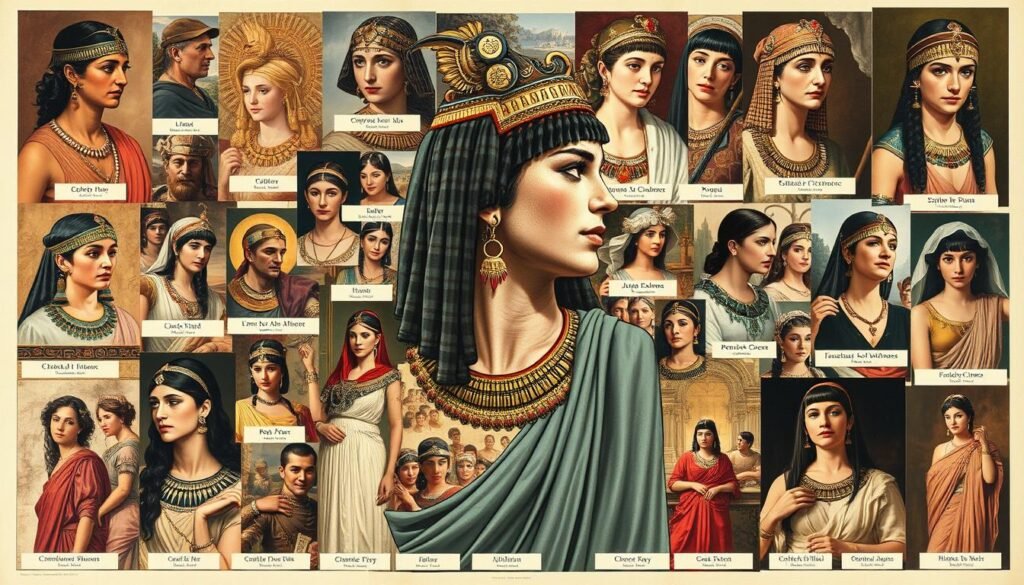
Evolution of Cleopatra’s image through art history, from ancient Roman depictions to modern interpretations
Roman writers established the initial framework, with poets like Horace and Virgil portraying her as a dangerous foreign queen threatening Roman virtue. This negative characterization served Augustan propaganda but established tropes that would influence later interpretations. By the Medieval period, Cleopatra had become a cautionary tale about the dangers of female rule and excessive passion.
The Renaissance brought renewed interest in Classical antiquity and more complex portrayals. Shakespeare’s “Antony and Cleopatra” (c. 1607) presented her as passionate and flawed but also noble and captivating. Visual artists of the period often depicted her death scene, emphasizing both tragedy and exoticism.
The 19th century saw Cleopatra reimagined through the lens of Orientalism, with paintings by artists like Jean-André Rios and Alexandre Cabanel emphasizing sensuality and exotic otherness. This period established the visual vocabulary that would influence early film portrayals, including Theda Bara’s now-lost 1917 silent film and Claudette Colbert’s 1934 performance.
Elizabeth Taylor’s iconic portrayal in the 1963 film “Cleopatra” perhaps most powerfully shaped modern popular imagination, emphasizing romance and spectacle. More recent interpretations, influenced by feminist scholarship and postcolonial perspectives, have attempted to recover the historical Cleopatra from these accumulated layers of projection and fantasy.
Modern Reassessment and Continuing Relevance
Contemporary scholarship has increasingly recognized Cleopatra’s political and administrative accomplishments, moving beyond the reductive focus on her relationships with Roman men. Archaeological discoveries, careful reexamination of textual sources, and new analytical approaches have contributed to a more nuanced understanding of her reign.
“The Cleopatra we’re now recovering is a brilliant politician, strategist, and negotiator who managed to keep Egypt independent of Rome for longer than anyone could have expected.”
Cleopatra’s story continues to resonate with contemporary concerns about female leadership, cultural identity, and resistance against imperialism. As a woman who exercised power in a male-dominated world, a multicultural ruler navigating complex identities, and a leader defending national sovereignty against a superpower, she embodies challenges that remain relevant in the modern world.

Modern underwater archaeological excavation in Alexandria’s harbor, revealing artifacts from Cleopatra’s time
Archaeological work continues to uncover new evidence about her reign, particularly underwater excavations in Alexandria’s harbor that have revealed statuary, architectural elements, and artifacts from the royal quarter. These discoveries provide tangible connections to Cleopatra’s world and help separate historical reality from accumulated myth.
Perhaps most significantly, Cleopatra represents a historical moment when different possibilities existed for the Mediterranean world – when Egypt’s ancient civilization, Greek learning, and Roman power might have been balanced differently. Her defeat closed one historical path, but her legacy reminds us that the triumph of Rome and its cultural model was not inevitable but the result of specific historical choices and circumstances.
Conclusion: Remembering the Queen of the Nile
Cleopatra’s reign as Queen of the Nile represents a fascinating chapter in world history – a moment when Egyptian tradition, Greek learning, and Roman power converged in the person of one remarkable ruler. Beyond the romantic legends and political propaganda lies a woman of extraordinary capability who navigated treacherous waters with intelligence and determination.
Her political strategies preserved Egyptian independence for nearly two decades against overwhelming odds. Her cultural policies balanced respect for Egyptian traditions with engagement in the wider Mediterranean world. Her economic management maintained prosperity despite significant challenges. And her resistance against Roman domination, though ultimately unsuccessful, demonstrated remarkable resilience and strategic thinking.

The Nile at sunset – symbolic of Cleopatra’s legacy as the last Queen of the Nile and the end of pharaonic Egypt
As we continue to uncover archaeological evidence and reexamine historical sources, our understanding of Cleopatra continues to evolve. Moving beyond simplistic portrayals as either seductress or victim, we can appreciate her as a complex historical figure who made difficult choices in challenging circumstances. Her legacy invites us to consider questions about leadership, cultural identity, and the ways in which history is shaped by both individuals and larger forces.
The Queen of the Nile may have died over two millennia ago, but her story continues to captivate and instruct. In her determination to maintain Egypt’s independence, her skillful navigation of power politics, and her embrace of cultural diversity, Cleopatra offers insights that remain relevant in our own complex world. Perhaps this explains her enduring fascination – not just as an exotic figure from a distant past, but as a leader whose challenges and choices still speak to our present concerns.
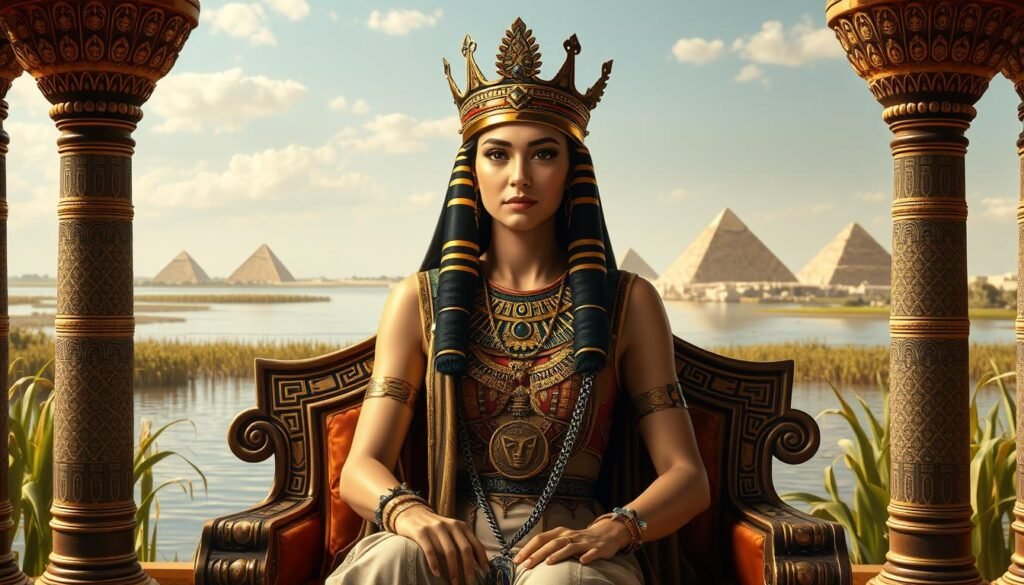
Cleopatra VII Thea Philopator, the last active ruler of the Ptolemaic Kingdom of Egypt
Uncover Ancient Egypt’s Greatest Mysteries
Join our newsletter to receive exclusive content about Cleopatra and other fascinating rulers of Ancient Egypt. Get access to expert insights, historical discoveries, and special educational resources.
Explore Cleopatra’s Alexandria
Discover the magnificent city where Cleopatra ruled. Our detailed historical guide reveals the lost wonders of ancient Alexandria, from the legendary Library to the Pharos Lighthouse.
Separate Historical Truth from Fiction
Curious about what’s myth and what’s reality in Cleopatra’s story? Our expert-reviewed guide examines the evidence behind the legends and reveals surprising facts about history’s most misunderstood queen.
Dive Deeper into Ptolemaic Egypt
Want to explore the fascinating world of Cleopatra and the Ptolemaic dynasty? Our comprehensive online course offers expert lectures, virtual tours of ancient sites, and exclusive historical resources.
Continue Your Journey Through Ancient History
Fascinated by Cleopatra and ancient Egypt? Subscribe to our history newsletter for weekly articles, virtual museum tours, and exclusive content about the ancient world’s most captivating civilizations and rulers.