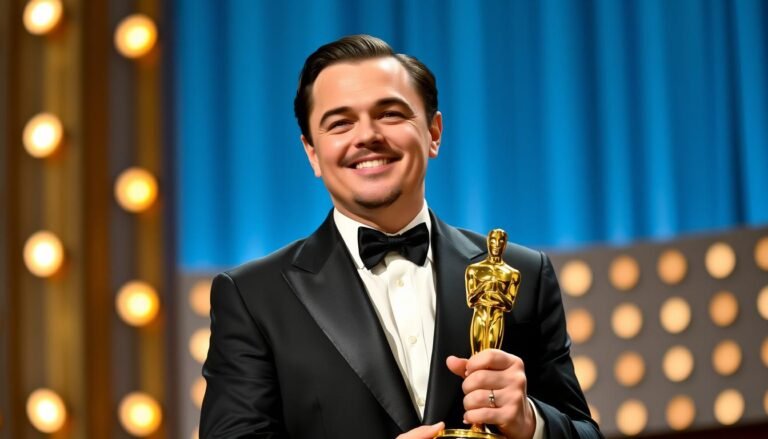
Chadwick Boseman – King Forever: Celebrating a Legacy of Courage and Impact
When Chadwick Boseman crossed his arms over his chest and proclaimed “Wakanda Forever,” he wasn’t just delivering a line from a blockbuster film – he was cementing a cultural touchstone that would resonate far beyond cinema. On August 28, 2020, the world lost not just an extraordinary actor, but a cultural icon whose work transcended entertainment to become a beacon of representation, excellence, and quiet dignity. What makes his legacy all the more remarkable was the revelation that came with his passing: throughout his most iconic roles, Boseman had been silently battling colon cancer, never once letting his personal struggle diminish the power he brought to the screen or his commitment to inspiring millions worldwide.
The Roles That Defined a Generation
Boseman’s portrayal of T’Challa/Black Panther became a cultural phenomenon that transcended the superhero genre
Chadwick Boseman’s career was defined by his extraordinary ability to breathe life into historical figures and fictional characters with equal measures of dignity, nuance, and power. His breakthrough came in 2013 when he portrayed baseball legend Jackie Robinson in “42,” capturing both the athlete’s remarkable skill and the quiet strength required to endure the racism he faced as the first Black player in Major League Baseball.
Speaking about portraying Robinson, Boseman told NPR in 2013: “You do get angry hearing it. And you do feel, in a slice of that reality, somewhat like he would feel. And it’s an incredible amount of courage to deal with that.” This ability to channel historical pain while highlighting resilience became a hallmark of Boseman’s approach to his roles.
Bringing Icons to Life
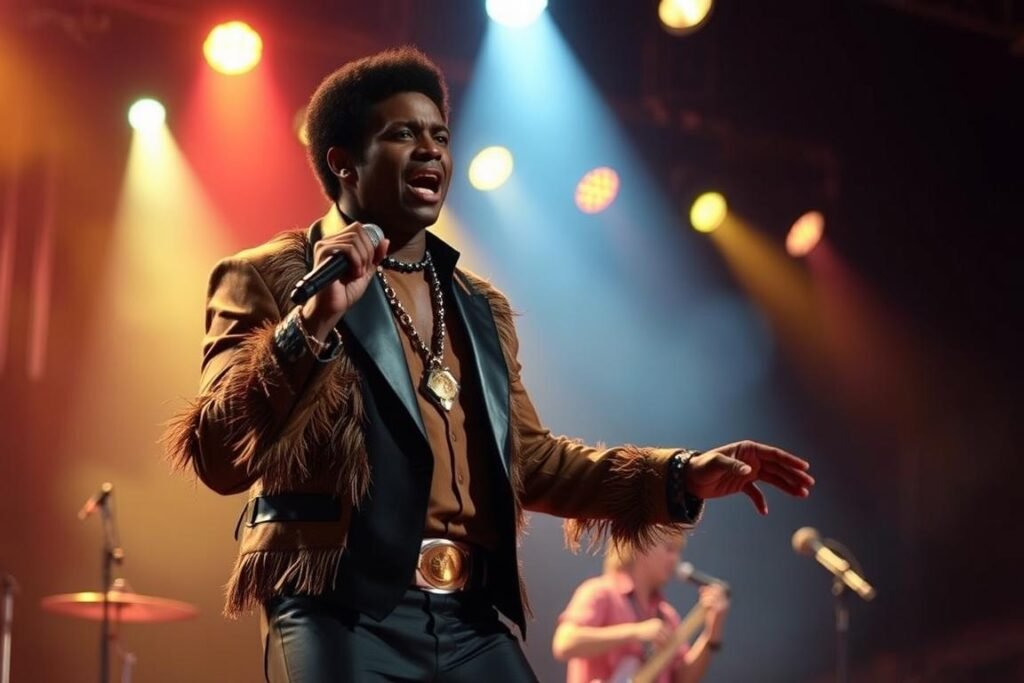
Following “42,” Boseman continued his exploration of influential Black Americans by portraying soul legend James Brown in “Get On Up” (2014). His electrifying performance captured Brown’s explosive stage presence and complex personality, with Boseman performing all his own dancing and some singing. Time critic Richard Corliss wrote that Boseman “deserves a Pulitzer, a Nobel and instant election to the Rock and Roll Hall of Fame” for his transformative work.
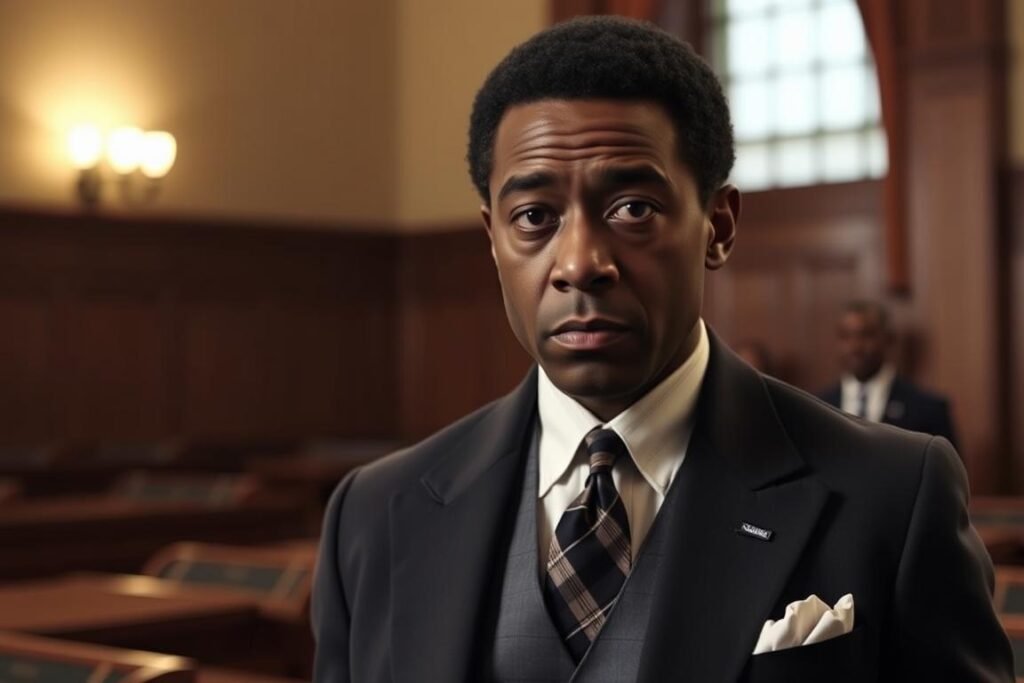
In 2017, Boseman took on the role of Thurgood Marshall in “Marshall,” portraying the future Supreme Court Justice during his early years as an NAACP lawyer. Rather than focusing on Marshall’s later achievements, the film highlighted a lesser-known case that demonstrated his brilliance and determination. Boseman approached the role with his characteristic depth, telling The New York Times he appreciated how the story “doesn’t allow you as an audience member, no matter what color you are, to hide from the issues.”
The Cultural Phenomenon of Black Panther
While Boseman had already established himself as a formidable talent, it was his role as T’Challa/Black Panther in the Marvel Cinematic Universe that catapulted him to global stardom. First appearing in “Captain America: Civil War” (2016), Boseman developed a Wakandan accent himself and used it throughout production “whether he was on camera or not,” demonstrating his deep commitment to authenticity.
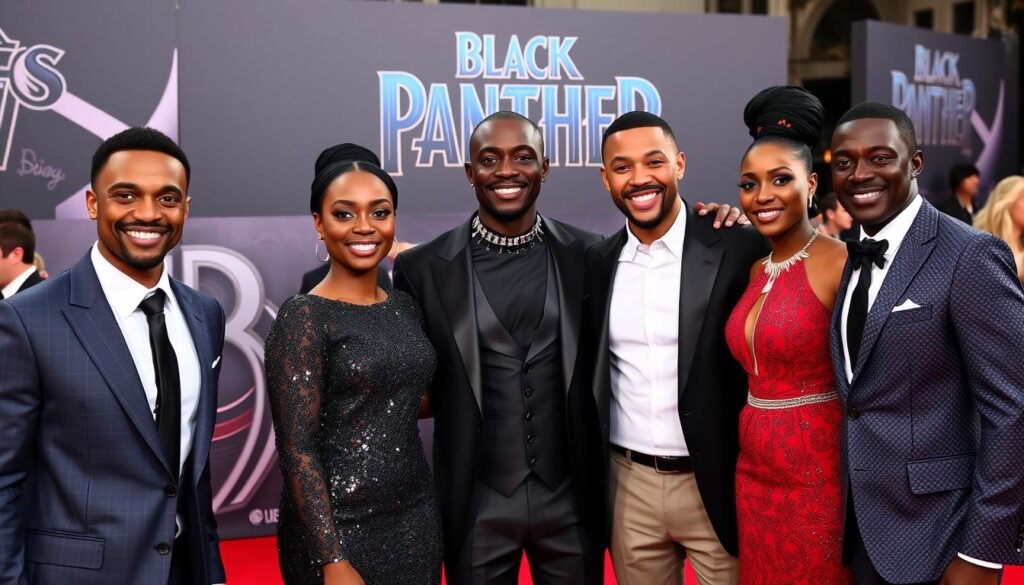
The cast of Black Panther at the film premiere, representing a watershed moment for representation in Hollywood blockbusters
The 2018 release of “Black Panther” marked a watershed moment in cinema history. As the first mega-budget superhero film with a predominantly Black cast and director, it shattered box office records and cultural barriers simultaneously. The film earned a Best Picture nomination at the Academy Awards—unprecedented for a superhero movie—and became a cultural touchstone that transcended entertainment.
“We know what it’s like to be told there isn’t a screen for you to be featured on, a stage for you to be featured on. We know what it’s like to be the tail and not the head. We know what it’s like to be beneath and not above. And that is what we went to work with every day… We knew that we could create a world that exemplified a world we wanted to see.”
His final role in “Ma Rainey’s Black Bottom” (2020), released posthumously, showcased Boseman at the height of his powers. As the ambitious trumpeter Levee, he delivered what many critics consider his finest performance, earning posthumous nominations for the Academy Award, Golden Globe, and Screen Actors Guild Award for Best Actor.
Experience Chadwick Boseman’s Transformative Performances
Revisit the roles that defined his legendary career and witness his extraordinary range as an actor.
A Silent Battle with Greatness
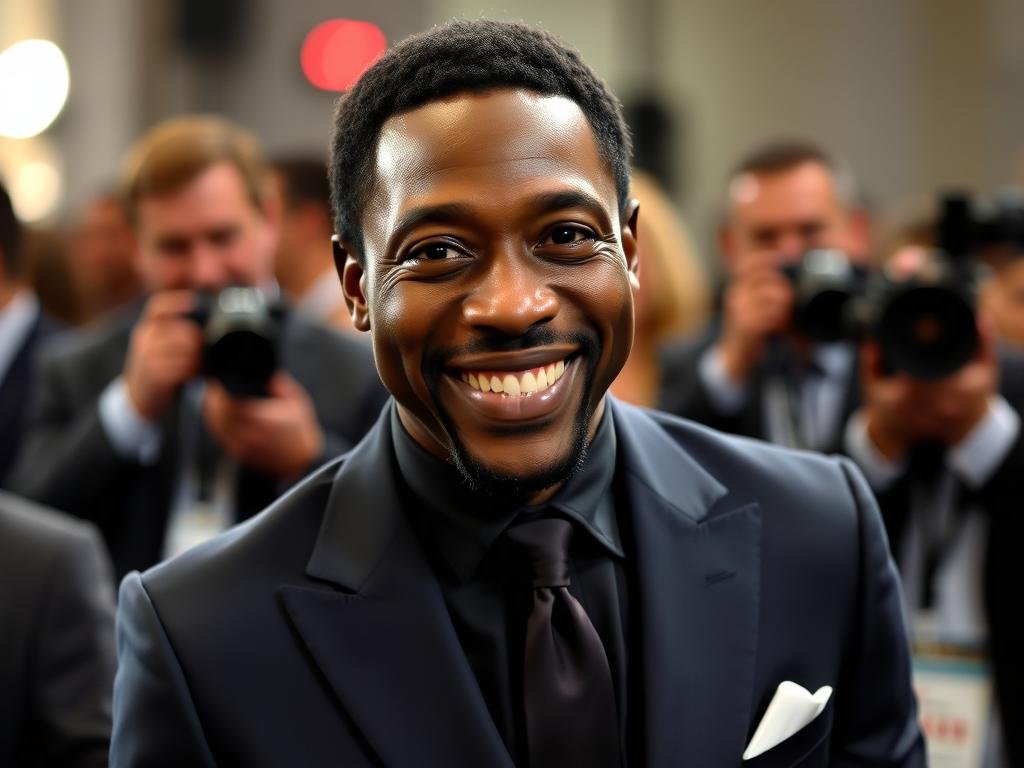
Despite his private battle with cancer, Boseman continued to inspire millions through his work and public appearances
The world was stunned to learn that throughout his most productive and high-profile years in Hollywood, Chadwick Boseman had been privately battling colon cancer. Diagnosed with stage III colon cancer in 2016, he continued working as the disease progressed to stage IV, never publicly disclosing his condition.
During this period, Boseman not only starred in “Black Panther,” “Avengers: Infinity War,” and “Avengers: Endgame”—physically demanding roles that required intense training and stamina—but also completed “Marshall,” “21 Bridges,” “Da 5 Bloods,” and “Ma Rainey’s Black Bottom.” This extraordinary feat of perseverance reveals the depth of his commitment to his craft and to the cultural significance of his work.
Boseman’s Incredible Work Ethic
Between his cancer diagnosis in 2016 and his passing in 2020, Chadwick Boseman completed filming on seven major movies, including physically demanding superhero roles, while undergoing multiple surgeries and chemotherapy treatments.
Ryan Coogler, director of “Black Panther,” was among the many who had no knowledge of Boseman’s illness. In a moving tribute after the actor’s death, Coogler revealed: “I spent the last year preparing, imagining and writing words for him to say [in the sequel] that we weren’t destined to see.”
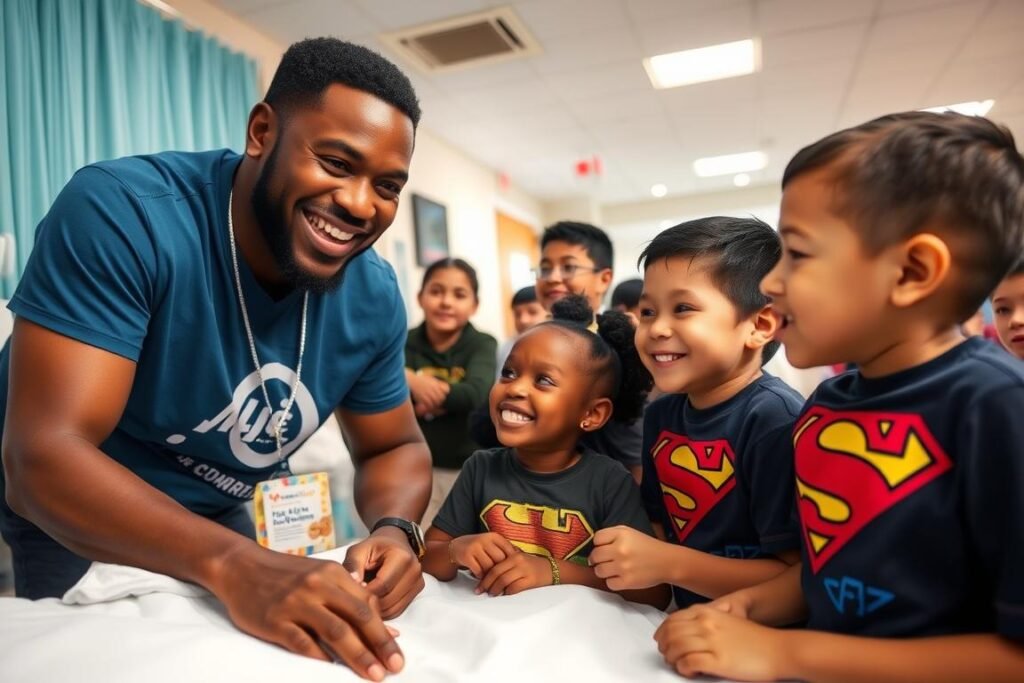
Throughout his treatment, Boseman continued to visit children with cancer at St. Jude Children’s Research Hospital, never revealing that he was fighting the same disease. In a message to a producer just days before his death, he inquired about sending gifts to childhood cancer patients, demonstrating his selfless nature even in his final days.
“Chad deeply valued his privacy, and I wasn’t privy to the details of his illness… He was really an old-school artist and would not want his battles to get in the way of the work.”
His widow, Taylor Simone Ledward, whom he married in secret during his final months, was by his side when he passed away at his Los Angeles home on August 28, 2020. The announcement of his death came as a shock to fans worldwide, with the tweet from his family’s account becoming the most-liked tweet in history at that time, garnering over seven million likes within days.
Colon Cancer Awareness
Colon cancer is the third most common cancer diagnosed in both men and women in the United States. Early detection through regular screening can dramatically improve survival rates. The American Cancer Society now recommends that people at average risk of colorectal cancer start regular screening at age 45.
Shaping Black Excellence in Cinema
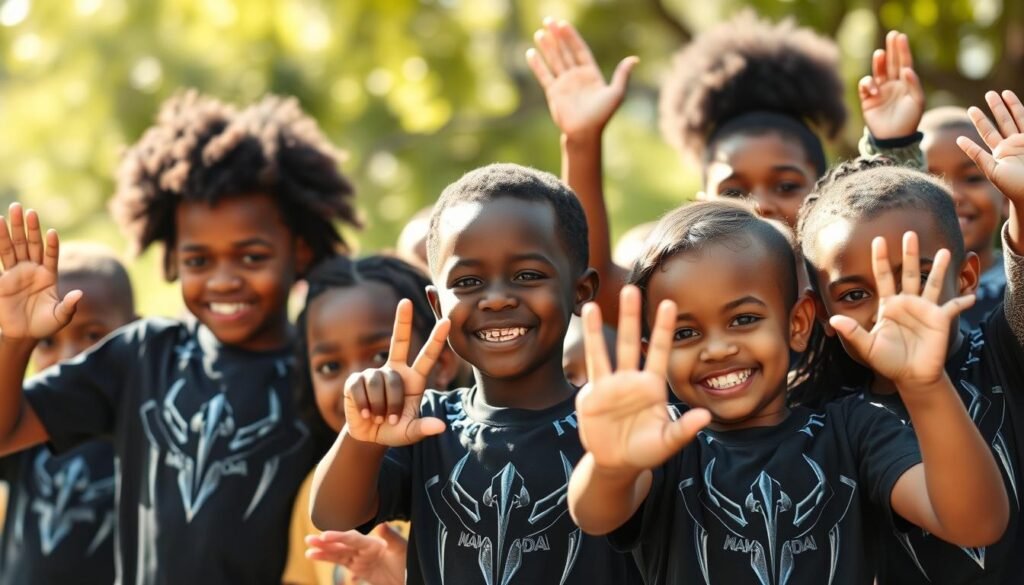
Boseman’s portrayal of T’Challa inspired a generation of young fans who finally saw themselves represented as heroes
Chadwick Boseman’s impact on cinema extends far beyond his performances. As the first Black actor to headline a film in the Marvel Cinematic Universe, he helped transform Hollywood’s approach to representation and proved definitively that films with predominantly Black casts could achieve unprecedented global success.
Redefining Representation in Hollywood
Throughout his career, Boseman was intentional about the roles he chose and how they portrayed Black experiences. When cast in “Gods of Egypt” (2016), he took the role specifically to ensure that one of the film’s African characters would be played by someone of African descent. He was equally thoughtful about his approach to Black Panther, working with director Ryan Coogler to create an authentic portrayal of African culture that avoided stereotypes.
Boseman’s influence extended behind the camera as well. As a producer on “21 Bridges,” he advocated for diverse casting and personally recruited actors like Sienna Miller and Stephan James. When Miller requested a higher salary than the studio offered, Boseman donated part of his own pay to meet her request, demonstrating his commitment to equity in the industry.
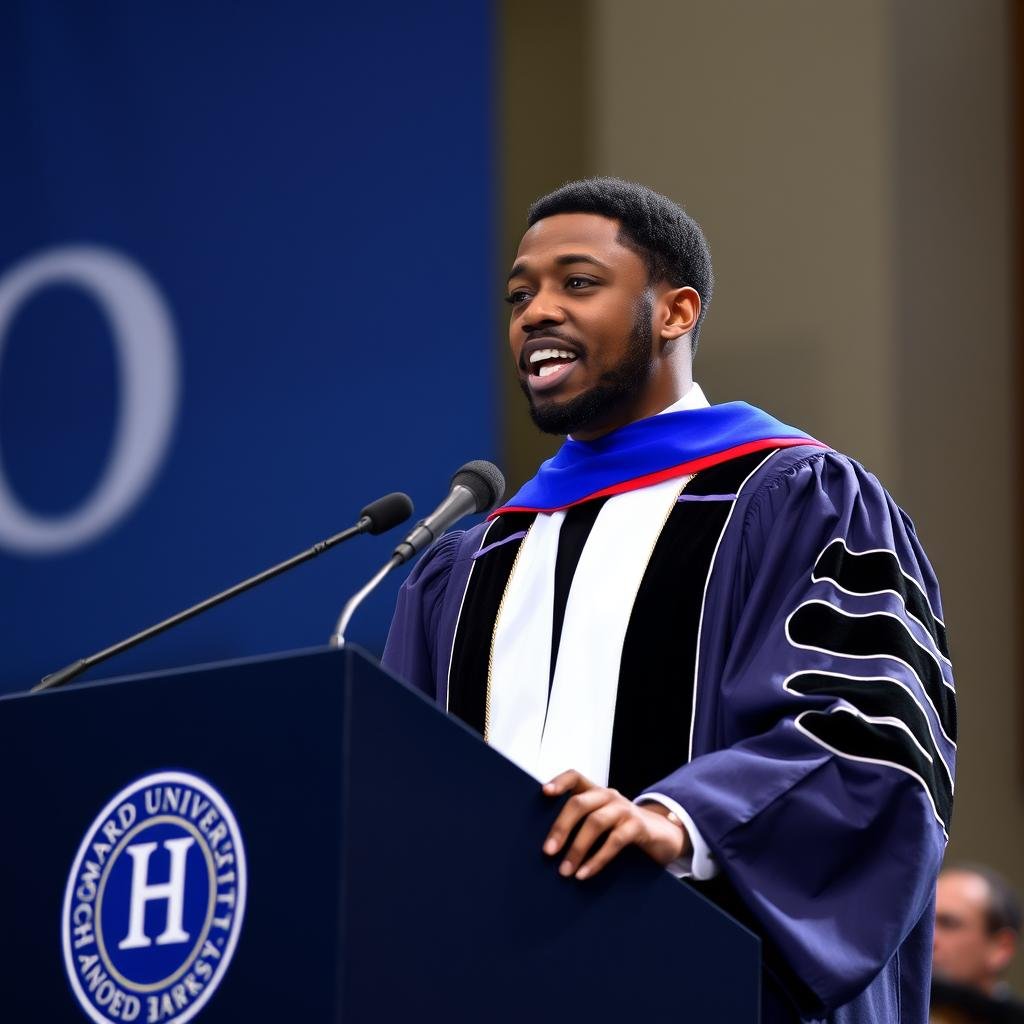
Mentorship and Education
Boseman’s commitment to nurturing the next generation was evident in his support for education. A graduate of Howard University, he returned in 2018 to deliver a powerful commencement address, encouraging students to “find purpose, not just a job.” The university later renamed its College of Fine Arts in his honor.
Before achieving Hollywood success, Boseman taught acting at the Schomburg Center for Research in Black Culture in Harlem, sharing his knowledge with young artists. Throughout his career, he remained dedicated to opening doors for others in the industry.
“He was not just an actor or filmmaker; he was an inspiration to millions around the world. His journey from humble beginnings to Hollywood stardom serves as a testament to the power of perseverance, passion, and unwavering dedication to one’s craft.”
Cultural Impact Beyond Cinema
The “Wakanda Forever” salute from “Black Panther” transcended the film to become a symbol of Black pride and solidarity worldwide. Athletes, politicians, and everyday people adopted the gesture as a recognition of shared cultural identity and strength. Following Boseman’s death, the salute took on additional meaning as a tribute to his legacy.
The fictional nation of Wakanda, brought to life through Boseman’s portrayal of T’Challa, offered a vision of an African society untouched by colonization—technologically advanced, culturally rich, and self-determined. This portrayal challenged persistent stereotypes about Africa and provided a powerful counter-narrative that resonated globally.
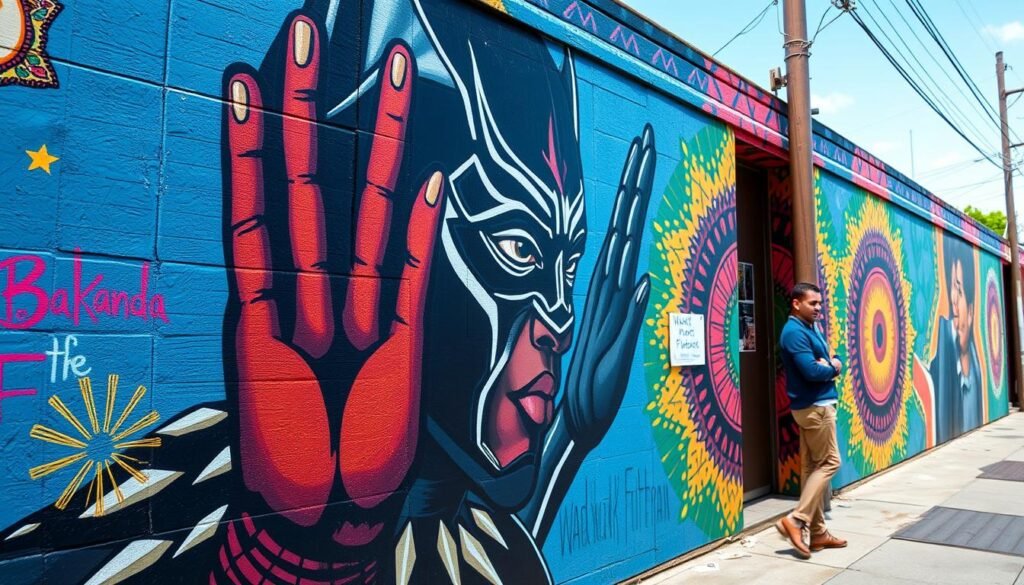
Murals and tributes to Boseman appeared in communities around the world following his passing
Rhea Combs, film curator of the Smithsonian National Museum of African American History and Culture, noted that Boseman “was not only a conduit to the past and the way African-Americans persevered and pushed through so many challenges, he also represented brightness and the promise of tomorrow.”
Eternal Impact: A Legacy That Transcends Time
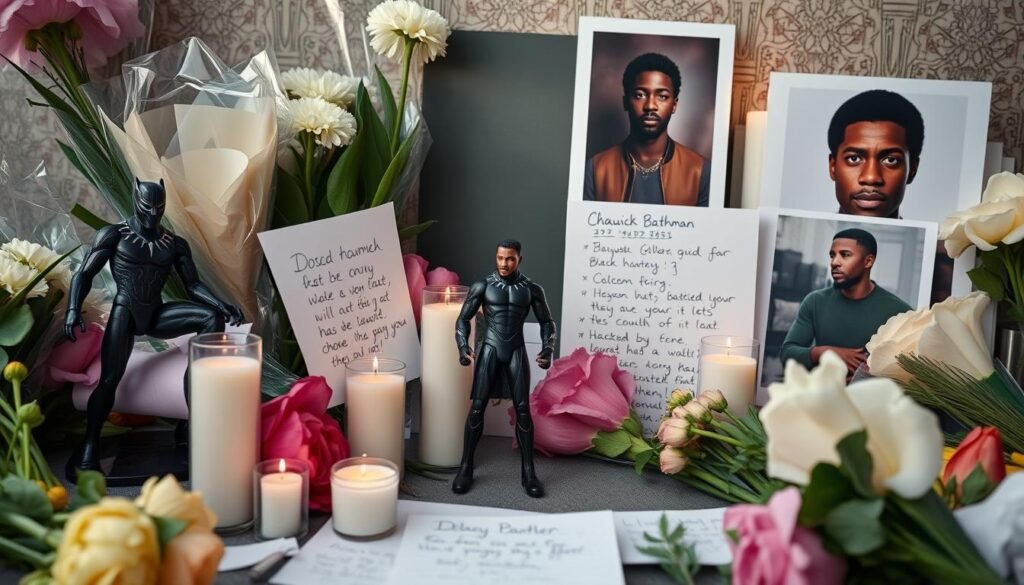
Fans around the world created memorials and tributes to honor Boseman’s legacy
In the wake of Chadwick Boseman’s passing, the outpouring of grief and tributes revealed the profound impact he had on people from all walks of life. Fellow actors, directors, political figures, and millions of fans shared how his work had touched and transformed them.
Honoring His Memory in Film
Following Boseman’s death, Marvel Studios faced the difficult decision of how to approach the “Black Panther” sequel. Director Ryan Coogler and the studio ultimately chose not to recast the role of T’Challa, instead crafting “Black Panther: Wakanda Forever” (2022) as both a continuation of the story and a tribute to Boseman’s legacy.
The film depicts T’Challa’s death and the nation of Wakanda processing their grief—mirroring the real-world loss felt by cast, crew, and audiences. The Marvel Studios opening sequence was modified to show only images of Boseman as T’Challa, and the film concluded with the dedication: “For our friend Chadwick Boseman.”
Beyond the Marvel universe, Boseman’s influence continues to be felt throughout the industry. His approach to selecting roles with cultural and historical significance has inspired a new generation of actors to consider the broader impact of their work.
Humanitarian Legacy
Throughout his life, Boseman supported numerous charitable causes, often without public recognition. He worked with cancer charities including St. Jude Children’s Research Hospital, donated $10,000 to the Boys and Girls Club of Harlem to provide free tickets for children to see “Black Panther,” and supported the Jackie Robinson Foundation’s youth outreach.
In April 2020, during the COVID-19 pandemic, he launched “Operation 42” (named after his Jackie Robinson film), donating $4.2 million in personal protective equipment to hospitals serving Black communities that were disproportionately affected by the virus.
“In my culture, death is not the end. It’s more of a stepping off point. You reach out with both hands and Bast and Sekhmet, they lead you into the green veld where you can run forever.”
Inspiring Future Generations
Perhaps Boseman’s most enduring legacy is the inspiration he provides to young people, particularly young Black children who saw in him a hero who looked like them. The image of T’Challa as a brilliant, compassionate, and powerful leader offered a vision of Black excellence that continues to resonate.
His life story—from a child in Anderson, South Carolina, who experienced racism firsthand to a global icon who transformed how Black characters are portrayed in mainstream cinema—serves as a testament to the power of perseverance, integrity, and purpose.
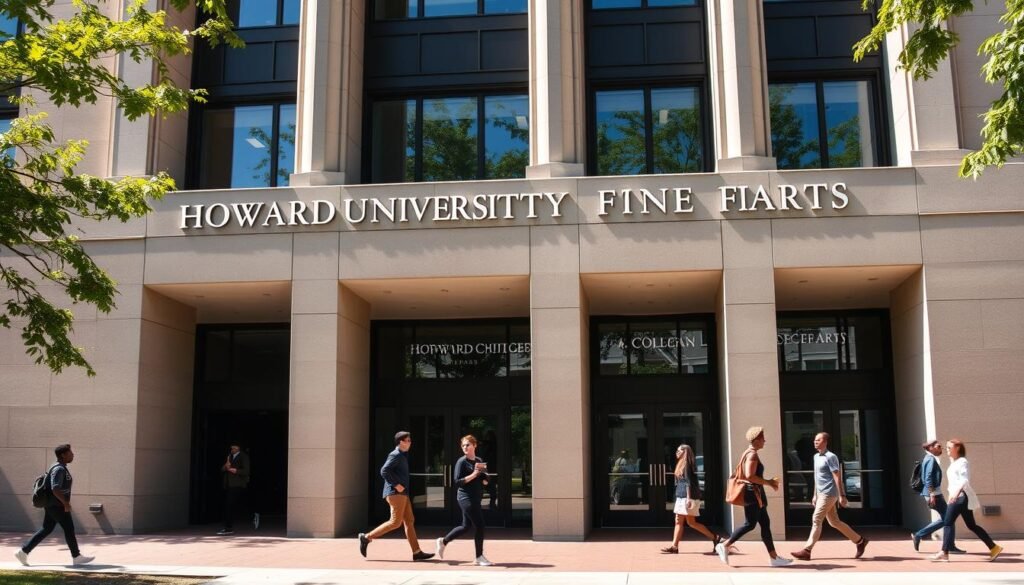
Howard University renamed its College of Fine Arts in honor of their distinguished alumnus
Film critic Owen Gleiberman of Variety wrote that “Boseman was a virtuoso actor who had the rare ability to create a character from the outside in and the inside out… That’s what made him an artist, and a movie star, too. Yet in Black Panther, he also became that rare thing, a culture hero.”
As we reflect on Chadwick Boseman’s all-too-brief time with us, we’re reminded that true legacy isn’t measured in years but in impact. In just 43 years, he created a body of work that will continue to inspire, challenge, and move audiences for generations to come.
Honor Chadwick Boseman’s Legacy
Continue the fight against colon cancer and support the causes that were important to him.
Support Colorectal Cancer Research
Donate to St. Jude Children’s Hospital
Wakanda Forever: A King’s Eternal Legacy

The Wakanda salute has become a powerful symbol of Boseman’s enduring legacy
Chadwick Boseman’s journey from a young playwright in South Carolina to a global icon exemplifies a life lived with purpose, integrity, and extraordinary talent. Through his portrayals of historical figures like Jackie Robinson, James Brown, and Thurgood Marshall, he preserved and celebrated Black excellence throughout American history. As T’Challa/Black Panther, he created a new kind of hero—one who led with wisdom, compassion, and cultural pride.
Beyond his artistic achievements, Boseman’s personal courage in the face of illness and his unwavering commitment to using his platform for positive change reveal a man whose character matched the heroes he portrayed on screen. His decision to keep his cancer diagnosis private while continuing to deliver powerful performances and support charitable causes speaks to his selflessness and dedication.
As we remember Chadwick Boseman, we honor not just what he accomplished but how he lived—with dignity, purpose, and a determination to make a difference. In the words he spoke as T’Challa: “In times of crisis, the wise build bridges while the foolish build barriers.” Boseman built bridges across cultures, generations, and experiences, leaving behind a legacy that continues to inspire us to do the same.
Wakanda Forever isn’t just a catchphrase from a film—it’s a reminder that some legacies truly are eternal. Chadwick Boseman may have left us too soon, but his impact as an artist, humanitarian, and cultural icon will endure for generations to come.