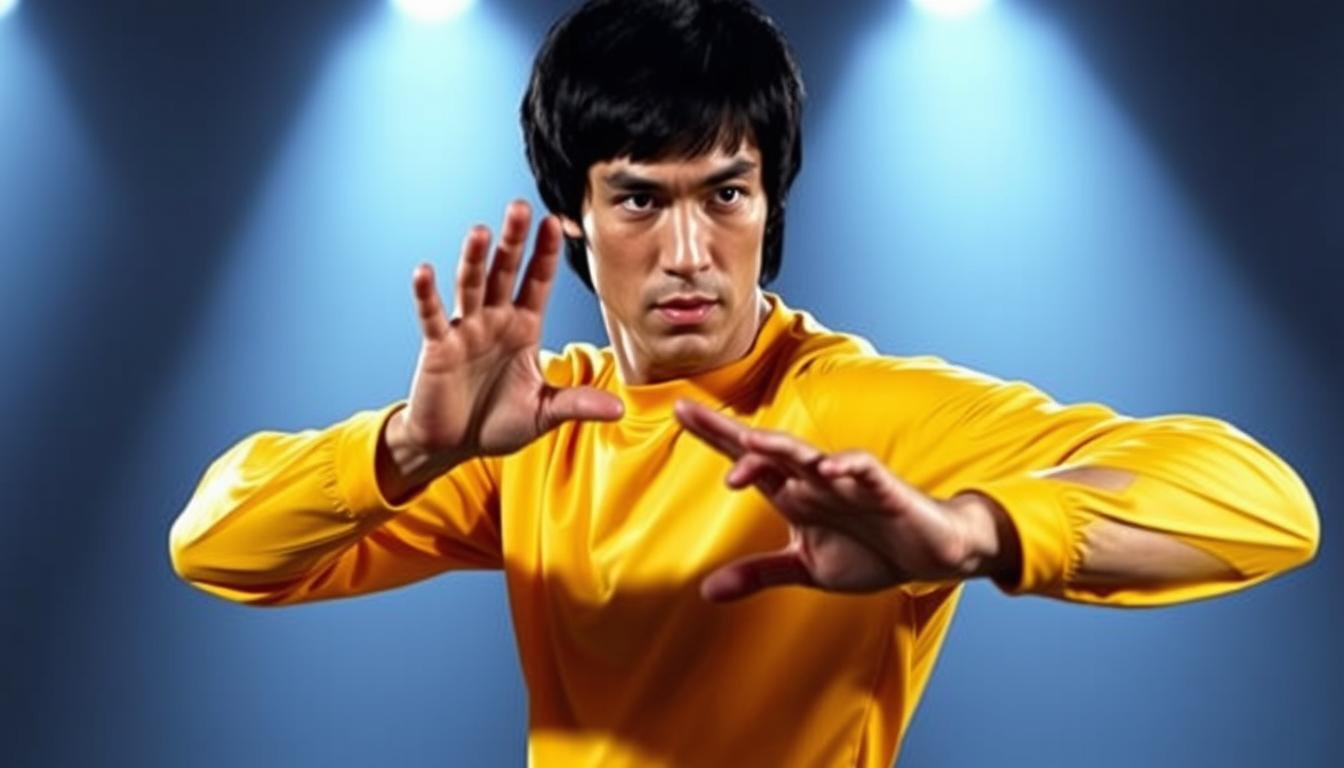
Bruce Lee – The Legend That Lives On
Nearly 50 years after his untimely death at age 32, Bruce Lee remains one of the most recognizable and influential cultural icons on earth. His impact transcends martial arts, cinema, and philosophy, creating a legacy that continues to inspire millions worldwide. From San Francisco to Hong Kong and beyond, Lee’s journey broke barriers and redefined what was possible for Asian representation in global media.
Early Life & Philosophy: The Making of a Legend
Born Lee Jun Fan in San Francisco in 1940, Bruce Lee’s journey began in the year and hour of the dragon—earning him the nickname “Little Dragon.” Though born in America, Lee spent his formative years in Hong Kong, where he studied Wing Chun Kung Fu under the legendary master Ip Man. This training laid the foundation for what would become his revolutionary approach to martial arts.
Lee returned to the United States at age 18, where he continued his education while developing his unique martial arts philosophy. While studying philosophy at the University of Washington, Lee began synthesizing Eastern and Western concepts into what would become Jeet Kune Do—a hybrid martial art that rejected rigid traditions in favor of adaptability and efficiency.
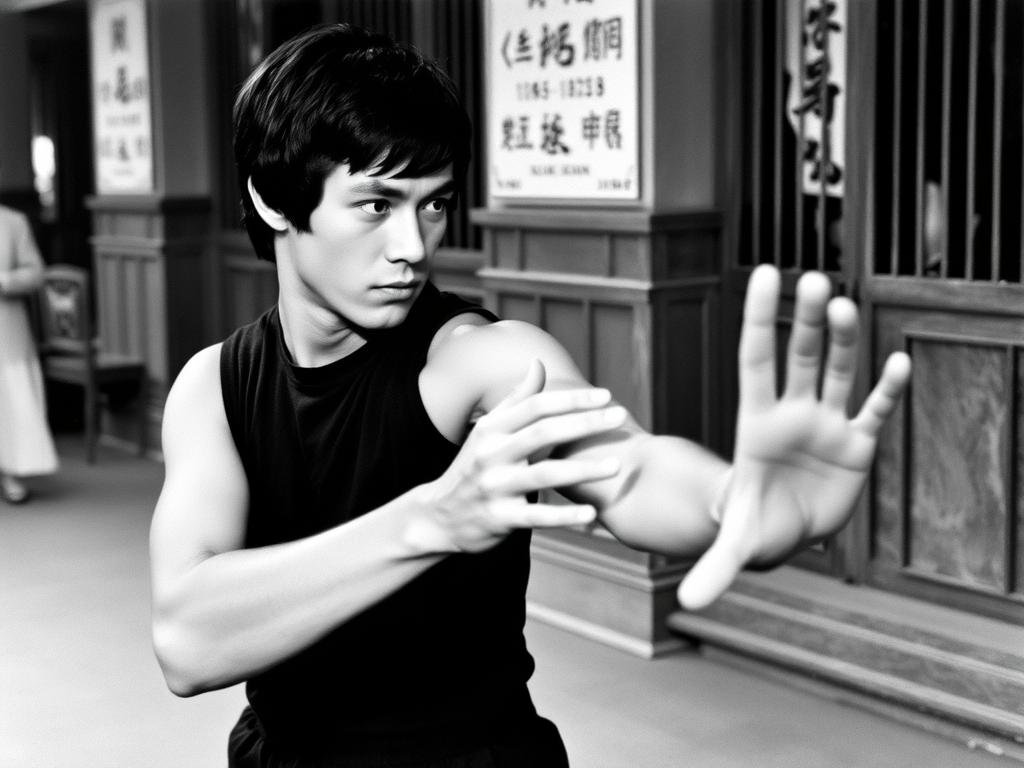
“I have no fear of the man who has practiced 10,000 kicks once, but I fear the man who has practiced one kick 10,000 times.”
Lee’s philosophy extended far beyond combat. He embraced the Taoist concept of “being like water”—adaptable, flowing, and capable of taking any form while maintaining its essential nature. This philosophy informed not only his martial arts but his approach to life’s challenges and cultural barriers.
Discover Bruce Lee’s Philosophical Writings
Explore the depth of Bruce Lee’s thinking through his collected writings on martial arts, self-improvement, and philosophy.
Career Milestones: From Kato to Global Superstar
Lee’s acting career began in childhood—appearing in approximately 20 films as a child actor in Hong Kong. However, his adult career faced significant obstacles in Hollywood, where Asian actors were typically relegated to stereotypical roles. As Kato in the television series “The Green Hornet” (1966-1967), Lee demonstrated authentic martial arts on American television for the first time, though he constantly fought for more dialogue and character development.
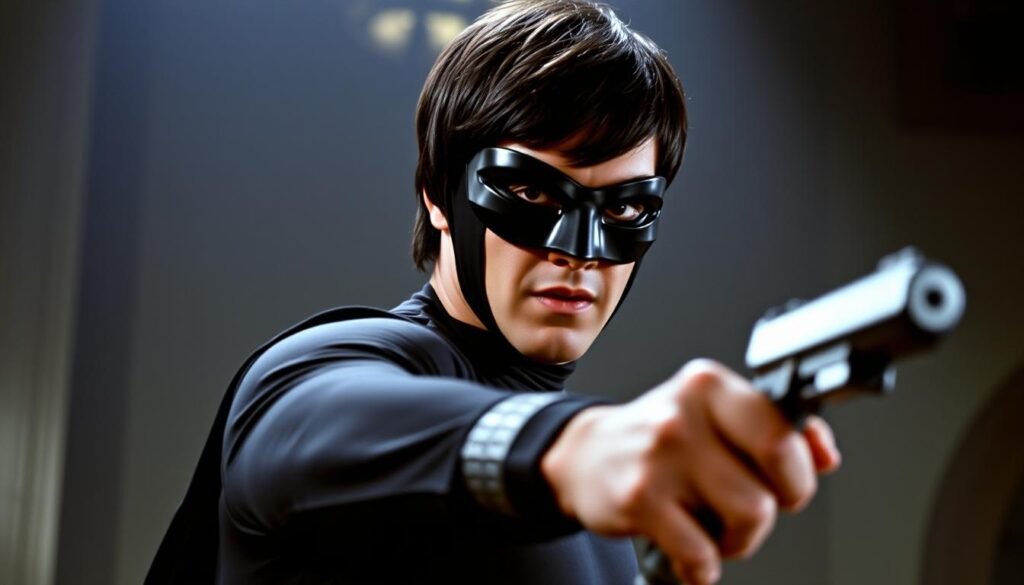
Frustrated by Hollywood’s limitations, Lee returned to Hong Kong in 1971 and created four groundbreaking films in just two years: “The Big Boss” (1971), “Fist of Fury” (1972), “Way of the Dragon” (1972), and “Enter the Dragon” (1973). These films revolutionized martial arts cinema with their authentic fighting techniques, themes of resistance against oppression, and Lee’s charismatic screen presence.
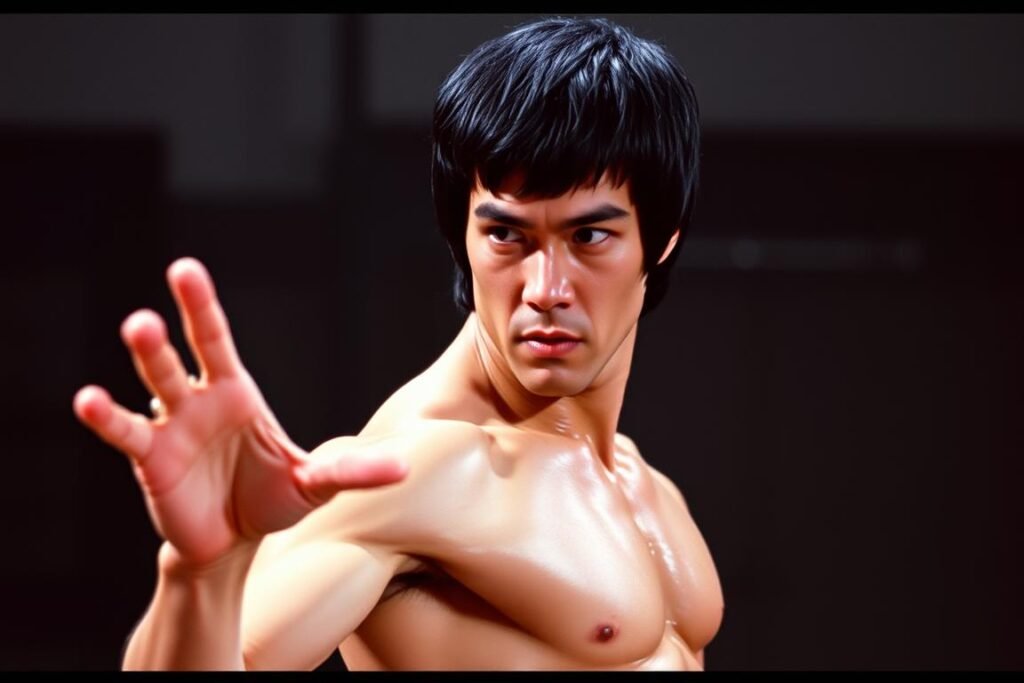
“Enter the Dragon,” released shortly after Lee’s death in July 1973, represented the first major Hollywood-Hong Kong co-production and catapulted Lee to global superstardom. The film’s influence on action cinema cannot be overstated—establishing conventions that would define the genre for decades to come.
Lee’s fighting style on screen was revolutionary—lightning-fast, graceful yet powerful, and above all, authentic. Unlike the stylized choreography common in films of the era, Lee’s combat sequences demonstrated real martial arts principles while remaining visually spectacular.
Experience Bruce Lee’s Cinematic Legacy
Watch the documentary “Be Water” (2020) to understand how Bruce Lee’s films changed cinema forever and broke cultural barriers.
Cultural Impact: Breaking Barriers and Building Bridges
Bruce Lee’s impact extended far beyond entertainment—he fundamentally changed how Asian men were perceived in Western media. At a time when Asian characters were typically portrayed as servants, villains, or comic relief, Lee presented a powerful, heroic, and multidimensional alternative that resonated with audiences worldwide.

Lee’s marriage to Linda Emery, a woman of European descent, occurred before the U.S. Supreme Court’s decision in Loving v. Virginia (1967), which struck down laws banning interracial marriage. His personal life, like his professional one, challenged conventional boundaries and prefigured today’s increasingly interconnected world.
“Under the sky, under the heavens, there is but one family.”
As Professor Daryl Joji Maeda of the University of Colorado Boulder notes, “Bruce Lee is not a product of Asia and not a product of the West. Bruce Lee fundamentally emerges in the transit, the crossing, the flows across and between and among countries, oceans and cultures.” This cultural hybridity made Lee uniquely positioned to bridge divides and inspire people across backgrounds.

Modern martial artists like UFC champion Anderson Silva and actor Donnie Yen cite Lee as a primary influence. Beyond combat sports, Lee’s philosophy has inspired figures ranging from basketball legend Kobe Bryant to hip-hop artists like the Wu-Tang Clan, who frequently reference his films and ideas.
Legacy Today: The Immortal Dragon
Fifty years after his death, Bruce Lee’s legacy continues to evolve and expand. Statues honoring him stand in Hong Kong and Bosnia. His image appears in video games like EA Sports UFC and Tekken. The Bruce Lee Foundation, established by his daughter Shannon Lee, works to preserve and promote his philosophical teachings.

Bruce Lee’s 7-foot bronze statue on Hong Kong’s Avenue of Stars remains a popular tourist destination.
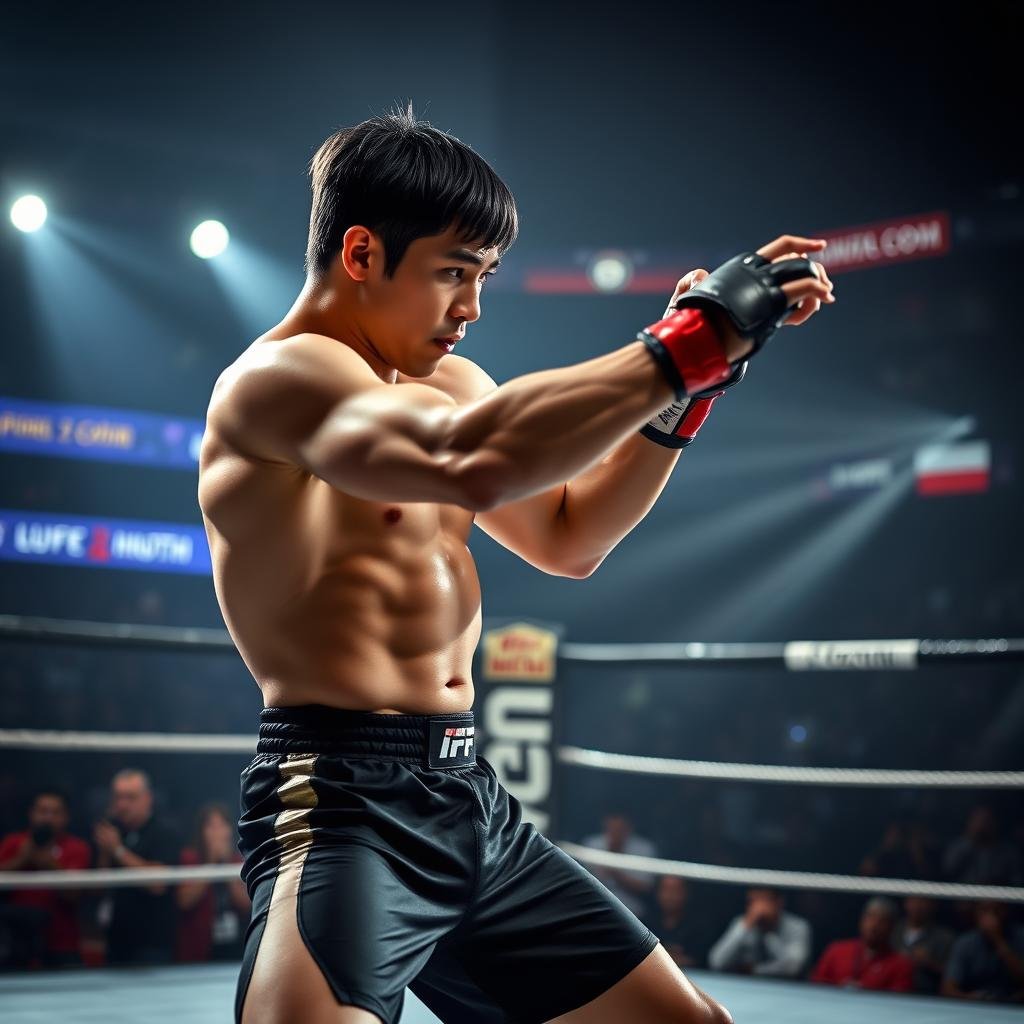
Modern MMA fighters continue to study and incorporate Lee’s revolutionary fighting techniques.
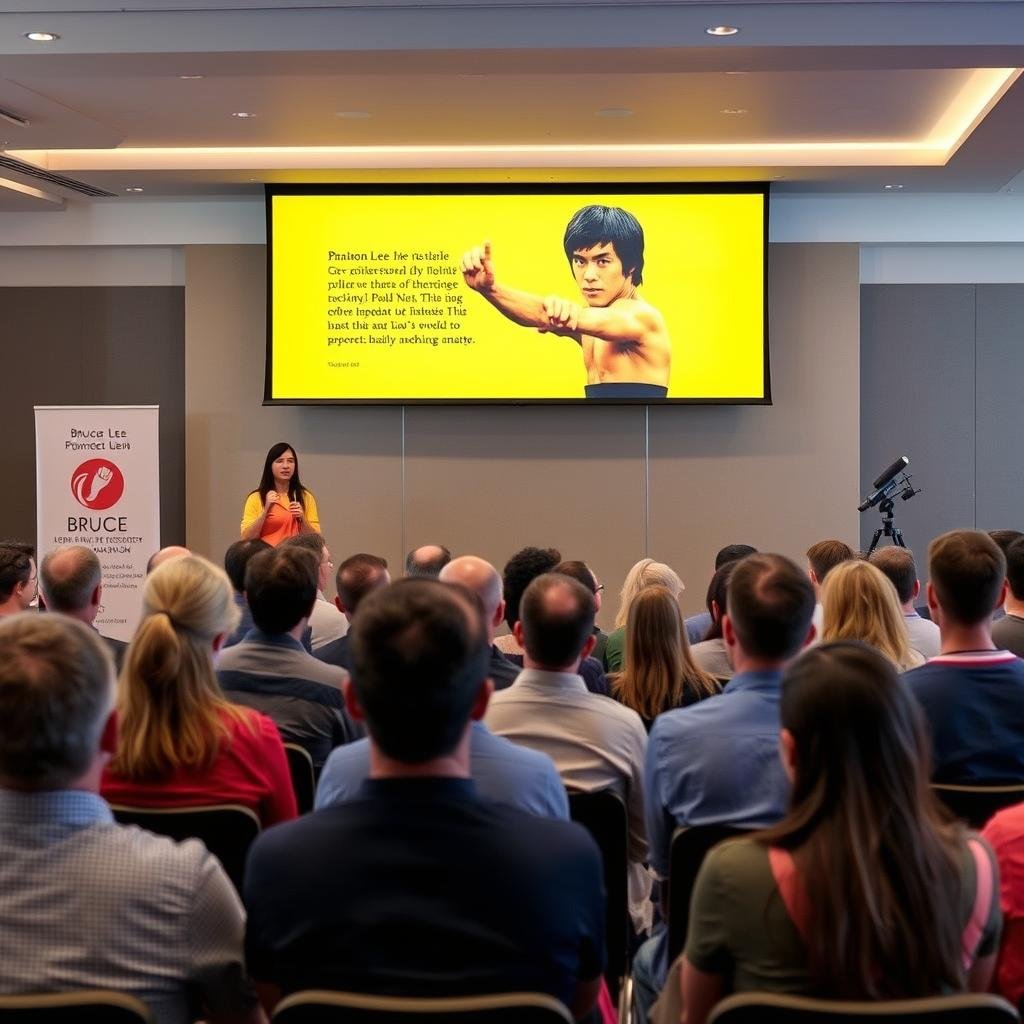
The Bruce Lee Foundation continues to share his philosophical teachings with new generations.
Lee’s approach to martial arts—blending techniques from different disciplines and rejecting dogmatic adherence to tradition—prefigured modern Mixed Martial Arts (MMA). UFC President Dana White has called Lee “the father of mixed martial arts,” acknowledging his pioneering role in creating a more adaptable, practical approach to combat.
“Be water, my friend. Empty your mind. Be formless, shapeless, like water. You put water into a cup, it becomes the cup. You put water into a bottle, it becomes the bottle. You put it into a teapot, it becomes the teapot. Now water can flow or it can crash. Be water, my friend.”
This famous quote encapsulates Lee’s enduring philosophical contribution—the idea that adaptability, not rigidity, is the key to success. This concept resonates across disciplines from business to personal development, ensuring Lee’s ideas remain relevant in contexts far beyond martial arts.
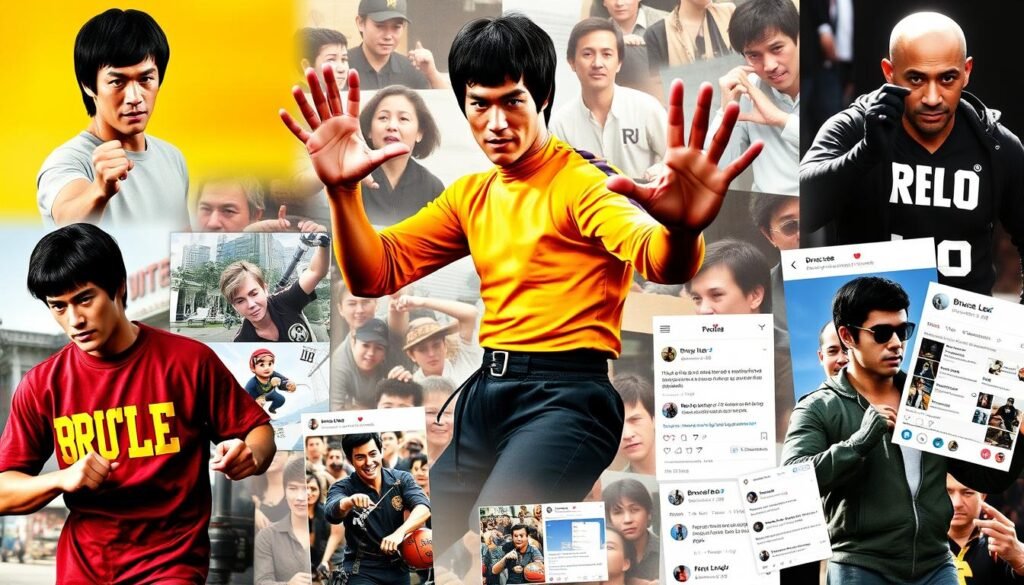
Continue Bruce Lee’s Legacy
Support the Bruce Lee Foundation’s work in preserving his teachings and promoting his philosophy of self-actualization.
Conclusion: The Dragon’s Eternal Flame
Bruce Lee’s legacy transcends his brief 32 years of life, continuing to inspire and influence people across generations and cultures. As a martial artist, he revolutionized combat training by emphasizing adaptability over tradition. As an actor, he broke barriers for Asian representation in global media. As a philosopher, he offered timeless wisdom about personal growth and cultural harmony.
Perhaps most importantly, Lee embodied the very principles he taught—constantly evolving, breaking boundaries, and demonstrating that limitations exist primarily in our minds. In a world still struggling with cultural divisions, his example of bridging East and West remains profoundly relevant.
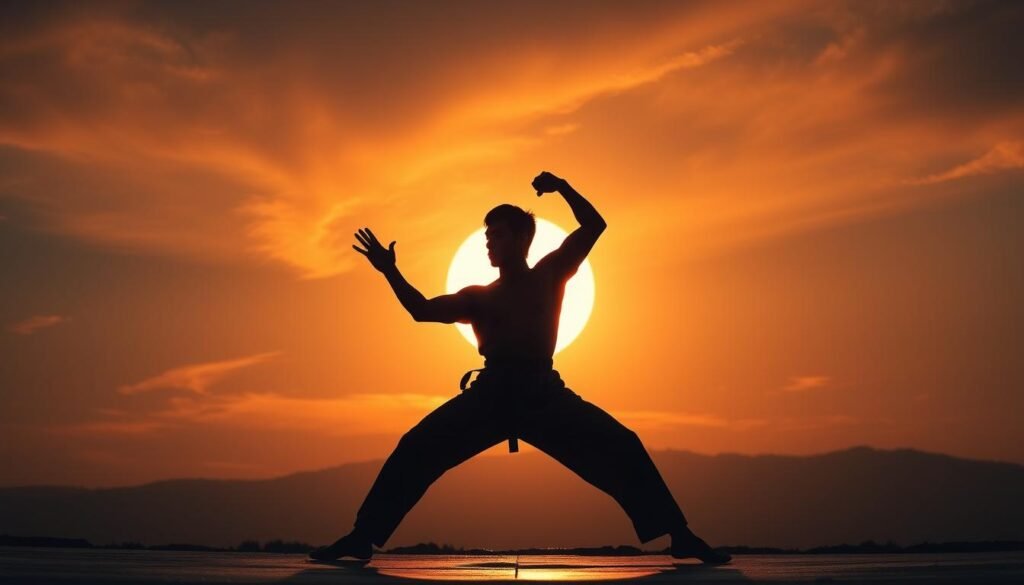
As we reflect on Bruce Lee’s legacy 50 years after his passing, we’re reminded that true immortality comes not from longevity but from impact. In this sense, the Little Dragon continues to soar, inspiring each new generation to break their own barriers and, in his words, “be water, my friend.”
Embody Bruce Lee’s Philosophy
Discover how to apply Bruce Lee’s principles of adaptability, continuous growth, and self-actualization in your own life.