Adolf Hitler – The Evil Architect
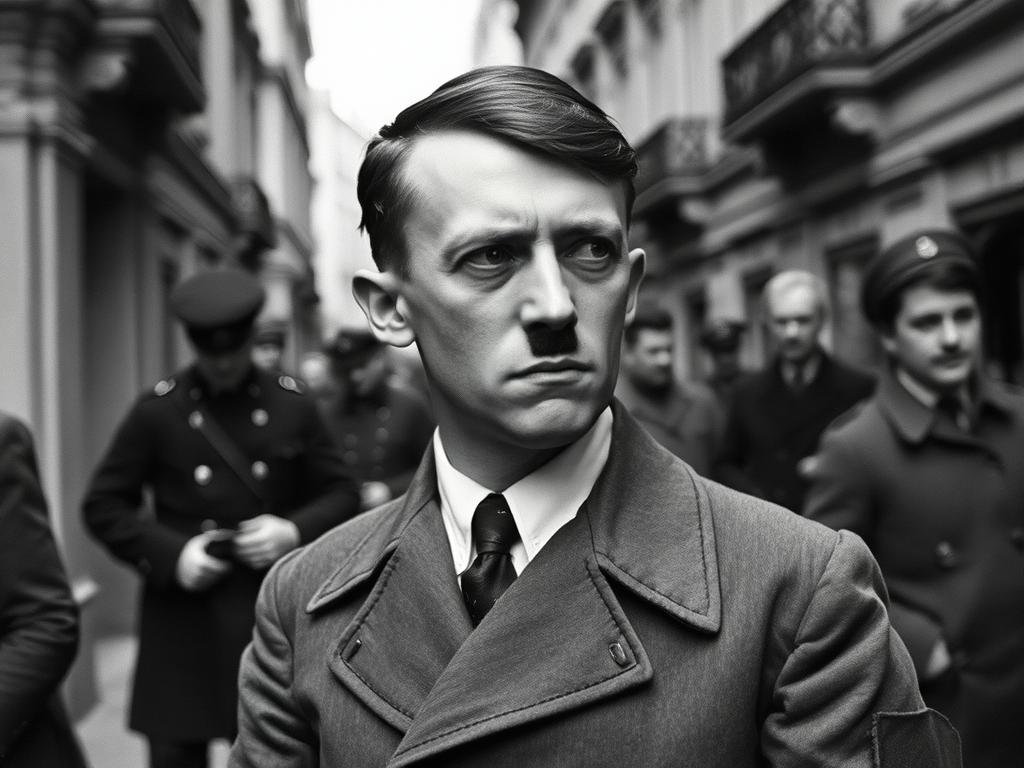
Adolf Hitler (1889-1945) was more than just a dictator; he was the methodical architect of a totalitarian regime that plunged the world into its deadliest conflict and orchestrated one of history’s most horrific genocides. This analysis examines how Hitler systematically designed and constructed Nazi Germany through calculated propaganda, militarization, and racial policies, revealing the blueprint behind his evil vision and its catastrophic implementation.
Early Life and Ideological Formation
Born on April 20, 1889, in Braunau am Inn, Austria, Adolf Hitler’s early years provided little indication of his future role as history’s most notorious dictator. After his father’s death in 1903, Hitler pursued artistic ambitions in Vienna, where he was twice rejected from the Academy of Fine Arts. These formative years in Vienna exposed him to virulent anti-Semitism and pan-German nationalism that would later form the core of his worldview.
Hitler’s military service during World War I proved pivotal to his ideological development. Serving as a corporal in the German Army, he was awarded the Iron Cross for bravery. Germany’s defeat in 1918 devastated Hitler, who, like many Germans, embraced the “stab-in-the-back” myth that claimed Germany had been betrayed by Jews and Marxists rather than defeated militarily.
“In my eyes, the year 1919 was destined to give me the foundations of a conviction that can never be destroyed.”
This period crystallized Hitler’s core beliefs: rabid anti-Semitism, racial hierarchy with “Aryans” at the top, contempt for democracy, and the need for German expansion. These ideas weren’t merely hateful opinions—they formed the architectural plans for what would become the Third Reich.
Political Architecture: Building the Nazi Regime
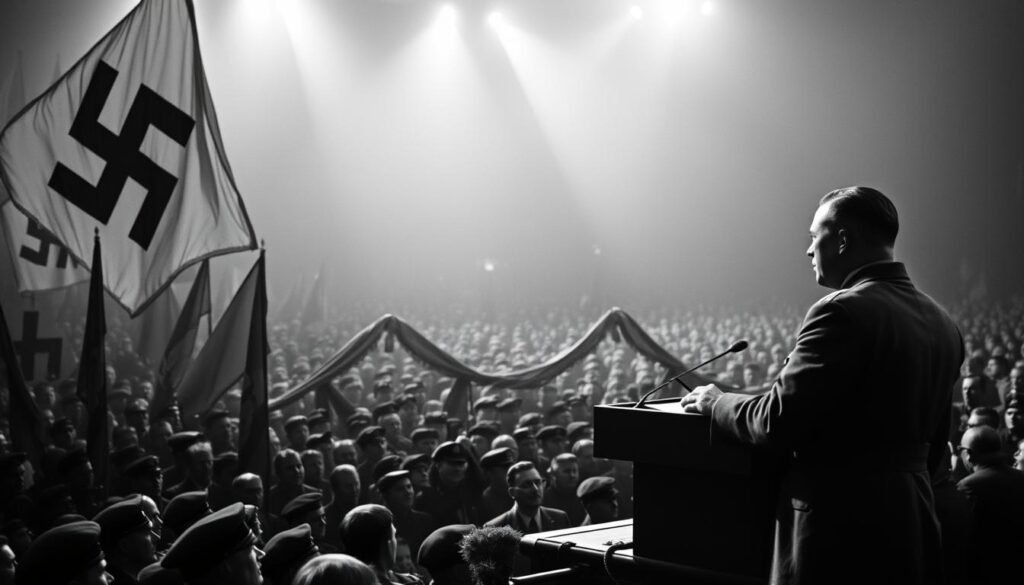
Hitler’s rise to power demonstrated his tactical genius in exploiting Germany’s political and economic vulnerabilities. After joining the German Workers’ Party in 1919 (later renamed the National Socialist German Workers’ Party), Hitler quickly ascended to leadership through his exceptional oratorical skills and organizational abilities.
The Blueprint for Power
Hitler’s failed Beer Hall Putsch in 1923 taught him that seizing power would require working within Germany’s political system. During his imprisonment, he dictated Mein Kampf, which outlined his political philosophy and plans for Germany. This manifesto served as the architectural drawings for the regime he would later build.
Propaganda Mastery
Under Joseph Goebbels’ direction, Nazi propaganda became a sophisticated tool for manipulating public opinion. Hitler understood that controlling information was essential to controlling the population. Radio broadcasts, films, posters, and mass rallies were all carefully orchestrated to promote Nazi ideology and Hitler’s cult of personality.
Elimination of Opposition
After being appointed Chancellor in January 1933, Hitler moved swiftly to consolidate power. The Reichstag fire in February provided the pretext to suspend civil liberties. The Enabling Act of March 1933 granted Hitler dictatorial powers, allowing him to bypass the Reichstag and rule by decree—a critical architectural element in his totalitarian design.
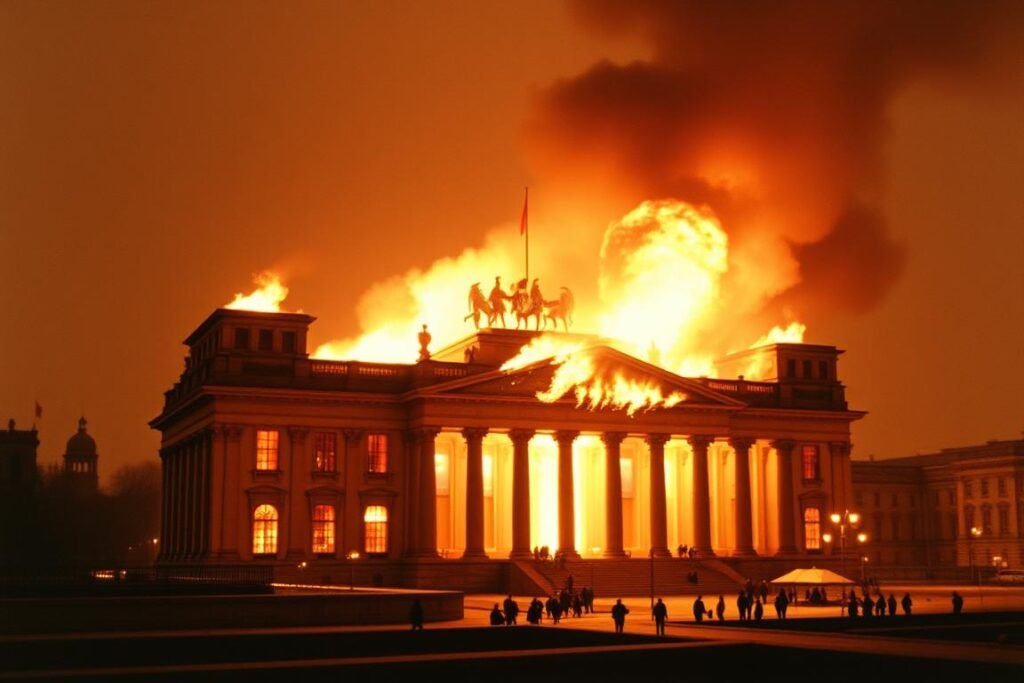
Understand Hitler’s Rise to Power
Download our comprehensive timeline of Hitler’s political ascension and the key events that enabled the Nazi takeover of Germany.
Constructing the Totalitarian State
Once in power, Hitler systematically dismantled Germany’s democratic institutions and replaced them with Nazi structures. His architectural vision for Germany required complete control over every aspect of society.
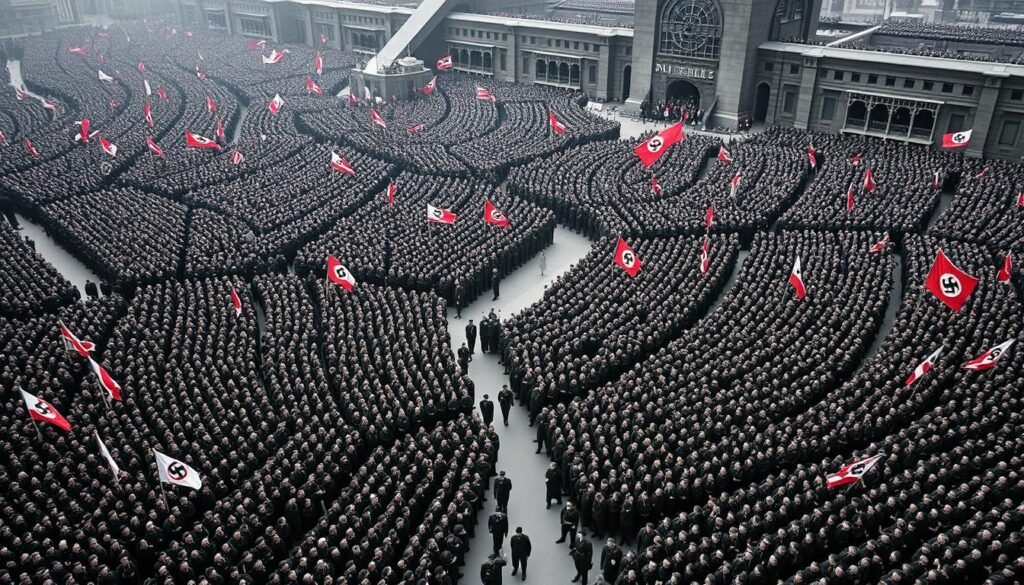
The Night of the Long Knives in June 1934 demonstrated Hitler’s ruthlessness in eliminating threats, even within his own party. By purging the SA leadership, including his longtime ally Ernst Röhm, Hitler secured the loyalty of the regular army and removed potential rivals.
“I am the supreme judge of the German people. I do not recognize the ridiculous paper paragraphs created by men.”
When President Paul von Hindenburg died in August 1934, Hitler merged the offices of Chancellor and President, declaring himself Führer of the German Reich. The architectural framework of his dictatorship was now complete.
Racial Engineering: The Foundation of Nazi Ideology
At the core of Hitler’s architectural vision was a racial hierarchy with “Aryans” at the top and Jews at the bottom. This wasn’t merely rhetoric—it was a blueprint for action that would ultimately lead to genocide.
Implementing Racial Policies
Hitler’s regime implemented racial policies in stages, gradually normalizing discrimination and persecution:
| Year | Policy | Impact |
| 1933 | Boycott of Jewish businesses | Economic isolation of Jewish community |
| 1935 | Nuremberg Laws | Stripped Jews of citizenship and prohibited marriages between Jews and Germans |
| 1938 | Kristallnacht (Night of Broken Glass) | Organized violence against Jewish businesses, synagogues, and homes |
| 1939-1941 | Ghettoization | Forced relocation of Jews to restricted areas |
| 1941-1945 | The “Final Solution” | Systematic murder of six million Jews |
Hitler’s racial engineering extended beyond anti-Semitism. The T4 Program authorized the murder of disabled Germans deemed “life unworthy of life.” Roma, Sinti, homosexuals, and Jehovah’s Witnesses were also targeted for persecution and extermination.
Holocaust Education Resources
Access our comprehensive teaching materials about the Holocaust, suitable for educators, students, and anyone seeking to understand this dark chapter in human history.
Expansionist Blueprint: Lebensraum and War
Hitler’s architectural vision extended beyond Germany’s borders. The concept of Lebensraum (living space) called for territorial expansion to the east, providing land for German settlement and resources for the Reich.
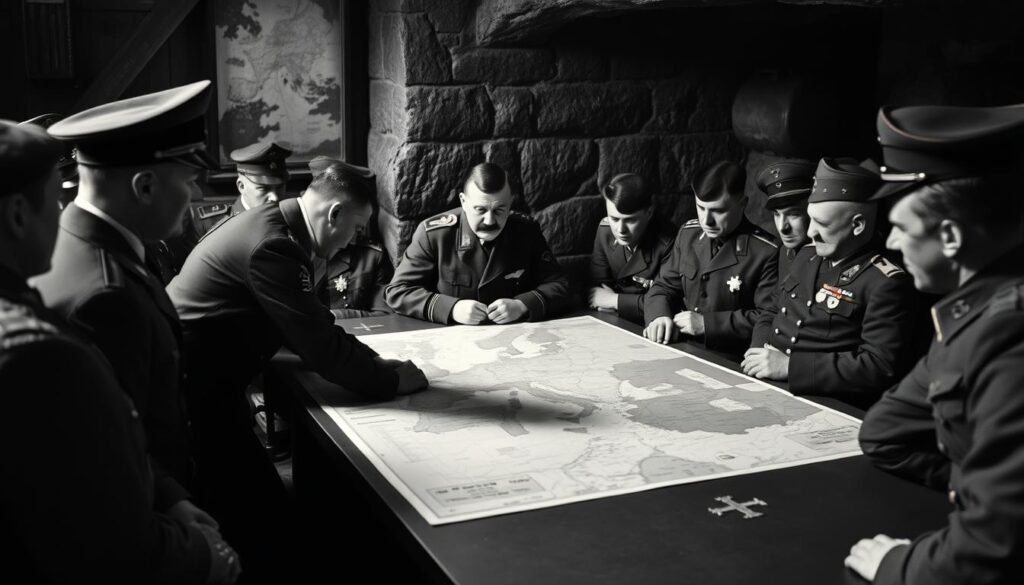
Building the War Machine
Hitler’s rearmament program violated the Treaty of Versailles but transformed Germany into a formidable military power. The creation of the Luftwaffe (air force), expansion of the army, and development of tanks and other weapons prepared Germany for the coming conflict.
Territorial Annexations
Hitler’s expansionist agenda proceeded in calculated stages:
- 1936: Remilitarization of the Rhineland
- 1938: Anschluss with Austria
- 1938: Annexation of the Sudetenland
- 1939: Occupation of Czechoslovakia
- 1939: Invasion of Poland, triggering World War II
Blitzkrieg Warfare
Hitler’s military strategy emphasized speed, surprise, and overwhelming force. The Blitzkrieg (lightning war) tactics proved devastatingly effective in the early years of the war, allowing Germany to conquer much of Europe with remarkable speed:
- Poland fell in just 35 days
- Denmark surrendered in less than 24 hours
- France, considered a major military power, capitulated in just six weeks
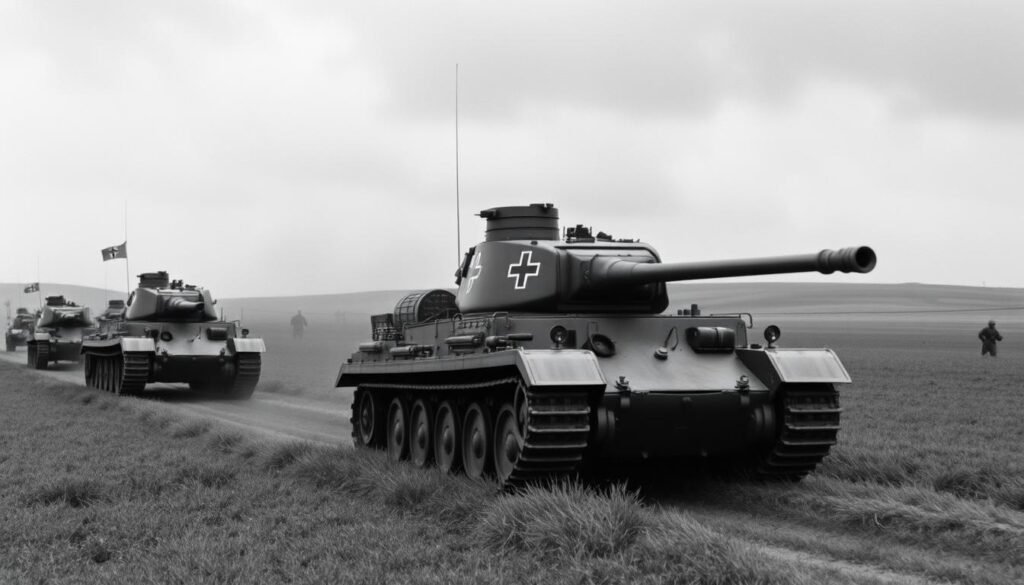
By mid-1940, Hitler had achieved what Napoleon could not—the conquest of most of continental Europe. His architectural vision for a Nazi-dominated Europe seemed to be materializing with frightening efficiency.
The Holocaust: The Ultimate Expression of Hitler’s Ideology
The Holocaust represents the most horrific manifestation of Hitler’s architectural vision—the systematic attempt to eliminate entire peoples based on racial ideology. What began with discrimination evolved into industrialized mass murder on an unprecedented scale.
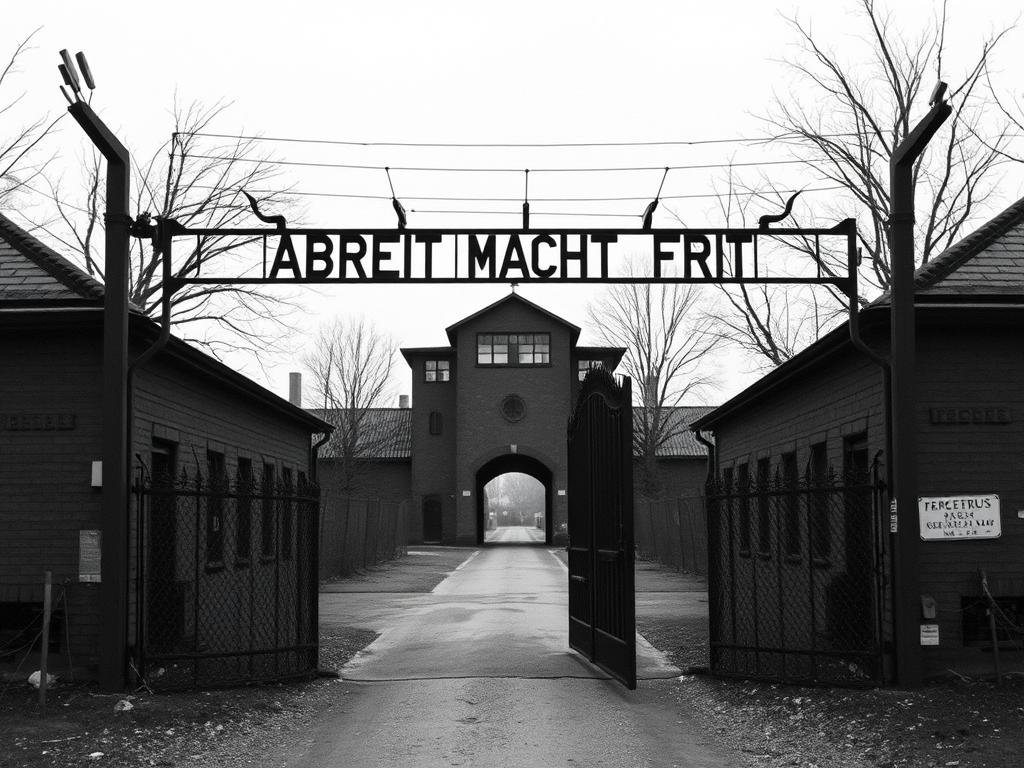
The Final Solution
In January 1942, at the Wannsee Conference, Nazi officials coordinated the implementation of the “Final Solution to the Jewish Question”—the plan to murder all European Jews. This wasn’t a spontaneous outbreak of violence but a carefully designed system of extermination.
The Holocaust claimed the lives of approximately six million Jews—two-thirds of Europe’s Jewish population—along with millions of others deemed “undesirable” by the Nazi regime.
The concentration camp system evolved into a network of death camps equipped with gas chambers and crematoria designed specifically for mass murder. Auschwitz-Birkenau, Treblinka, Belzec, Sobibor, Chelmno, and Majdanek became factories of death, processing thousands of victims daily.
“I want to be a bearer of the clear racial idea.”
The Holocaust demonstrated the horrifying potential of modern bureaucracy, technology, and industry when directed toward genocidal ends. It was the ultimate expression of Hitler’s architectural vision—a world redesigned according to racial hierarchy through the elimination of those deemed inferior.
Never Forget: Holocaust Remembrance
Download our guide to Holocaust memorials and museums worldwide, with resources for preserving the memory of victims and educating future generations.
The Collapse of Hitler’s Reich
Hitler’s architectural vision began to crumble when Germany’s military fortunes turned. The failed invasion of the Soviet Union in 1941, the entry of the United States into the war, and the Allied strategic bombing campaign all contributed to Germany’s eventual defeat.
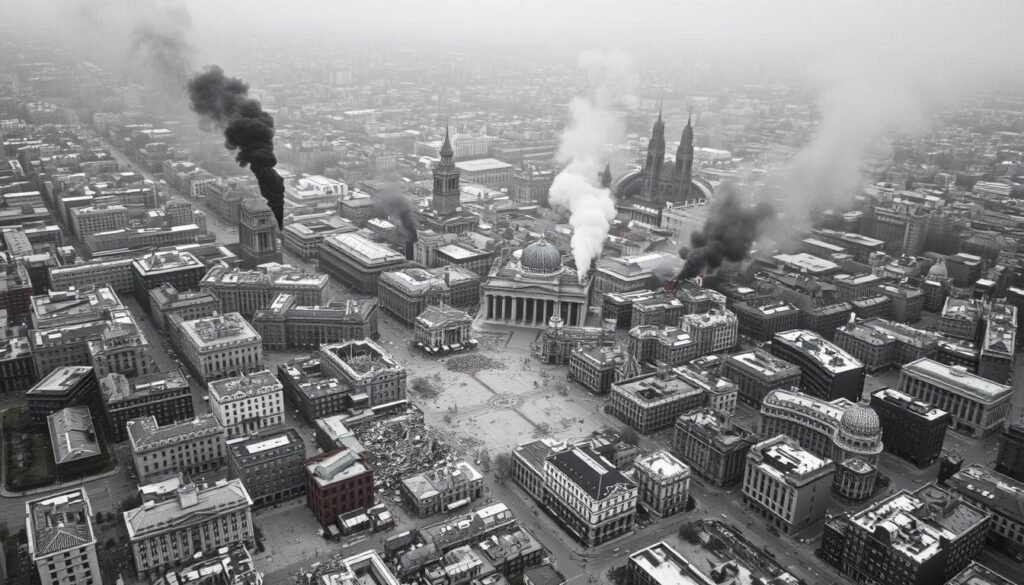
The Final Days
As Allied forces closed in from east and west, Hitler retreated to his bunker beneath the Reich Chancellery in Berlin. Even as the Third Reich collapsed around him, Hitler continued to issue orders to nonexistent armies and blame others for Germany’s defeat.
On April 30, 1945, with Soviet troops just blocks away, Adolf Hitler committed suicide alongside his new wife, Eva Braun. His body was burned in the garden above the bunker, a final attempt to avoid capture and display by his enemies.
“I would rather die than fall into the hands of enemies who need a spectacle, staged by the Jews, for the amusement of their hysterical masses.”
The Third Reich, which Hitler had proclaimed would last a thousand years, collapsed after just twelve. The architectural vision that had caused unprecedented suffering and death was ultimately unsustainable, built as it was on foundations of hatred, violence, and racial mythology.
Legacy: The Ruins of Hitler’s Architecture
Hitler’s architectural vision for Germany and Europe left behind physical and moral ruins that continue to influence our world today. The physical destruction was eventually rebuilt, but the moral and human devastation created lasting scars.
Historical Impact
Hitler’s regime fundamentally altered the course of history:
Modern scholars continue to analyze how Hitler’s architectural vision for society was able to gain such widespread support. Historian Ian Kershaw notes that Hitler’s success relied on “working towards the Führer”—a process where individuals and institutions anticipated Hitler’s wishes and acted accordingly, often without explicit orders.
“Those who cannot remember the past are condemned to repeat it.”
The study of Hitler’s rise to power and the implementation of his ideological vision remains critically important. It provides warnings about the fragility of democratic institutions, the dangers of extreme nationalism, and the potential for ordinary people to participate in extraordinary evil when led by a skilled architect of hatred.
Conclusion: Dismantling the Architecture of Evil
Adolf Hitler’s role as the architect of Nazi Germany demonstrates how a single individual with a coherent, if evil, vision can reshape a nation and impact the world. His systematic approach to building a totalitarian state—from propaganda techniques to racial policies to military strategy—reveals a methodical mind bent on implementing a comprehensive ideological blueprint.
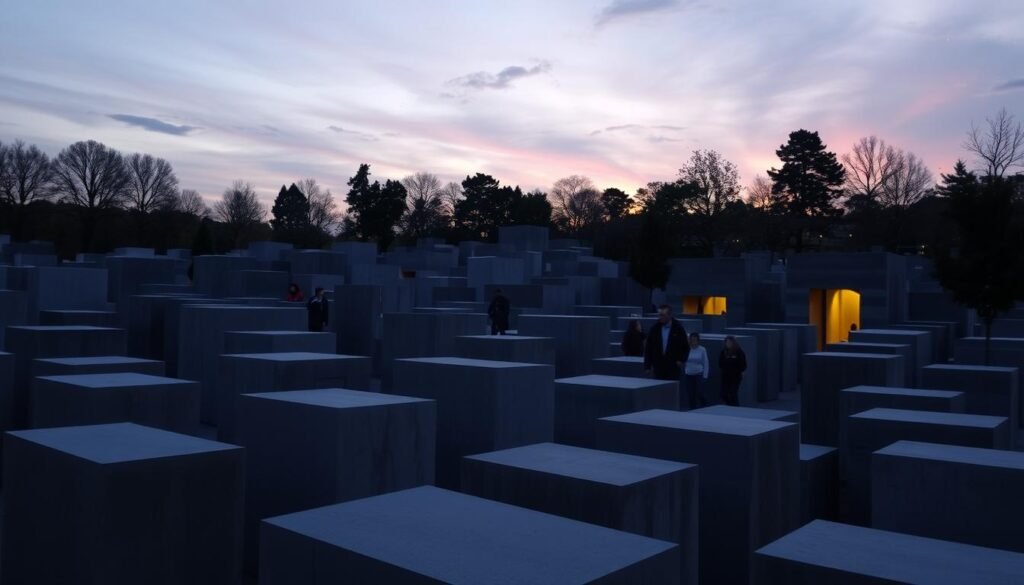
Understanding Hitler as an architect of evil rather than simply a madman is crucial. It acknowledges the deliberate, systematic nature of Nazi crimes while highlighting the importance of recognizing and resisting similar patterns in the future. The structures Hitler built—both ideological and physical—remind us of our responsibility to construct societies based on human dignity, equality, and democratic values.
Continue Your Historical Education
Access our complete library of historical analyses, including detailed examinations of World War II, totalitarianism, and genocide prevention.